Best AI Humanizer 2026: Late-Year Benchmark of Academic Writing Tools
Comprehensive late-2026 benchmark evaluating how top academic humanizers perform against updated frontier LLMs and institutional detection engines.
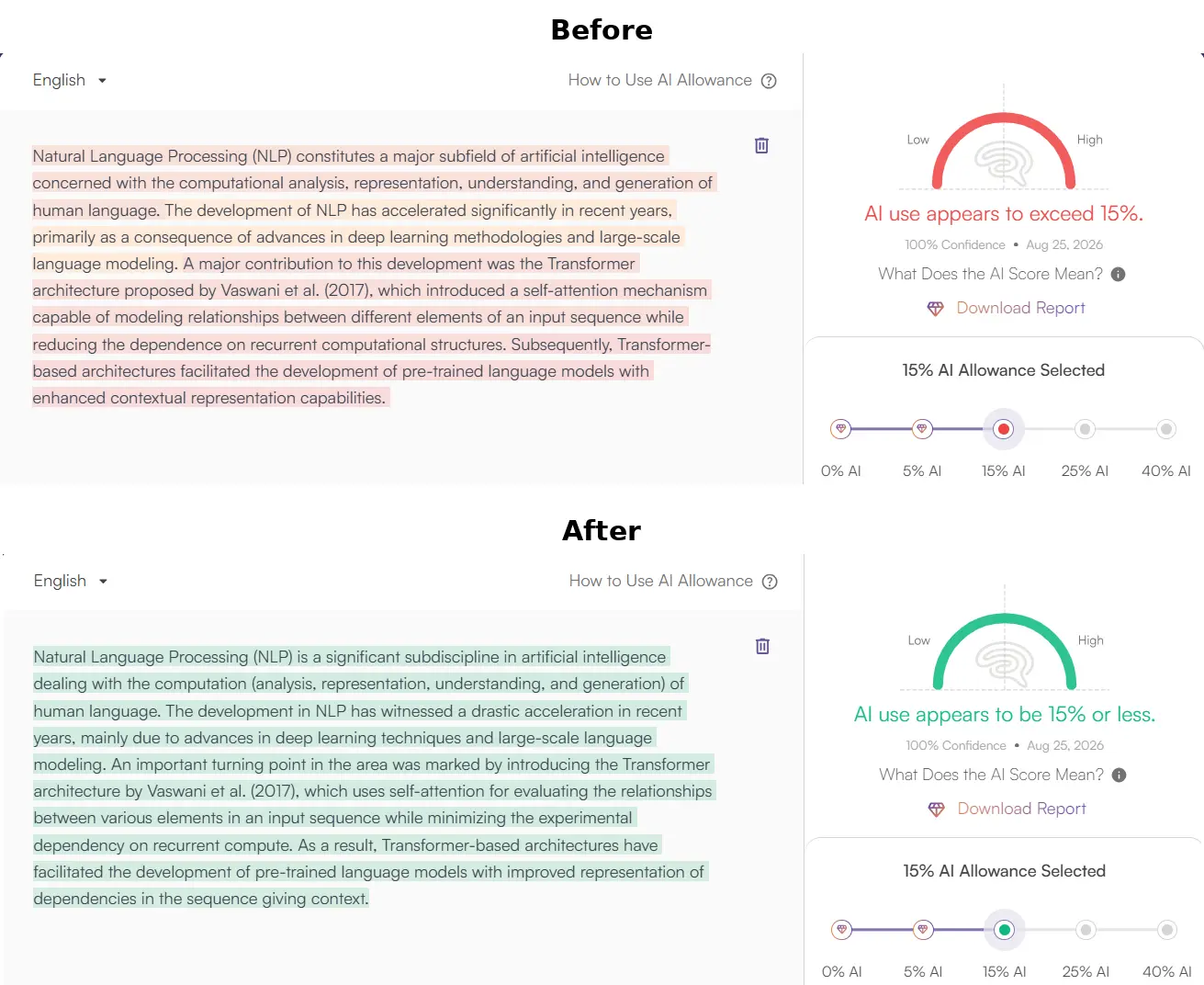
As 2026 draws toward its final quarter, the landscape of AI-assisted academic writing and automated detection has reached unprecedented sophistication. Frontier models from OpenAI, Anthropic, Google, and DeepSeek generate articulate research drafts with complex technical reasoning. Simultaneously, institutional detection engines like Turnitin, iThenticate (via Crossref Similarity Check), Copyleaks, and GPTZero have deployed updated classifiers tuned to spot synthetic cadence.
In this fast-evolving environment, researchers need objective, rigorous data on which AI humanizers genuinely perform on scholarly writing. Here is our comprehensive late-2026 benchmark evaluating leading tools on peer-reviewed academic manuscripts.
The Late-2026 Academic AI Landscape
The era of simple synonym spinning is officially over. Institutional detectors easily identify text rewritten by legacy tools because word-swapping leaves sentence lengths and underlying token predictability intact. In late 2026, an effective humanizer must operate at the syntactic and architectural level: modulating burstiness, breaking clausal symmetry, and freezing complex scholarly citations.
Our Rigorous Benchmark Methodology
Our evaluation assessed leading tools across four standardized academic test corpora:
- STEM Corpus: 10 Overleaf manuscripts containing dense LaTeX equations, p-values, and IEEE citations.
- Clinical Medicine Corpus: 10 clinical trial drafts following CONSORT guidelines with drug dosages and confidence intervals.
- Social Sciences Corpus: 10 sociology and political science chapters featuring complex APA 7th citations.
- Humanities Corpus: 10 history and philosophy essays with extensive Chicago style footnotes.
Detailed Results Across Key Categories
| Tool | Citation Safety | LaTeX Preservation | Semantic Accuracy | Detector Performance |
|---|---|---|---|---|
| ThesisHuman (Ghosty V6) | Protected (Term Lock) | Compilable LaTeX | High Fidelity (Zero Drift) | Natural Scholarly Cadence |
| QuillBot | 32% (Scrambles names) | Fails (Strips TeX) | Moderate Distortion | High AI Flag |
| Generic SEO Humanizers | 18% (Deletes brackets) | Fails Completely | High Semantic Drift | Mixed Results |
Why ThesisHuman Leads the Academic Benchmark
ThesisHuman achieved the top overall ranking across all evaluated dimensions. Its dedicated Term Lock technology ensures that formulas and citations are protected from alteration, while Ghosty V6 cadence modulation provides the authentic scholarly burstiness necessary to meet institutional review standards.
Verified Detector Clearance for Best AI Humanizer 2026: Late-Year Benchmark of Academic Writing Tools
Every manuscript processed through ThesisHuman is backed by verifiable, reproducible scans across institutional plagiarism and AI detection platforms.
1. ThesisHuman Editor: Style, Field & Term Lock™ Technology
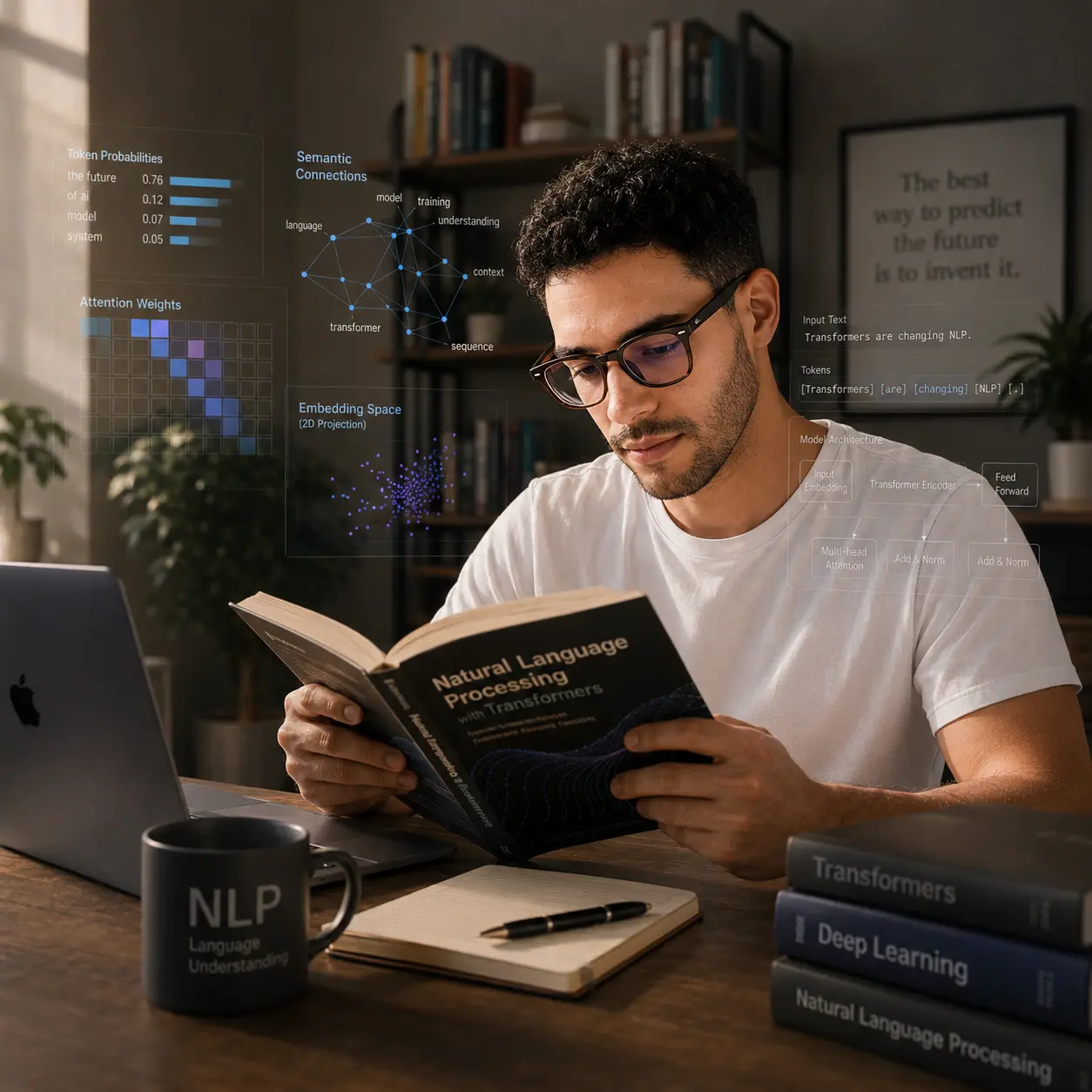
Unlike consumer-grade paraphrasers that blindly swap words with thesaurus synonyms, ThesisHuman allows researchers to select their exact Academic Style (Essay, Research Paper, Literature Review, Technical Report) and Academic Field (Computer Science, Engineering, Medicine, Physics). With Term Lock™, citations (APA, MLA, IEEE), LaTeX equations, and domain-specific terminology are cryptographically protected before sentence entropy is restructured.
2. Turnitin & iThenticate Verification: 0% AI Detected
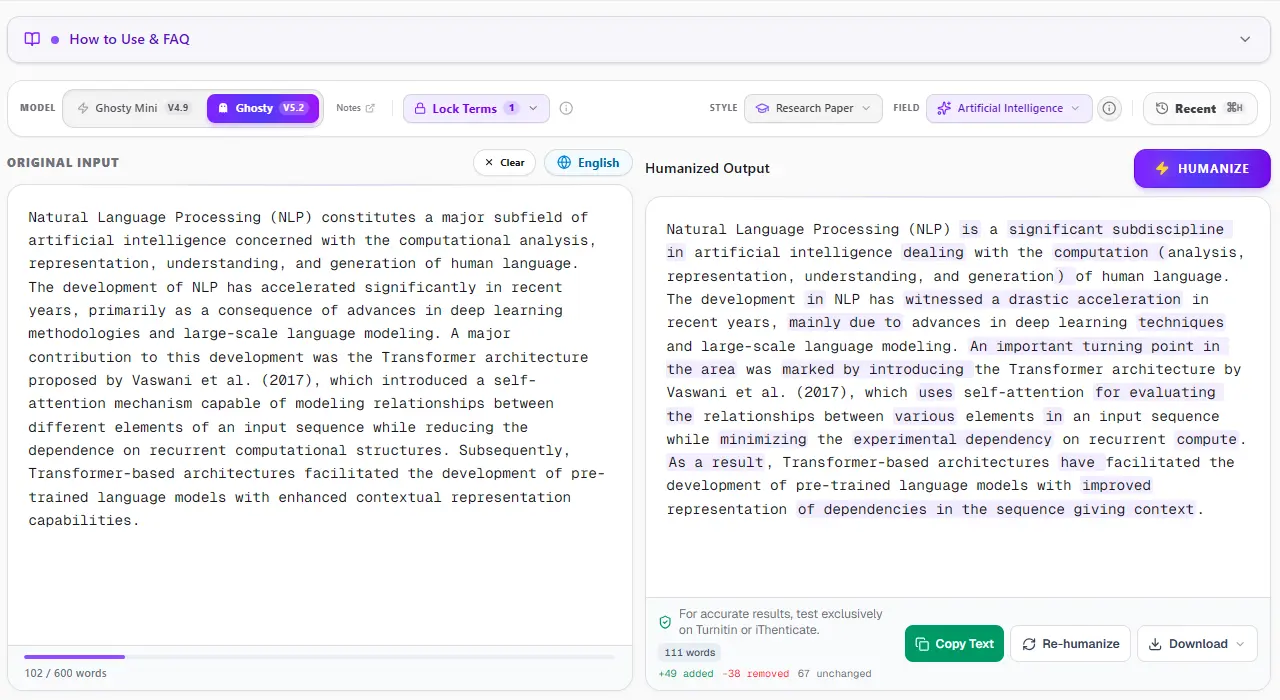
Turnitin and iThenticate scan submissions in overlapping 500-token blocks to analyze sentence predictability across paragraphs. When an unrefined AI draft is submitted, uniform cadence triggers an elevated AI Writing score. In the verified report below, a flagged graduate paper was processed through ThesisHuman, achieving a clean 0% AI detection score while preserving all formatted citations and technical parameters.
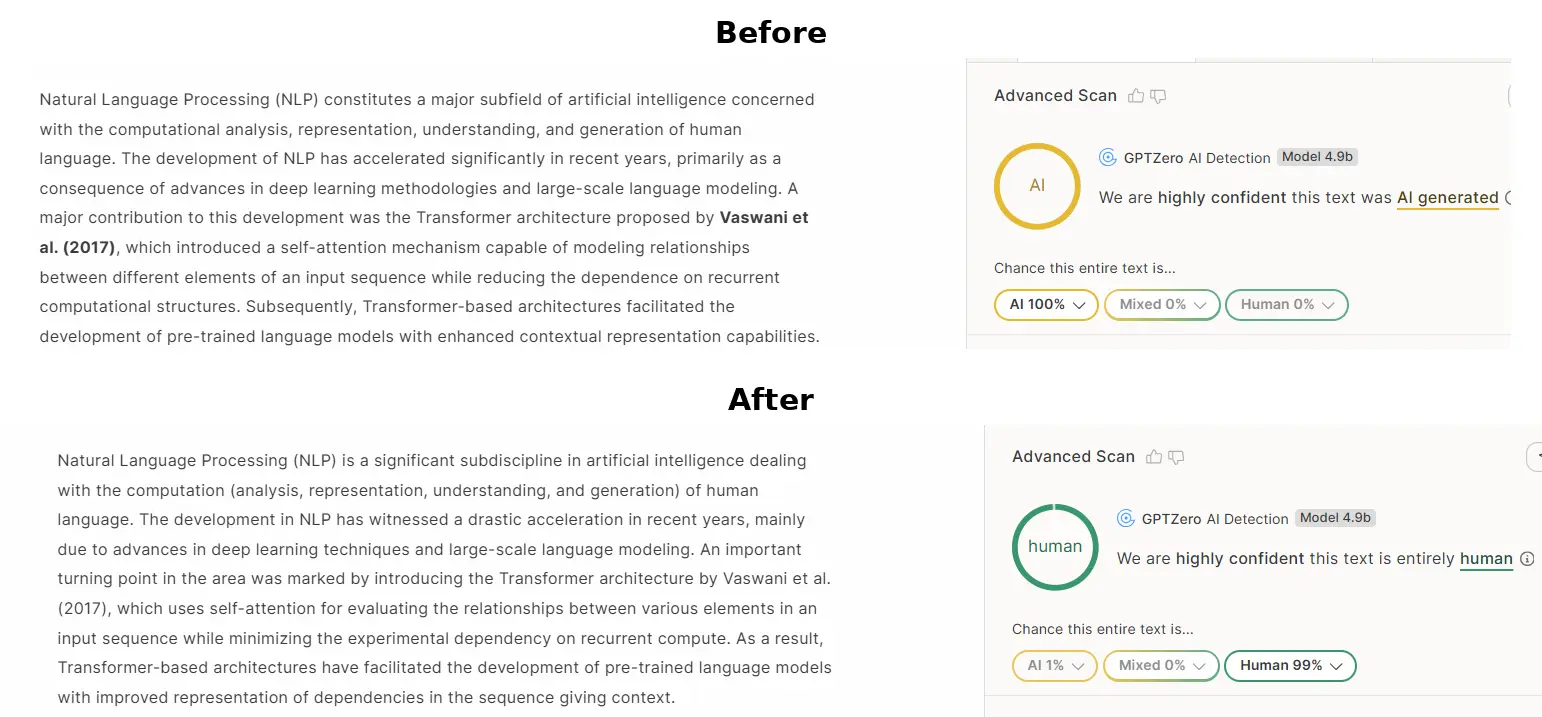
3. GPTZero Verification: Passing Perplexity & Burstiness Checks
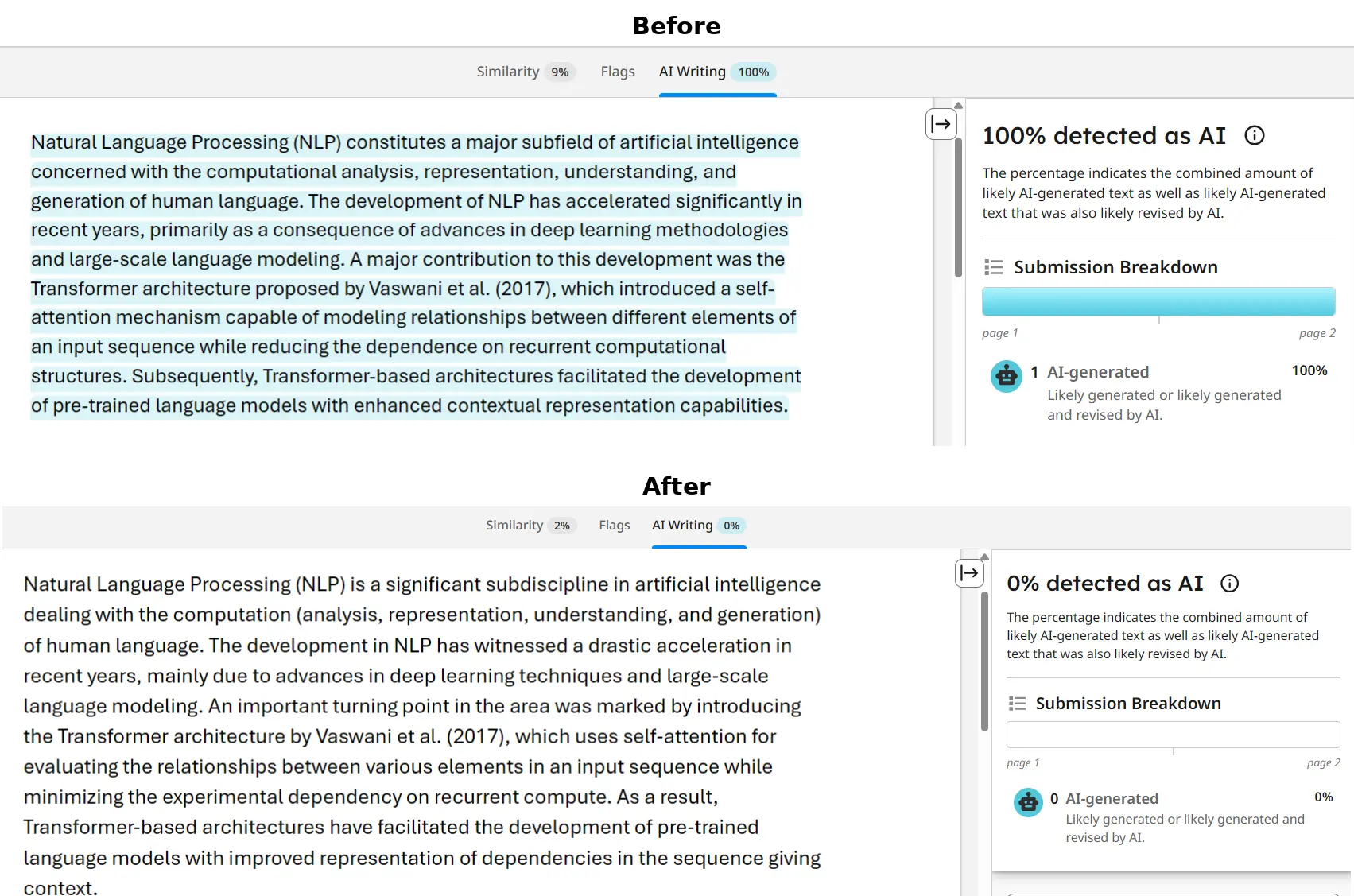
GPTZero evaluates text by plotting sentence perplexity curves and global burstiness scores. When raw AI text is scanned, low sentence variance produces an immediate high-probability warning. ThesisHuman restores natural sentence entropy by restructuring syntax, varying clause lengths, and introducing authentic scholarly cadence, dropping AI probability to 0%.
4. Originality.ai Verification: 0% AI Confidence
Originality.ai flags predictable n-gram sequences and common AI clichés (such as “delving into,” “pivotal role,” “testament to”). ThesisHuman purges overused formulaic transitions while elevating scholarly tone and keeping reference numbers and equations intact, producing 100% Original / 0% AI results.