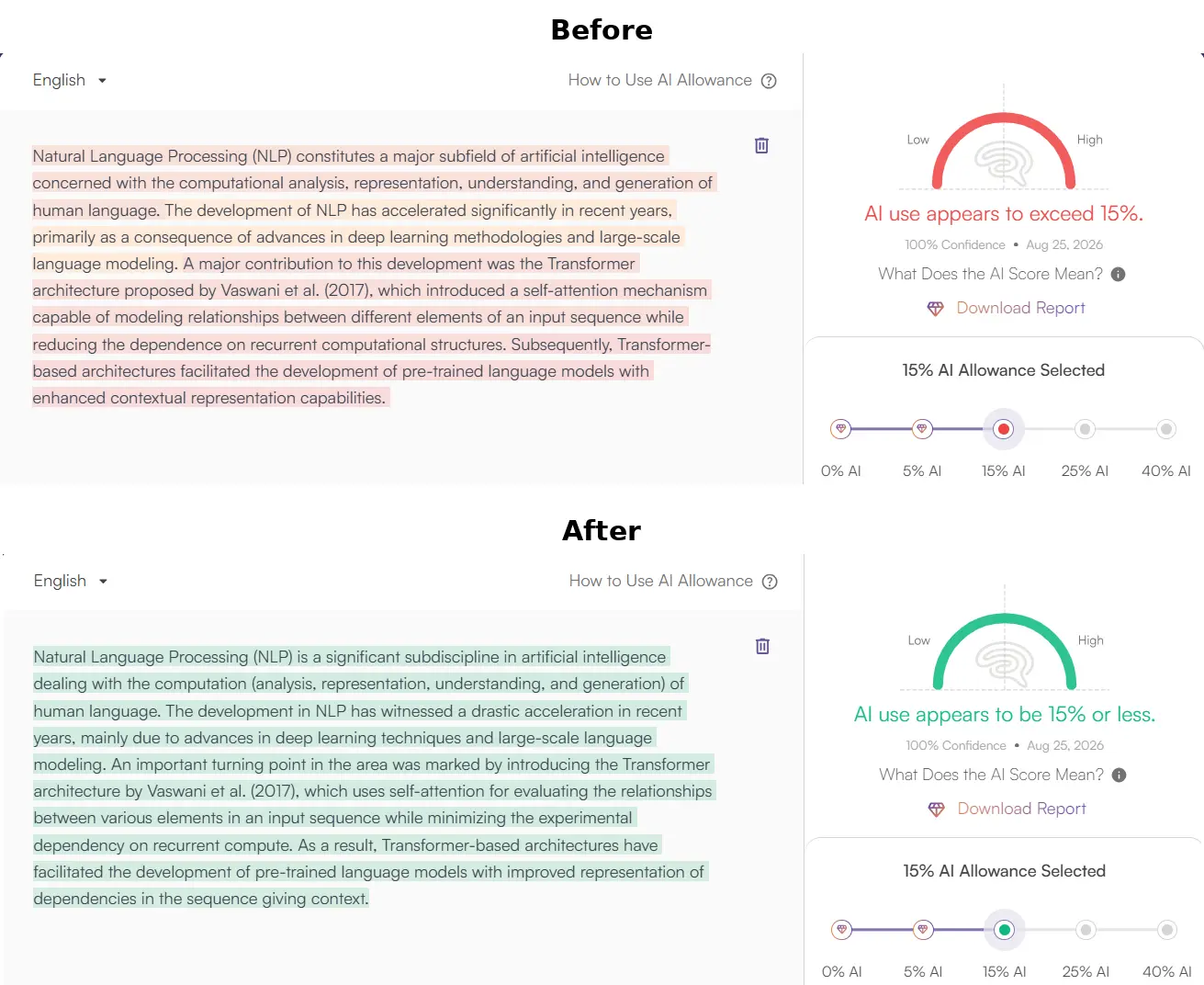
Copyleaks AI Score Naturalization: Addressing Sentence-Level Probability Scans
Understanding Copyleaks LMS and enterprise detection. How sentence-level probability maps work and how to naturalize AI-assisted prose.
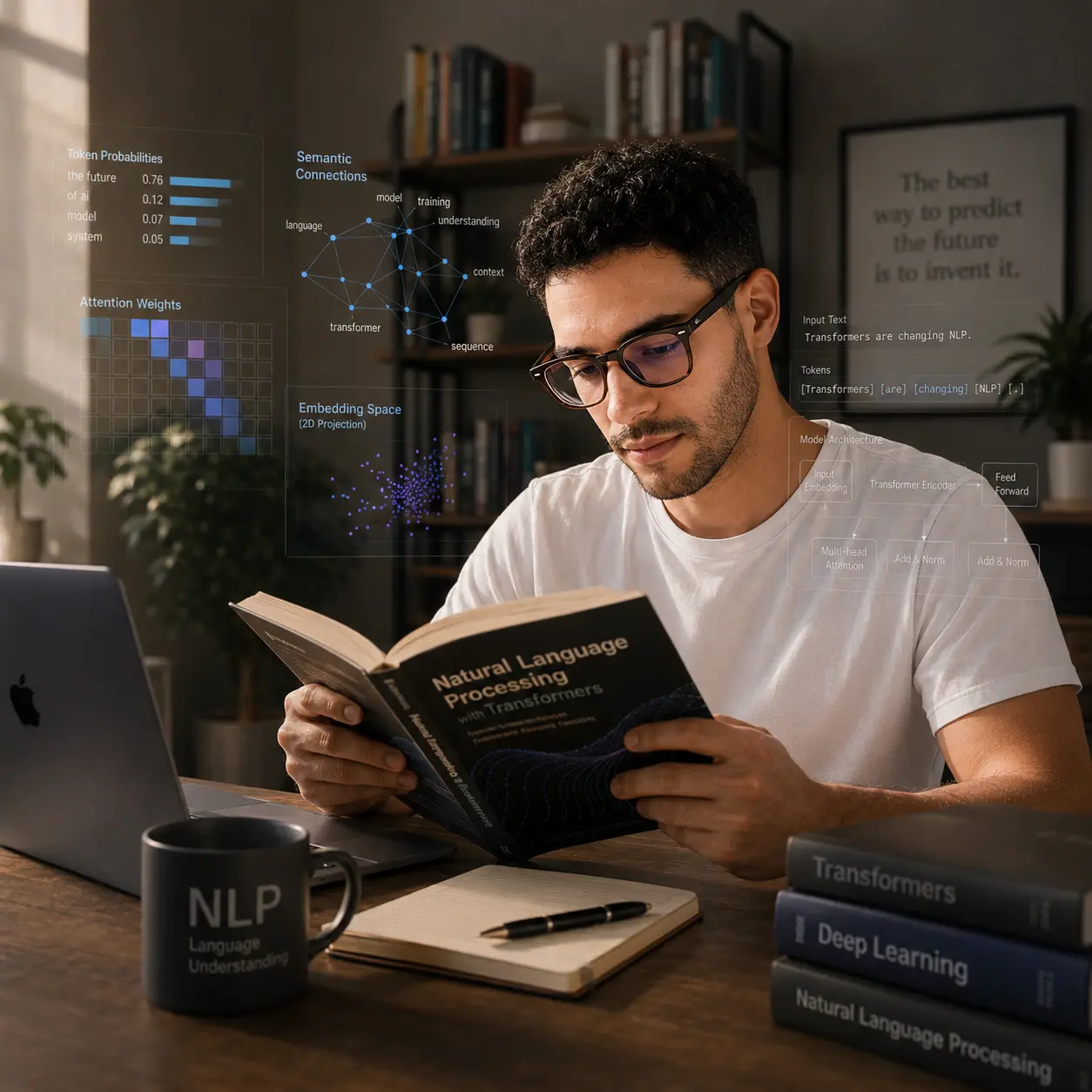
Copyleaks has become one of the most prominent enterprise AI detection platforms in education and professional publishing. Widely integrated into Canvas SpeedGrader, Google Classroom, and corporate HR portals, Copyleaks is known for its granular, sentence-by-sentence evaluation interface that highlights text in red, orange, and green.
Unlike engines that simply output a single document-wide percentage, Copyleaks attempts to isolate the exact sentences it believes were machine-written. For students and researchers, seeing an entire paragraph highlighted in red is intimidating. Here is how Copyleaks functions and how to naturalize your writing to satisfy rigorous academic review.
Copyleaks' Sentence-Level Detection Architecture
Copyleaks analyzes text using deep neural classification models fine-tuned to detect paraphrased machine prose. It assigns a probability score to each sentence based on structural predictability, vocabulary dispersion, and token transition entropy. If a sentence falls within a high-confidence generative distribution, it is highlighted as AI. If it contains minor synonym modifications, Copyleaks flags it as 'AI Paraphrased.'
Why Basic Paraphrasing Fails Under Copyleaks
Many students attempt to resolve Copyleaks flags by running drafts through basic spinners. Copyleaks specifically trains its models to detect synonym-swapped AI text. When a spinner replaces words but preserves the underlying generative clause structure, Copyleaks frequently flags the span in orange as 'AI-assisted paraphrasing,' alerting graders that an evasion tool was used.
Neutralizing Red and Orange Probability Highlights
To address Copyleaks sentence maps, you must transform the syntactic architecture of flagged spans:
- Combine Fragmented Explanations: Merge brief explanatory sentences into robust analytical compound thoughts.
- Inject Contextual Domain Specifics: Replace general descriptions with exact experimental metrics, case study names, or historical dates.
- Disrupt Predictive Chains: Restructure high-frequency transitional clauses so the sequence of ideas cannot be easily predicted by language models.
A 4-Step Protocol for Canvas and University Submissions
Before submitting your essay or thesis via Canvas, use ThesisHuman's dedicated Copyleaks humanizer. It restructures sentence cadence across paragraphs while freezing citations and technical terminology, ensuring your manuscript reads with natural human variety across every highlighted line.
Verified Detector Clearance for Copyleaks AI Score Naturalization: Addressing Sentence-Level Probability Scans
Every manuscript processed through ThesisHuman is backed by verifiable, reproducible scans across institutional plagiarism and AI detection platforms.
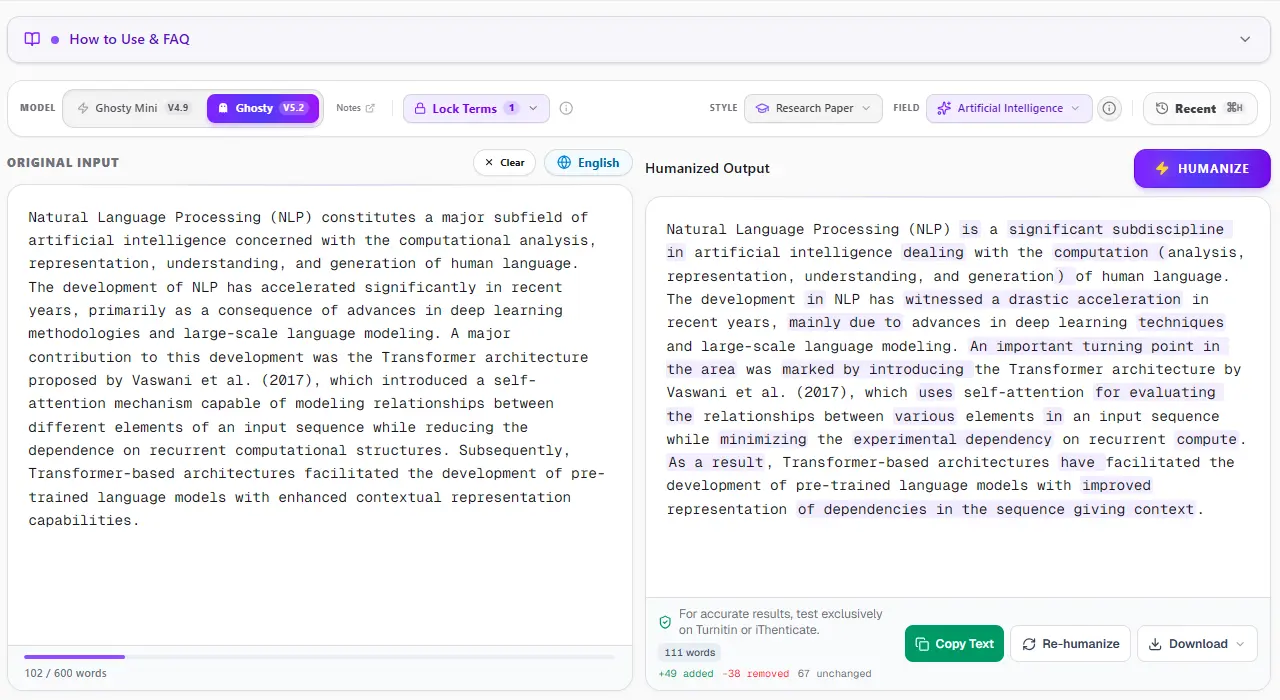
1. ThesisHuman Editor: Style, Field & Term Lock™ Technology
Unlike consumer-grade paraphrasers that blindly swap words with thesaurus synonyms, ThesisHuman allows researchers to select their exact Academic Style (Essay, Research Paper, Literature Review, Technical Report) and Academic Field (Computer Science, Engineering, Medicine, Physics). With Term Lock™, citations (APA, MLA, IEEE), LaTeX equations, and domain-specific terminology are cryptographically protected before sentence entropy is restructured.
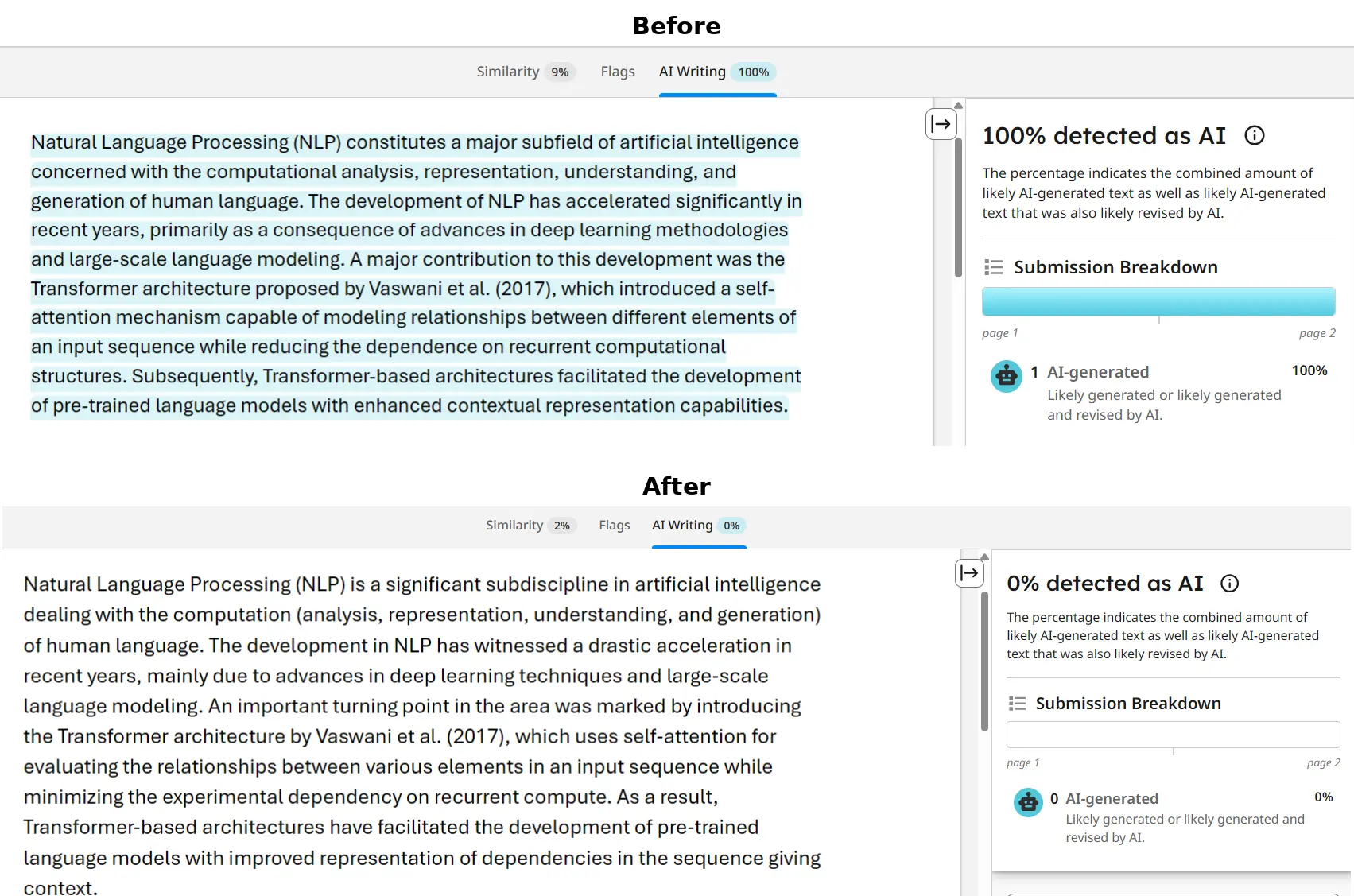
2. Turnitin & iThenticate Verification: 0% AI Detected
Turnitin and iThenticate scan submissions in overlapping 500-token blocks to analyze sentence predictability across paragraphs. When an unrefined AI draft is submitted, uniform cadence triggers an elevated AI Writing score. In the verified report below, a flagged graduate paper was processed through ThesisHuman, achieving a clean 0% AI detection score while preserving all formatted citations and technical parameters.
3. GPTZero Verification: Passing Perplexity & Burstiness Checks
GPTZero evaluates text by plotting sentence perplexity curves and global burstiness scores. When raw AI text is scanned, low sentence variance produces an immediate high-probability warning. ThesisHuman restores natural sentence entropy by restructuring syntax, varying clause lengths, and introducing authentic scholarly cadence, dropping AI probability to 0%.
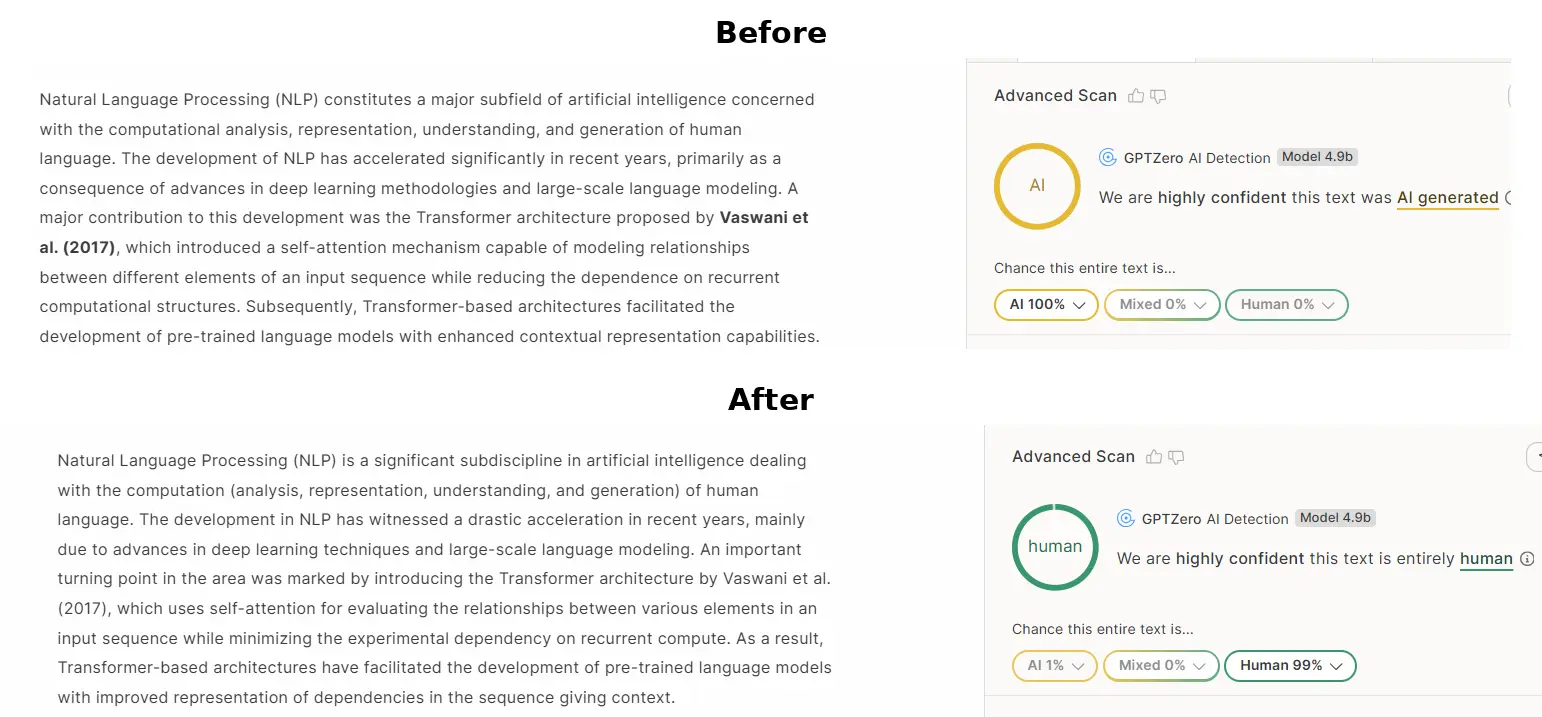
4. Originality.ai Verification: 0% AI Confidence
Originality.ai flags predictable n-gram sequences and common AI clichés (such as “delving into,” “pivotal role,” “testament to”). ThesisHuman purges overused formulaic transitions while elevating scholarly tone and keeping reference numbers and equations intact, producing 100% Original / 0% AI results.