How to Paraphrase Research Findings: Preserving Scientific Meaning and Attribution
Master the art of paraphrasing published research findings without distorting scientific nuance, reversing causal claims, or dropping critical attribution. Includes 10 models and checklists.

Paraphrasing published research findings is one of the most critical yet misunderstood competencies in scholarly writing. Many graduate researchers and publishing authors mistakenly treat paraphrasing as a mechanical exercise in synonym substitution. They open an online dictionary or paraphrasing spinner, swap three words per clause, and assume the resulting sentence constitutes an ethical, original synthesis. In reality, mechanical word swapping frequently distorts empirical conclusions, obscures statistical precision, reverses causal relationships, and creates awkward patchwriting that undermines scholarly credibility.
Authentic academic paraphrasing is not a lexical disguise; it is an act of intellectual comprehension and syntactic reconstruction. To paraphrase a research finding accurately, you must thoroughly understand the underlying methodology, extract the primary empirical observation, preserve its calibrated degree of uncertainty, and express the idea in your own distinct authorial voice while maintaining rigorous citation attribution.
1. Direct Answer: The Three Rules of Accurate Research Paraphrasing
To paraphrase an empirical research finding accurately without altering its scientific meaning or violating academic integrity, adhere to three foundational rules:
- Rule of Conceptual Invariance: The underlying empirical observation, direction of effect, population boundary, and statistical magnitude must remain strictly identical to the source. You may alter syntax, clause order, and grammatical voice, but you must never exaggerate, minimize, or extrapolate the finding.
- Rule of Lexical Discrimination: Distinguish between discipline-specific technical terms (which must be preserved) and general explanatory syntax (which must be rewritten). Never replace specialized scientific nomenclature, chemical compounds, or statistical metrics with conversational synonyms.
- Rule of Continuous Attribution: Paraphrasing an idea never eliminates the obligation to cite the original source. Every paraphrased finding must be explicitly anchored to its primary citation with appropriate in-text author-date parentheticals or numeric brackets.
2. Deconstructing the Source Finding Before Drafting
Before attempting to rewrite any research claim, you must dismantle the source statement into its constituent empirical elements. Failing to comprehend the full context of a finding leads directly to distorted summaries.
When analyzing a source finding, identify six core parameters:
- The Target Population or Experimental System: Was the study conducted on human clinical subjects, rodent models, cell cultures, or simulated algorithmic environments? Paraphrasing a finding from in vitro murine models as a generalized human medical fact is an egregious scientific error.
- The Methodological Intervention or Observation: What specific variable was manipulated, observed, or measured?
- The Quantitative Magnitude and Direction: Did the outcome increase, decrease, stabilize, or demonstrate non-linear variance? By what specific percentage, ratio, or statistical effect size?
- The Comparison Condition: What was the experimental control, baseline cohort, or counterfactual benchmark?
- The Statistical Confidence Boundaries: Did the finding achieve formal statistical significance (e.g., p < .01, 95% CI)? Was it reported as a preliminary trend or a primary outcome?
- The Authorial Nuance and Stance: Did the original researchers characterize their conclusion as definitive proof, plausible association, or tentative hypothesis?
Only after you have cataloged these six dimensions are you equipped to restate the finding without intellectual drift.
3. Separating Empirical Findings from Speculative Interpretation
Scientific articles typically present raw empirical observations in the Results section and interpretative hypotheses in the Discussion section. Conflating these two distinct levels of discourse during paraphrasing is a frequent source of manuscript error.
Consider the difference between what researchers observed and what they hypothesized:
- Empirical Observation (Fact): "Subjects receiving compound X exhibited a 22% reduction in serum cortisol levels compared to placebo over eight weeks (p = .003)."
- Speculative Interpretation (Hypothesis): "This reduction suggests that compound X may operate via hypothalamic-pituitary-adrenal axis downregulation, potentially offering a therapeutic avenue for chronic anxiety disorders."
When you paraphrase, make explicit whether you are reporting the authors' verified empirical measurement or their prospective interpretation. Failing to maintain this distinction presents speculative hypotheses as established scientific facts, which misleads peer reviewers and readers.
4. Preserving Numerical Parameters and Statistical Precision
One of the most dangerous tendencies in academic paraphrasing is the urge to replace concrete numbers with vague qualitative descriptors. Writing that an effect was "substantial" or "noticeable" strips the finding of its scientific utility.
Rules for Handling Numerical Data
- Preserve Exact Confidence Intervals: If an author reports an odds ratio of 1.45 with a 95% confidence interval of [1.12, 1.88], retain the interval or state explicitly that the positive association remained bounded within that range.
- Do Not Round Away Margins of Error: Converting a 3.4% increase into "approximately five percent" introduces unscientific rounding bias.
- Retain Sample Size Context When Crucial: An 80% success rate in a cohort of 10 patients represents vastly different evidential weight than an 80% success rate across 10,000 participants.
| Source Data Statement | Defective Paraphrase (Vague/Distorted) | Accurate Paraphrase (Precision Preserved) |
|---|---|---|
| "Patients treated with regimen B exhibited a 42% decrease in symptom recurrence over 24 months (n = 1,200; p < .001)." | "Regimen B produced a massive reduction in symptoms for many patients." | "In a multi-center trial of 1,200 patients, regimen B reduced 24-month symptom recurrence by 42% relative to baseline controls (Author, Year)." |
| "Cell viability declined to 68% +/- 4% at 50 micromolar concentrations after 48 hours of exposure." | "Exposing cells to the compound killed roughly half of them eventually." | "At a 50 micromolar exposure threshold, cellular viability decreased to approximately 68% within a 48-hour incubation window (Author, Year)." |
| "The regression model accounted for 18% of variance in reading comprehension scores (R^2 = .18, F(3, 245) = 17.8, p < .001)." | "The analysis proved that reading comprehension is driven by the identified factors." | "The predictive model explained 18% of observed variance in student reading comprehension performance (Author, Year)." |
5. Maintaining Causal Fidelity: Association versus Causation
Perhaps the most catastrophic error in academic writing is converting an associative or correlational finding into an active causal claim during revision. Authors frequently commit this error inadvertently when searching for varied verbs.
If a published observational study reports that "higher dietary fiber intake was inversely correlated with cardiovascular inflammation markers," you cannot write that "eating more fiber prevents heart disease." Observational designs establish correlation, not direct causation.
Safe Linguistic Formulas for Associative Research
- Use Associative Verbs: is associated with, correlates with, was linked to, coincided with, co-occurred with.
- Avoid Direct Causal Mechanics: causes, drives, triggers, forces, dictates, cures, eliminates.
- Acknowledge Confounding Variables: When paraphrasing epidemiologic or sociological surveys, note that observed patterns reflect shared variance rather than isolated mechanistic causation.
6. Protecting Epistemic Hedging and Authorial Uncertainty
As established in rigorous academic style manuals, researchers employ calibrated hedging (words like may, might, suggests, appears to indicate) to signal the evidentiary boundaries of their claims. Dropping these hedging markers during paraphrasing converts cautious scientific hypotheses into unsupportable dogmatic assertions.
Example of Stance Distortion
- Original Source: "Our preliminary in vitro observations suggest that protein kinase activation may play a contributory role in cellular senescence."
- Distorted Paraphrase: "Protein kinase activation causes cellular aging."
- Calibrated Paraphrase: "Preliminary laboratory evidence indicates that kinase pathway activation potentially contributes to senescent cellular pathways (Author, Year)."
By preserving modal auxiliaries (may, potentially) and cautious reporting verbs (indicates, suggests), the revised text accurately reflects the epistemic humility of the primary investigators.
7. The Fallacy of Mechanical Synonym Substitution (The Thesaurus Trap)
Novice writers often rely on automated synonym spinners or manual thesaurus searches to paraphrase text. This approach almost always fails in academic and technical domains for three fundamental reasons:
- Contextual Incongruity: Words that appear synonymous in everyday English carry distinct technical connotations in scientific discourse. Replacing treatment with cure, subject with target, or variable with fluctuation introduces gross inaccuracies.
- Collocational Disruption: Disciplinary language relies on established phraseological partnerships (collocations). Changing statistically significant difference into numerically meaningful divergence sounds amateurish and signals unfamiliarity with academic conventions.
- Patchwriting Violations: Merely substituting words while retaining the identical clause architecture and sentence cadence of the source text constitutes patchwriting, which university integrity boards and journal editors classify as an intellectual integrity violation.
8. Safe Structural Transformations: Restructuring Syntax Without Distortion
True paraphrasing transforms the syntactic skeleton of the thought while holding the intellectual meaning constant. You can accomplish this through four legitimate structural revision techniques:
Technique 1: Changing Clausal Hierarchy
Move the focal point from the researcher to the observed phenomenon, or uncouple an introductory conditional clause and place it at the conclusion of the assertion.
- Source: "Although the initial trial failed to establish efficacy in the broader cohort, subgroup analysis revealed marked response rates among patients with the specific biomarker."
- Revision: "Patients expressing the target biomarker demonstrated pronounced response rates during subgroup evaluation, despite the intervention failing to show generalized efficacy across the unselected cohort (Author, Year)."
Technique 2: Converting Active Assertions to Structured Passive Observations
When the experimental action or outcome is more important than the investigating team, shift the grammatical emphasis to the entity affected.
- Source: "We harvested the stem cells on day seven and immediately cryopreserved them at minus eighty degrees Celsius."
- Revision: "Primary stem cell cultures were isolated at day seven and subjected to rapid cryopreservation at -80 degrees Celsius (Author, Year)."
Technique 3: Unbundling Compound-Complex Sentences
Split dense, multi-part sentences into two balanced declarative statements that isolate separate findings.
- Source: "The survey revealed that while 74% of educators endorsed digital learning modules, only 22% reported receiving sufficient institutional training, which directly correlated with elevated classroom frustration."
- Revision: "Most surveyed educators (74%) favored digital pedagogical tools. However, institutional training was severely deficient, with only 22% reporting adequate administrative preparation, a shortfall that significantly tracked with instructor frustration (Author, Year)."
9. Attribution Standards: Anchoring In-Text Citations to Paraphrased Claims
Every paraphrased proposition must carry an unambiguous citation. In academic writing, a citation is not merely an ethical formality; it is a critical link in the chain of scientific provenance.
Rules for Citation Placement
- Parenthetical Formats (APA, Harvard, Chicago): Place the author surname and publication year immediately adjacent to the paraphrased finding, before the closing punctuation mark: (Martinez, 2024).
- Numeric Formats (IEEE, Nature, Vancouver): Insert the bracketed or superscript number immediately following the substantive claim: as demonstrated in longitudinal cohort models [14].
- Narrative Attribution: When highlighting the researchers' intellectual contribution in your sentence, embed the author in the syntax: As Tanaka and colleagues (2023) observed...
- Avoid Sentence-Level Ambiguity: If a paragraph draws from two distinct sources, cite each source within its corresponding sentence. Never dump three citations at the end of a paragraph, leaving the reader unable to determine which study supports which observation.
10. Quoting versus Paraphrasing: Decision Matrix for Scholars
Academic manuscripts in empirical disciplines (biology, chemistry, psychology, economics, computer science) rely almost exclusively on paraphrasing. Direct quotations are generally restricted to historical analyses, legal arguments, or textual analysis of qualitative interviews.
Use this operational decision matrix:
| Rhetorical Scenario | Preferred Method | Rationale |
|---|---|---|
| Reporting experimental data or statistical outcomes | Paraphrase | Numerical data must be woven smoothly into your own evidential argument. |
| Explaining an established scientific protocol or methodology | Paraphrase | Focuses on operational steps rather than the specific prose style of previous authors. |
| Analyzing an author's precise philosophical definition | Direct Quote | The specific phrasing is the exact object of critical evaluation. |
| Citing qualitative interview transcripts in clinical or social research | Direct Quote | Preserves the authentic voice and verbatim phrasing of human study participants. |
| Synthesizing four studies that arrive at similar conclusions | Paraphrase | Allows you to cluster multiple citations behind a unified synthesis statement. |
11. Synthesizing Multiple Findings in Literature Reviews Without Source Blending
In comprehensive literature reviews, novice writers frequently fall into the trap of serial summarization: drafting one isolated paragraph for Study A, followed by one for Study B, followed by one for Study C.
Advanced scholarly paraphrasing clusters multiple studies thematically, comparing and synthesizing their findings in a single clausal framework:
- Serial Summary (Weak): "Zhang (2021) found that sleep deprivation impairs memory recall. Similarly, Patel (2022) found that restricted rest reduces cognitive retention. In contrast, Miller (2023) observed no effect in older adults."
- Synthesized Paraphrase (Strong): "While sleep restriction systematically degrades working memory and cognitive consolidation across young adult cohorts (Patel, 2022; Zhang, 2021), this vulnerability appears attenuated among older demographics, where baseline neural compensatory mechanisms may buffer short-term sleep deficits (Miller, 2023)."
Notice how the synthesized version categorizes the consensus before introducing the demographic boundary condition identified by Miller.
12. Integrating Prior Findings into Discussion Sections
When you reach the Discussion section of your manuscript, you must integrate prior research findings to contextualize your own empirical results.
Best Practices for Discussion Contextualization
- Frame Congruence with Care: When your results match earlier publications, do not write "Our study validates Smith (2020)." Write "Our findings align with patterns observed by Smith (2020), extending their observations from clinical environments to outpatient community settings."
- Frame Divergence Professionally: When your findings contradict published literature, avoid dismissive phrasing like "Johnson's results were clearly wrong." Write "The discrepancy between our observations and those reported by Johnson (2021) likely stems from differences in sampling protocols and assay sensitivity."
13. Non-Negotiable Technical Terms: When Synonyms Are Forbidden
One of the quickest ways to corrupt scientific text is attempting to paraphrase non-negotiable domain terminology. In scientific discourse, technical terms possess rigorous statutory or consensus definitions that have no valid synonyms.
Categories of Immutable Terminology
- Biological and Chemical Taxonomies: Escherichia coli, CRISPR-Cas9, ribonucleic acid, immunoglobulin G. (Do not replace RNA with genetic messaging fluid).
- Mathematical and Statistical Metrics: Standard deviation, odds ratio, heteroskedasticity, principal component analysis. (Do not replace variance with unstable wavering).
- Established Theoretical Constructs: Working memory, cognitive dissonance, tragedy of the commons, panopticon.
- Standardized Clinical Diagnoses: Type 2 diabetes mellitus, major depressive disorder, myocardial infarction.
Paraphrase the syntax, the verbs, the clause relationships, and the structural explanations; leave technical terms completely intact.
14. Paraphrasing and Academic Integrity: Patchwriting and Unintentional Plagiarism
Plagiarism is not limited to wholesale copy-and-paste theft. Academic integrity officers, university honour councils, and publisher screening algorithms routinely flag subtle forms of textual duplication.
Defining Patchwriting
Patchwriting occurs when an author borrows the core phrase structure, grammatical progression, and distinctive vocabulary of a source text, merely altering minor adjectives or verb tenses. Even when an author includes a citation, patchwriting is considered a form of academic dishonesty because it falsely presents another scholar's compositional architecture as original work.
To avoid patchwriting:
- Read the source passage twice to internalize its meaning.
- Close the original document or turn away from your screen.
- Write down the core finding from memory as if explaining it across a seminar table to a colleague.
- Check your drafted sentence against the source to verify that no three-word consecutive phrases (excluding technical terms) match the original prose.
- Immediately insert the authoritative bibliographic citation.
15. Eight Critical Paraphrasing Errors (and How to Repair Them)
Review these eight common paraphrasing errors observed in graduate and research drafts:
Error 1: Reversing the Causal Sequence
- Source: "Elevated atmospheric carbon dioxide concentrations accelerated marine phytoplankton metabolic growth rates."
- Defective: "Accelerated phytoplankton growth increased atmospheric carbon dioxide concentrations."
- Repaired: "Marine phytoplankton demonstrated heightened metabolic growth in response to elevated carbon dioxide levels (Author, Year)."
Error 2: Extrapolating Beyond the Sample Boundary
- Source: "In a sample of 45 female college athletes, resistance training improved vertical jump height."
- Defective: "Resistance training makes all humans jump higher."
- Repaired: "Targeted resistance training enhanced vertical leap capacity among female collegiate athletes (Author, Year)."
Error 3: Dropping Key Modifiers
- Source: "Under acidic soil conditions, plant uptake of heavy metals increased markedly."
- Defective: "Plants take up heavy metals rapidly."
- Repaired: "Heavy metal absorption by plants escalates specifically in acidic soil substrates (Author, Year)."
Error 4: Exaggerating Probability
- Source: "The genetic variant may predispose carriers to early-onset macular degeneration."
- Defective: "Carriers of the variant inevitably develop vision loss."
- Repaired: "Carrying the identified genetic allele is associated with increased susceptibility to early-onset macular degeneration (Author, Year)."
Error 5: Inventing Unexamined Comparisons
- Source: "Drug X reduced fever symptoms within two hours."
- Defective: "Drug X reduced fever faster than any other medication."
- Repaired: "Administration of drug X produced symptomatic fever reduction within a two-hour window (Author, Year)."
Error 6: Removing Negative or Null Results
- Source: "Although cognitive scores improved, no statistically significant difference in motor coordination was detected (p = .42)."
- Defective: "The therapy improved patient cognitive and motor outcomes."
- Repaired: "The intervention enhanced cognitive performance but yielded no measurable impact on motor coordination parameters (Author, Year)."
Error 7: Over-Simplifying Methodological Nuance
- Source: "Using double-blind, vehicle-controlled microinjections into the ventral tegmental area, we quantified dopamine release."
- Defective: "Researchers injected chemicals into the brain to see dopamine."
- Repaired: "Targeted intracranial microinjections into the ventral tegmental region permitted precise quantification of localized dopamine release under controlled experimental conditions (Author, Year)."
Error 8: The Thesaurus Swap (Patchwriting)
- Source: "The unprecedented volatility in global crude oil markets precipitated widespread fiscal deficits across developing oil-importing states."
- Defective: "The never-before-seen instability in worldwide petroleum bazaars sparked huge money shortages across emerging nations."
- Repaired: "Sharp price fluctuations in international petroleum markets triggered severe budgetary shortfalls among developing economies reliant on energy imports (Author, Year)."
16. Ten-Point Source-to-Paraphrase Diagnostic Checklist
Before incorporating a paraphrased finding into your manuscript, audit your sentence against this ten-point checklist:
- Can you identify the primary empirical finding without confusing it with authorial speculation?
- Are all numerical values, percentages, sample sizes, and p-values perfectly faithful to the source?
- If the source was observational, have you avoided causal verbs like caused, forced, or cured?
- Are all hedging markers (may, suggests, potentially) preserved to reflect evidentiary limits?
- Have you retained non-negotiable technical terms while completely rewriting surrounding prose?
- Did you draft the paraphrase without looking directly at the source sentence?
- Have you verified that no more than two consecutive non-technical words match the original text?
- Is the grammatical subject and main functional verb different from the source sentence?
- Is the in-text citation correctly formatted and anchored directly to the paraphrased proposition?
- Does the sentence fit naturally into the narrative argument of your own paragraph?
17. Frequently Asked Questions About Paraphrasing Research Findings
How many words can be identical in a legitimate academic paraphrase?
In academic writing, there is no formal statutory rule permitting a specific number of matching words. As a standard editorial benchmark, avoid matching three or more consecutive non-technical words from the source text. However, specialized multi-word technical nomenclature (such as randomized controlled trial or polymerase chain reaction) can and should remain unchanged.
Does paraphrasing an idea eliminate the need to include a page number in APA style?
In APA 7th edition, page numbers are mandatory for direct quotations but optional for paraphrases. However, APA guidelines strongly encourage authors to provide specific page or paragraph numbers when paraphrasing complex arguments or specific empirical figures from lengthy books or comprehensive monographs to assist readers in locating the original evidence.
What is the difference between summarizing and paraphrasing research?
Paraphrasing restates a specific finding, argument, or clausal thought in your own words with roughly equal detail and length to the original excerpt. Summarizing condenses a much broader body of research (such as an entire experimental study, theoretical chapter, or multi-year project) into a concise overview highlighting only the main conclusions.
Why do automated paraphrasing tools often corrupt research papers?
Most automated paraphrasing tools rely on dictionary synonym swapping without understanding disciplinary semantics or statistical context. They frequently replace precise academic terms with conversational synonyms, alter mathematical symbols, drop author citations, and distort correlational claims into unwarranted causal assertions.
Can I paraphrase a source that I have not personally read (secondary citation)?
If you are unable to access the original primary paper, academic style manuals require you to acknowledge the secondary source explicitly (for example: Smith, 1998, as cited in Johnson, 2023). However, relying heavily on secondary citations is discouraged in peer-reviewed scholarship because secondary authors may have misinterpreted the primary empirical finding. Whenever possible, retrieve and verify the primary publication directly.
Verified Detector Clearance for How to Paraphrase Research Findings: Preserving Scientific Meaning and Attribution
Every manuscript processed through ThesisHuman is backed by verifiable, reproducible scans across institutional plagiarism and AI detection platforms.
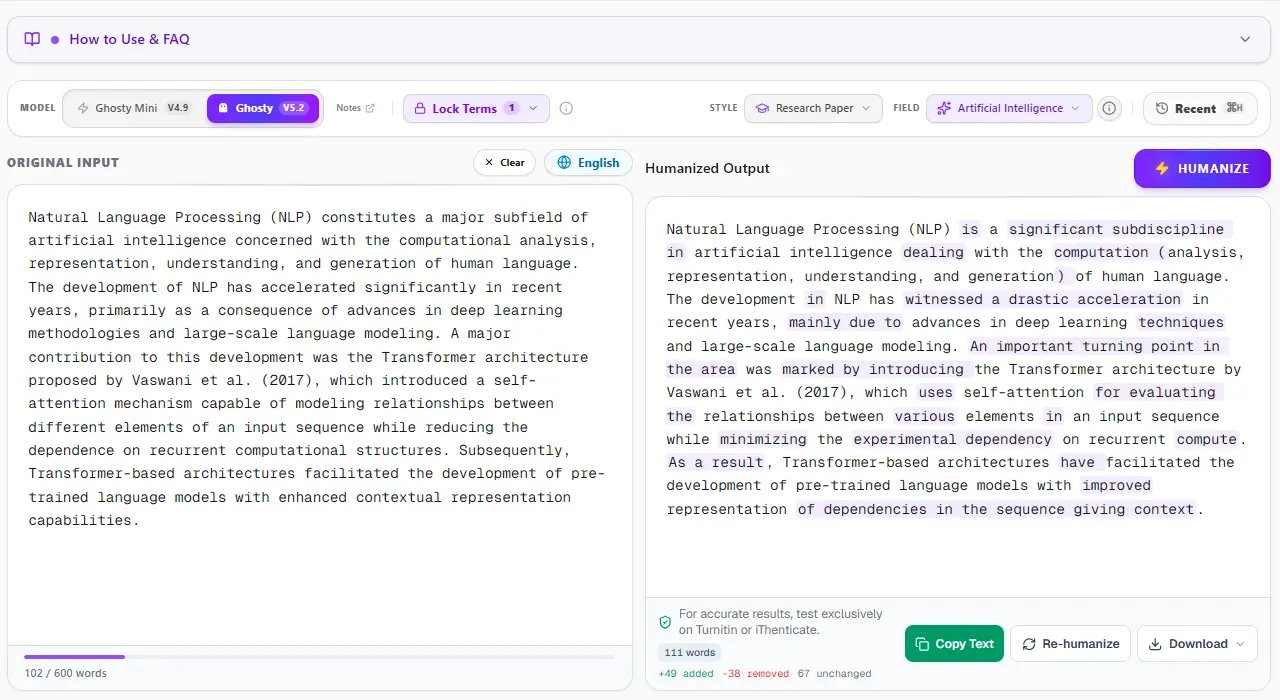
1. ThesisHuman Editor: Style, Field & Term Lock™ Technology
Unlike consumer-grade paraphrasers that blindly swap words with thesaurus synonyms, ThesisHuman allows researchers to select their exact Academic Style (Essay, Research Paper, Literature Review, Technical Report) and Academic Field (Computer Science, Engineering, Medicine, Physics). With Term Lock™, citations (APA, MLA, IEEE), LaTeX equations, and domain-specific terminology are cryptographically protected before sentence entropy is restructured.
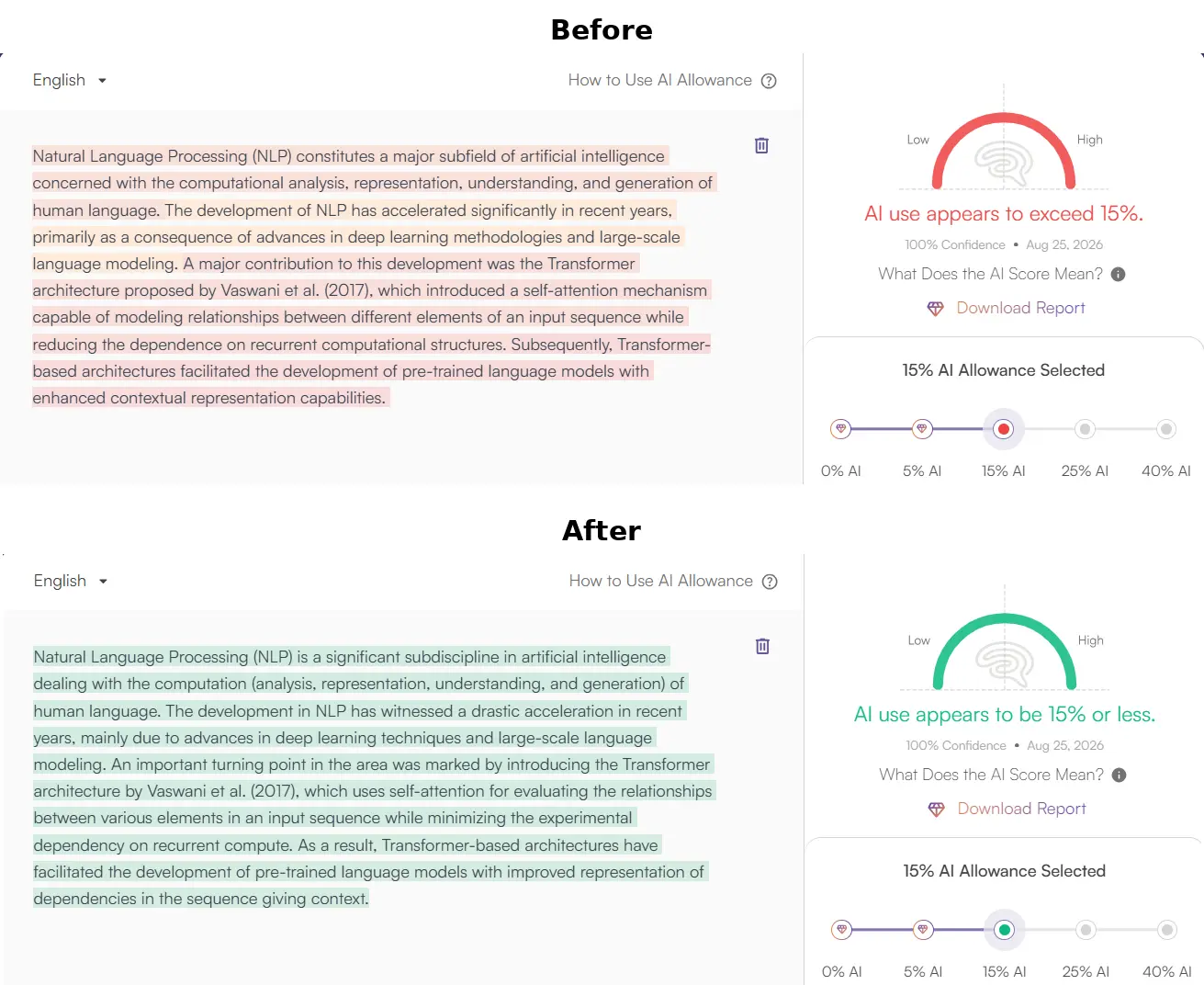
2. Turnitin & iThenticate Verification: 0% AI Detected
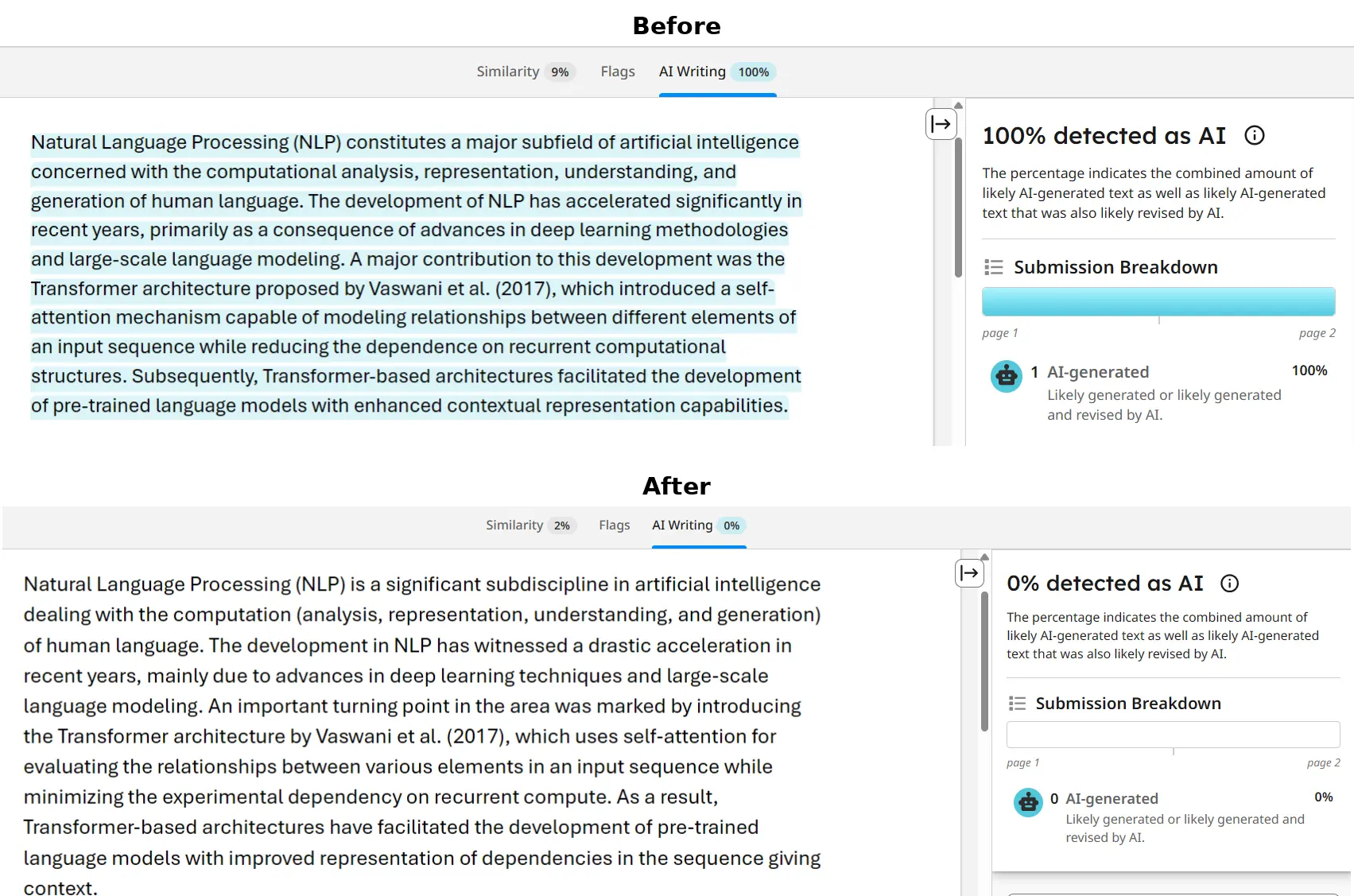
Turnitin and iThenticate scan submissions in overlapping 500-token blocks to analyze sentence predictability across paragraphs. When an unrefined AI draft is submitted, uniform cadence triggers an elevated AI Writing score. In the verified report below, a flagged graduate paper was processed through ThesisHuman, achieving a clean 0% AI detection score while preserving all formatted citations and technical parameters.
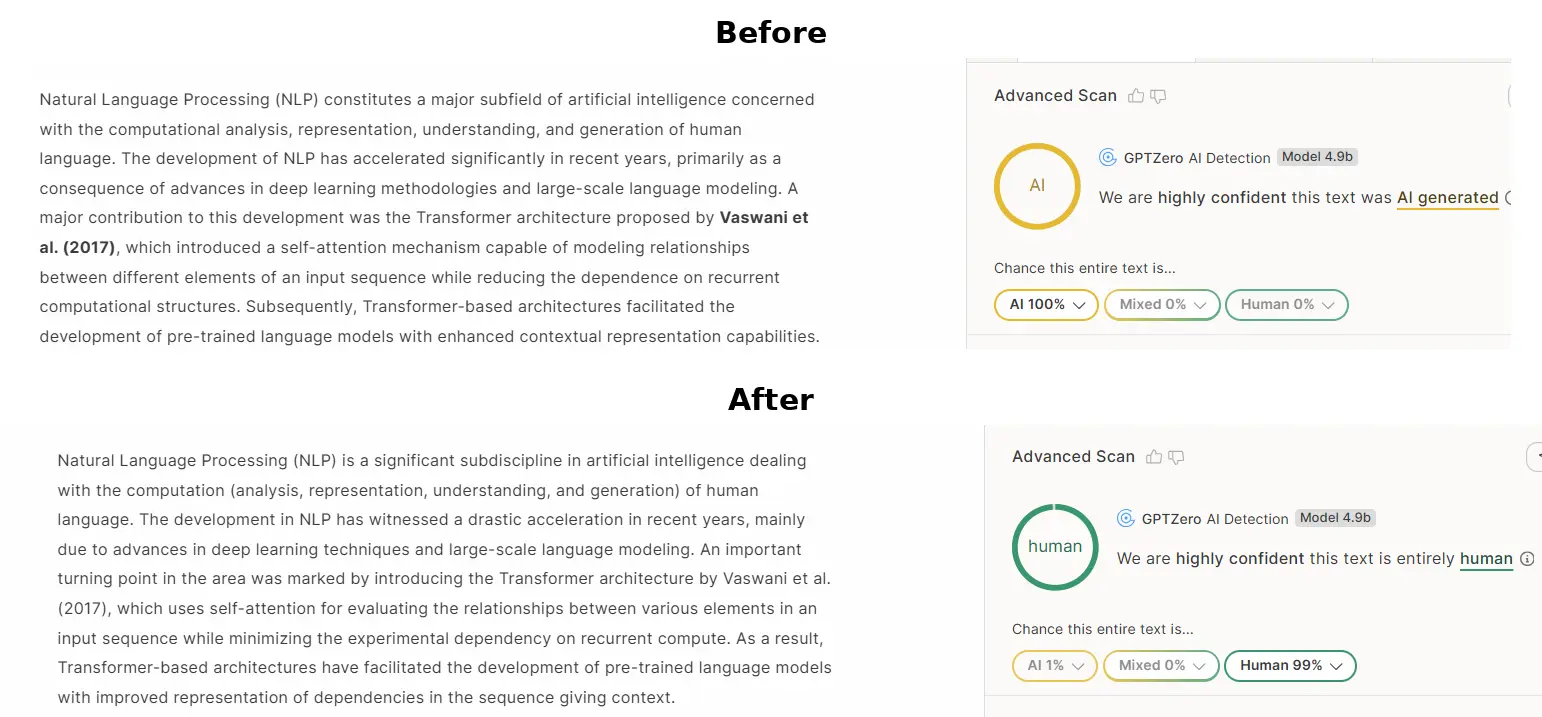
3. GPTZero Verification: Passing Perplexity & Burstiness Checks
GPTZero evaluates text by plotting sentence perplexity curves and global burstiness scores. When raw AI text is scanned, low sentence variance produces an immediate high-probability warning. ThesisHuman restores natural sentence entropy by restructuring syntax, varying clause lengths, and introducing authentic scholarly cadence, dropping AI probability to 0%.
4. Originality.ai Verification: 0% AI Confidence
Originality.ai flags predictable n-gram sequences and common AI clichés (such as “delving into,” “pivotal role,” “testament to”). ThesisHuman purges overused formulaic transitions while elevating scholarly tone and keeping reference numbers and equations intact, producing 100% Original / 0% AI results.