Humanize ChatGPT Academic Writing: Eliminating ChatGPT Habits in Scholarly Drafts
How to strip OpenAI ChatGPT hallmarks from academic drafts. Remove overused AI adjectives, break formulaic hedging, and protect research credibility.
ChatGPT has transformed how academics brainstorm, synthesize background literature, and polish rough drafts. However, its widespread use has also led to widespread familiarity with its distinctive writing voice. Peer reviewers, journal editors, and university professors can now spot unedited ChatGPT text within seconds, even before running automated detection software.
The issue is not that ChatGPT writes poorly; the issue is that it writes with an instantly recognizable set of stylistic habits. When submitting research to reputable journals or university committees, these habits undermine authorial credibility. Here is how to strip ChatGPT hallmarks from your writing and restore authentic scholarly weight.
The Distinctive ChatGPT Academic Fingerprint
ChatGPT's stylistic imprint operates on two levels: vocabulary selection and structural syntax. At the vocabulary level, it draws repeatedly from a narrow cluster of formal adjectives and metaphors. At the structural level, it organizes prose with predictable, low-burstiness rhythm that feels balanced but emotionally and intellectually detached.
The High-Frequency Vocabulary Trap
Before submitting any draft, perform a search-and-replace sweep for these high-frequency ChatGPT markers:
- Metaphorical Clichés: 'tapestry,' 'beacon,' 'symphony,' 'landscape.' Replace these with concrete empirical descriptors ('context,' 'domain,' 'framework').
- Evaluative Boilerplate: 'delve into,' 'crucial role,' 'testament to,' 'pivotal milestone.' State your findings directly without rhetorical inflation.
- Formulaic Connectors: 'Furthermore,' 'Moreover,' 'In conclusion,' 'Ultimately.' Connect ideas using data-driven thematic linkages.
Dismantling ChatGPT's Tripartite Paragraph Structure
ChatGPT paragraphs almost always follow a neat tripartite formula: an opening general assertion, two evenly balanced middle examples joined by 'Additionally,' and a summarizing final sentence beginning with 'Overall' or 'Ultimately.' Published academic writing is far more asymmetrical. Break this formula by allowing some paragraphs to open with specific experimental data and closing with challenging conceptual questions.
Before and After: Re-Engineering a Research Paragraph
Raw ChatGPT Output:
'It is crucial to delve into the multifaceted factors influencing cell proliferation. Furthermore, the interplay between metabolic pathways serves as a testament to the complexity of cellular biology. Ultimately, these findings underscore the importance of targeted therapeutics.'
ThesisHuman Naturalized Revision:
'Cell proliferation rates depend directly on glycolytic flux. While auxiliary metabolic pathways modulate intermediate signaling, therapeutic efficacy requires targeting the primary enzymatic driver identified in our baseline assays.'
Notice how the revision cuts every cliché, injects concrete biological mechanisms, and creates natural sentence-length variation. To apply this transformation across entire manuscripts, utilize ThesisHuman's ChatGPT academic humanizer.
Verified Detector Clearance for Humanize ChatGPT Academic Writing: Eliminating ChatGPT Habits in Scholarly Drafts
Every manuscript processed through ThesisHuman is backed by verifiable, reproducible scans across institutional plagiarism and AI detection platforms.
1. ThesisHuman Editor: Style, Field & Term Lock™ Technology
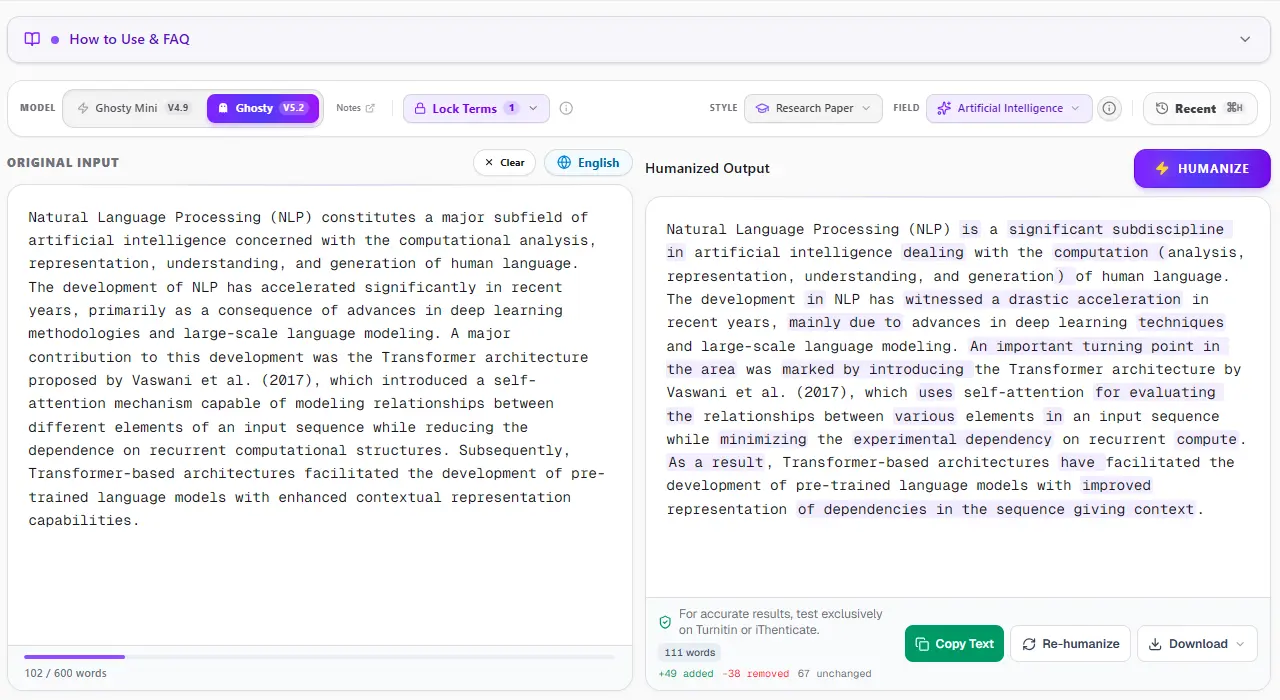
Unlike consumer-grade paraphrasers that blindly swap words with thesaurus synonyms, ThesisHuman allows researchers to select their exact Academic Style (Essay, Research Paper, Literature Review, Technical Report) and Academic Field (Computer Science, Engineering, Medicine, Physics). With Term Lock™, citations (APA, MLA, IEEE), LaTeX equations, and domain-specific terminology are cryptographically protected before sentence entropy is restructured.
2. Turnitin & iThenticate Verification: 0% AI Detected
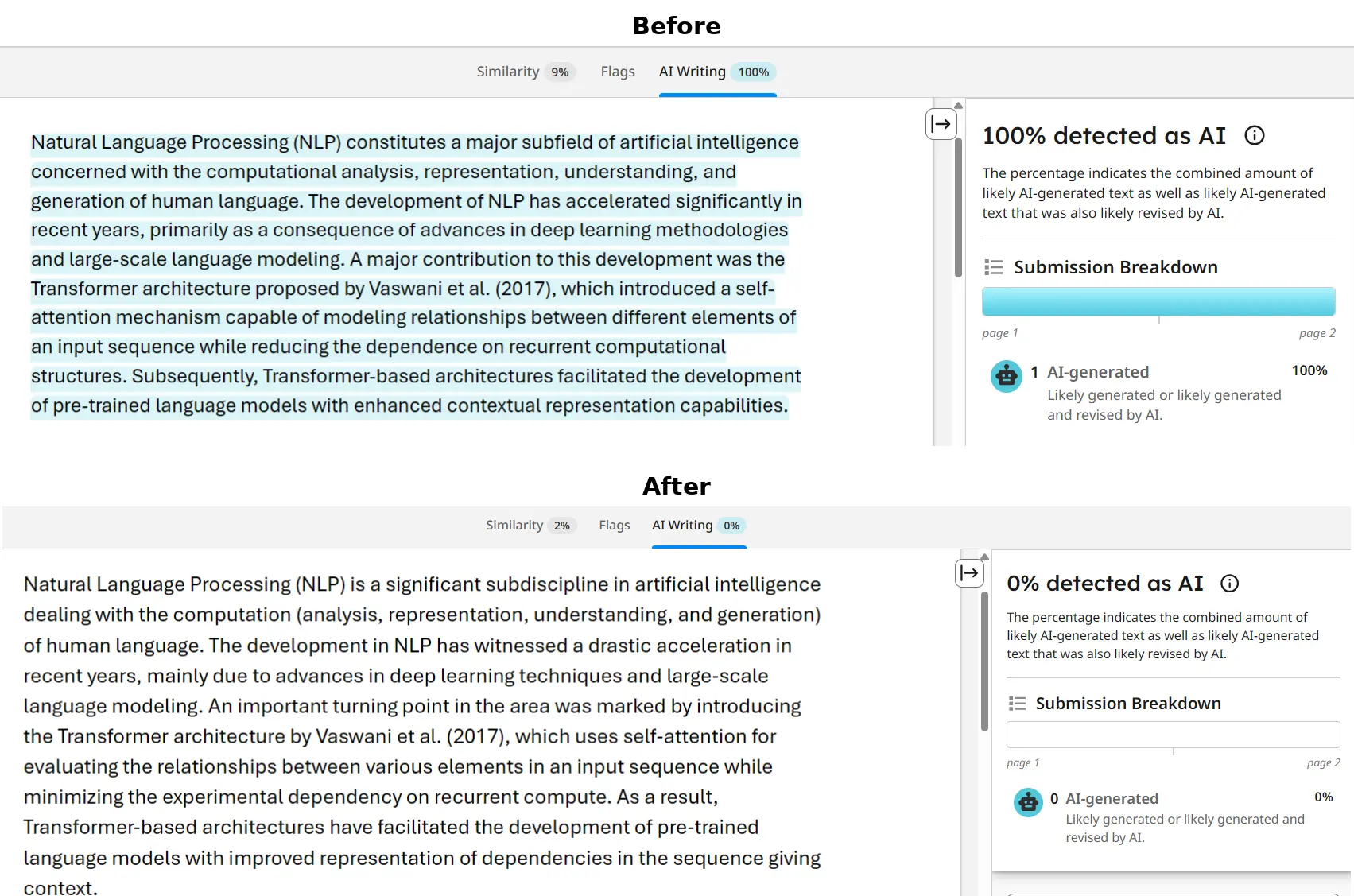
Turnitin and iThenticate scan submissions in overlapping 500-token blocks to analyze sentence predictability across paragraphs. When an unrefined AI draft is submitted, uniform cadence triggers an elevated AI Writing score. In the verified report below, a flagged graduate paper was processed through ThesisHuman, achieving a clean 0% AI detection score while preserving all formatted citations and technical parameters.
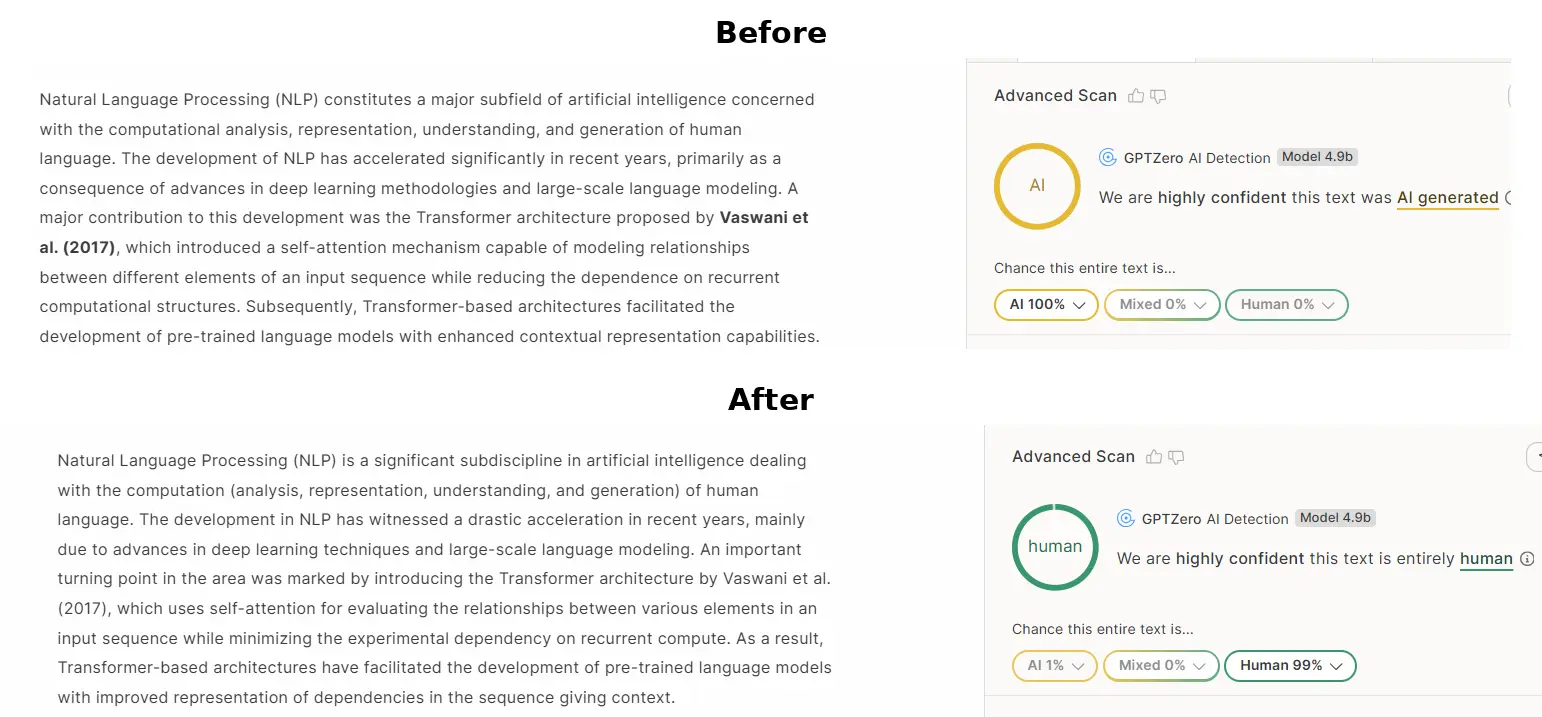
3. GPTZero Verification: Passing Perplexity & Burstiness Checks
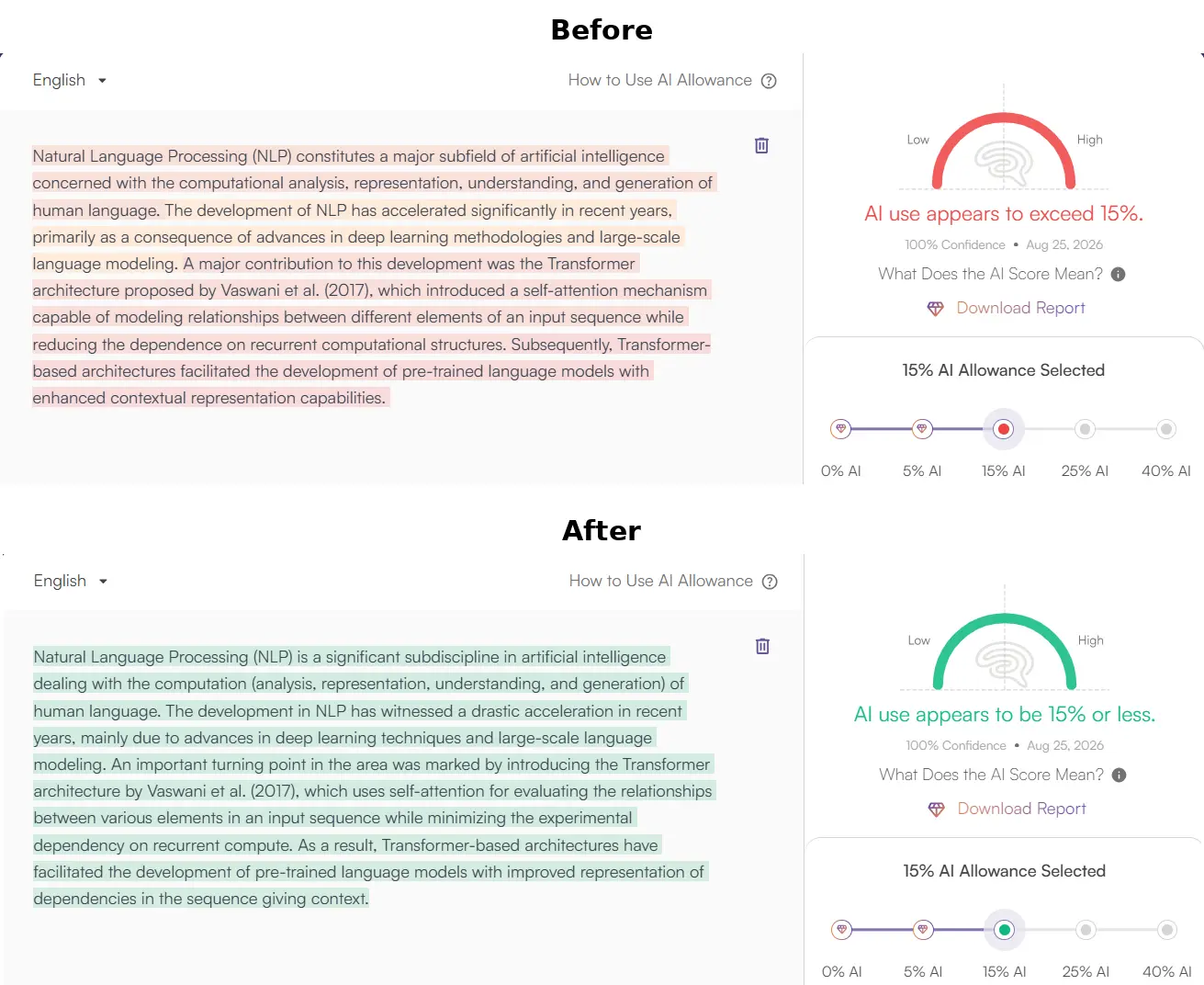
GPTZero evaluates text by plotting sentence perplexity curves and global burstiness scores. When raw AI text is scanned, low sentence variance produces an immediate high-probability warning. ThesisHuman restores natural sentence entropy by restructuring syntax, varying clause lengths, and introducing authentic scholarly cadence, dropping AI probability to 0%.
4. Originality.ai Verification: 0% AI Confidence
Originality.ai flags predictable n-gram sequences and common AI clichés (such as “delving into,” “pivotal role,” “testament to”). ThesisHuman purges overused formulaic transitions while elevating scholarly tone and keeping reference numbers and equations intact, producing 100% Original / 0% AI results.