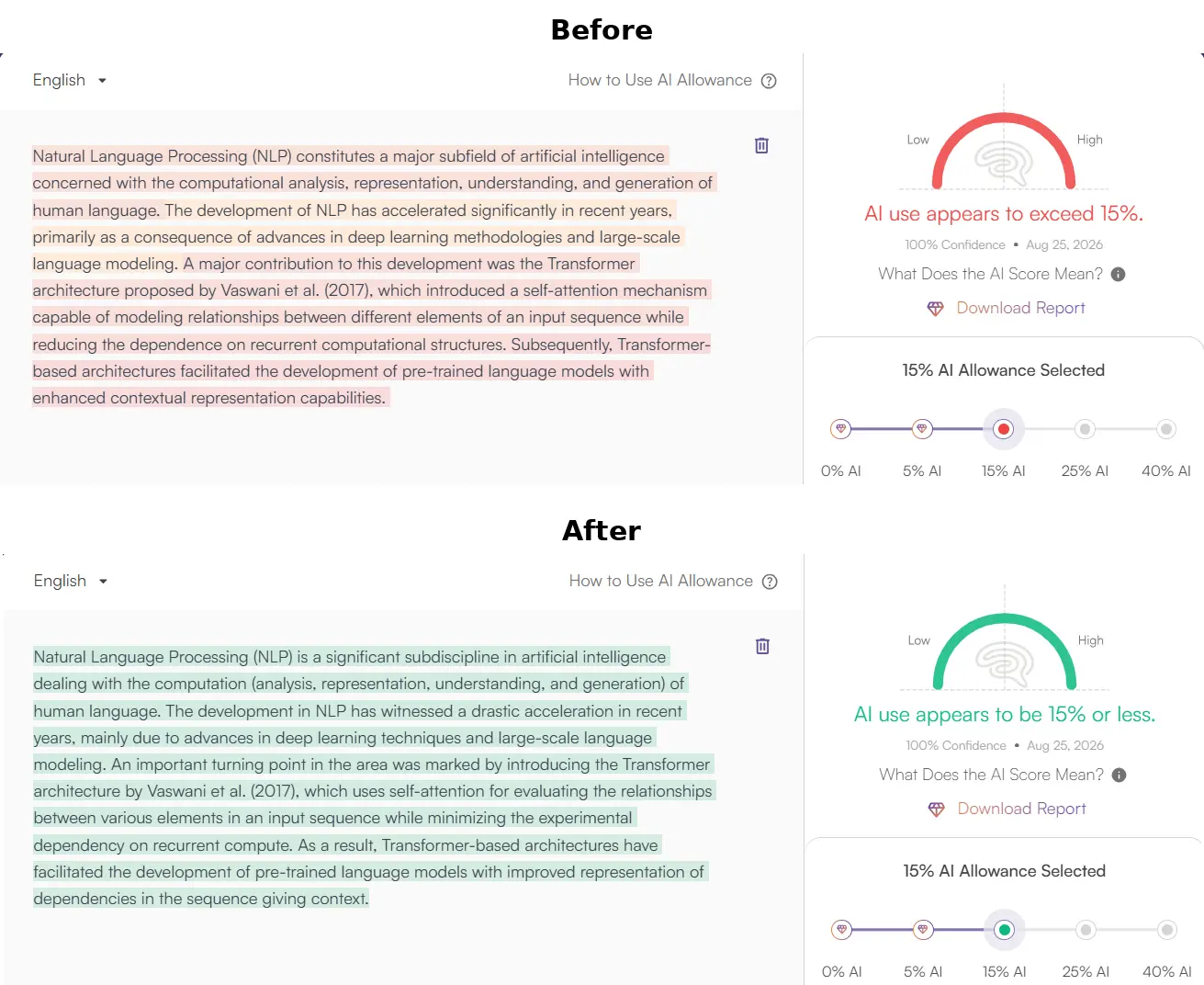
Is ZeroGPT Accurate for College Papers? False Positives, Detection Limits, and Student Rights
Understand how ZeroGPT works, why it differs from GPTZero, and why free online scanners produce high false positive rates on legitimate student essays.

Students across university campuses frequently face anxiety when submitting coursework, fearing that their authentic writing will trigger an automated AI scanner. Among the most widely searched detection websites is ZeroGPT. Students regularly paste their completed drafts into the platform to check whether their essays appear "safe" before formal submission.
However, relying on free online scanners presents significant risks. Flawed methodology, volatile percentage swings, and confusion between competing brands can mislead students and create unfounded panic. This article explains how ZeroGPT operates, how it differs from institutional tools, and what protections students have when facing false allegations.
ZeroGPT vs GPTZero: Clarifying the Confusion
A widespread point of confusion among college students is the difference between ZeroGPT and GPTZero. Despite nearly identical names, they are entirely separate entities with distinct business models and underlying architectures:
- ZeroGPT: A free, ad-supported consumer web utility (zerogpt.com) that provides fast percentage scores and highlighted spans. It has no affiliation with academic institutions or enterprise learning management systems.
- GPTZero: A venture-backed detection software company (gptzero.me) founded by Edward Tian, which sells API subscriptions and educator integrations based on perplexity and burstiness metrics.
Pasting a paper into ZeroGPT tells you nothing about how Turnitin, Canvas LMS, or GPTZero will evaluate the document. Each tool uses proprietary statistical baselines that frequently contradict one another.
How Free Scanners Evaluate Student Writing
Free detection scanners operate by analyzing text against probabilistic patterns associated with large language models. Rather than querying an index of student papers, they calculate the likelihood of specific word sequences and grammatical transitions.
Because these services operate with limited server budgets, their models often rely on aggressive, simplified heuristics. Passages featuring formal transitions, balanced clauses, and structured topic sentences frequently receive high percentage flags simply because they follow the standard academic conventions taught in high school and college composition courses.
Documented False Positive Concerns on Formal Prose
Online student forums and academic integrity discussions are filled with examples of historical documents, religious texts, and verified human essays receiving high AI probability scores on free scanners. Several systemic factors cause these false positives:
- Rigid Five-Paragraph Essay Structures: Standard introductory and concluding formats mimic the structured templates of generative language models.
- Formal Scholarly Connectors: Words like "consequently," "moreover," and "furthermore" are heavily weighted in simplified detection classifiers.
- Non-Native English Nuances: International scholars who rely on concise, standardized sentence frames are disproportionately flagged by automated probability tools.
Institutional Evidence Standards and University Honor Boards
A common fear among undergraduates is that an instructor will paste an essay into a free web scanner, see a 40% or 60% AI score, and immediately fail or expel them. In practice, institutional policies established across major universities strictly limit how detection software can be used:
Academic senate policies and university honor councils widely hold that an automated AI detector score cannot serve as the sole basis for an academic dishonesty finding. Because detectors are probabilistic estimators with documented error rates, faculty are instructed to treat flags as prompts for an educational conversation rather than definitive proof of cheating.
Practical Steps When Your Authentic Essay Is Flagged
If an instructor questions the authenticity of your paper based on an automated scanner report, remain calm and follow this evidence-based defense strategy:
- Produce Your Version History: Export the timestamped version history from Google Docs or Word. Showing hours of incremental edits, deletions, and structural revisions provides undeniable proof of human composition.
- Share Your Primary Research Trail: Present your bibliographic sources, highlighted PDF readings, browser history, and preliminary outlines.
- Offer an In-Person Walkthrough: Offer to walk the instructor through your essay paragraph by paragraph, explaining your analytical reasoning and cited sources.
When editing assisted drafts, ensure your writing reflects varied human cadence rather than repetitive machine structures. Learn more about how academic text humanizers restore natural sentence rhythm while protecting your citations.
Verified Detector Clearance for Is ZeroGPT Accurate for College Papers? False Positives, Detection Limits, and Student Rights
Every manuscript processed through ThesisHuman is backed by verifiable, reproducible scans across institutional plagiarism and AI detection platforms.
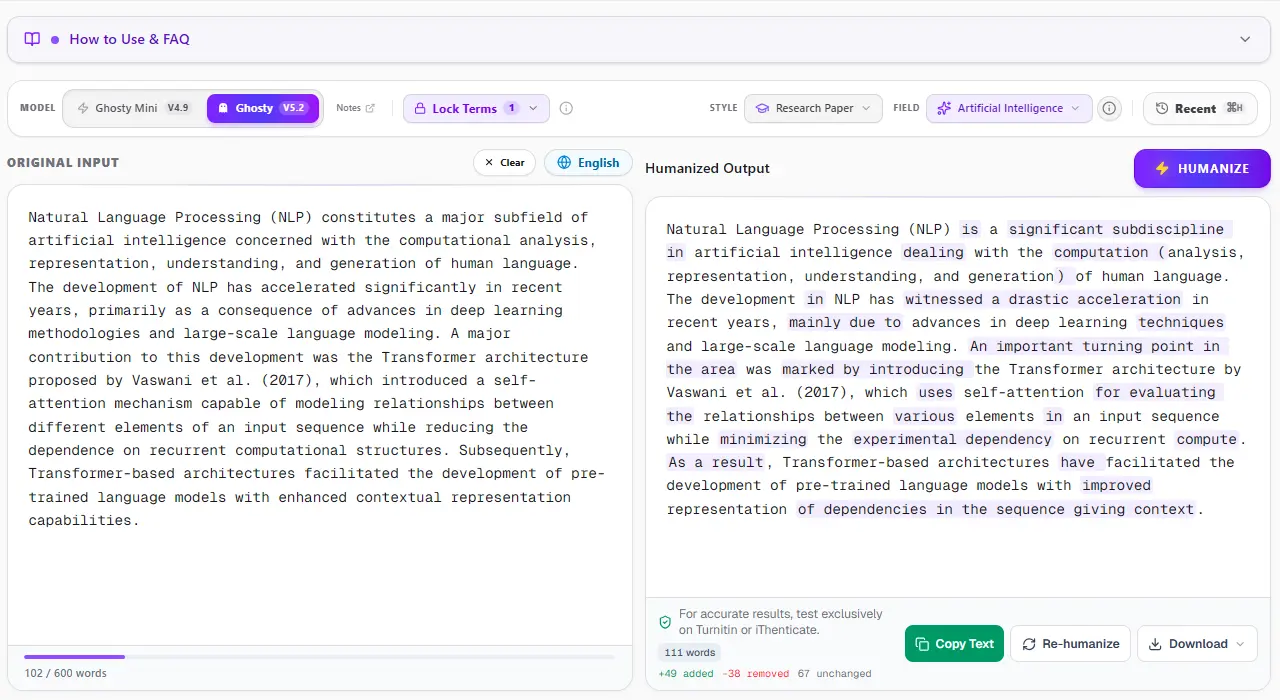
1. ThesisHuman Editor: Style, Field & Term Lock™ Technology
Unlike consumer-grade paraphrasers that blindly swap words with thesaurus synonyms, ThesisHuman allows researchers to select their exact Academic Style (Essay, Research Paper, Literature Review, Technical Report) and Academic Field (Computer Science, Engineering, Medicine, Physics). With Term Lock™, citations (APA, MLA, IEEE), LaTeX equations, and domain-specific terminology are cryptographically protected before sentence entropy is restructured.
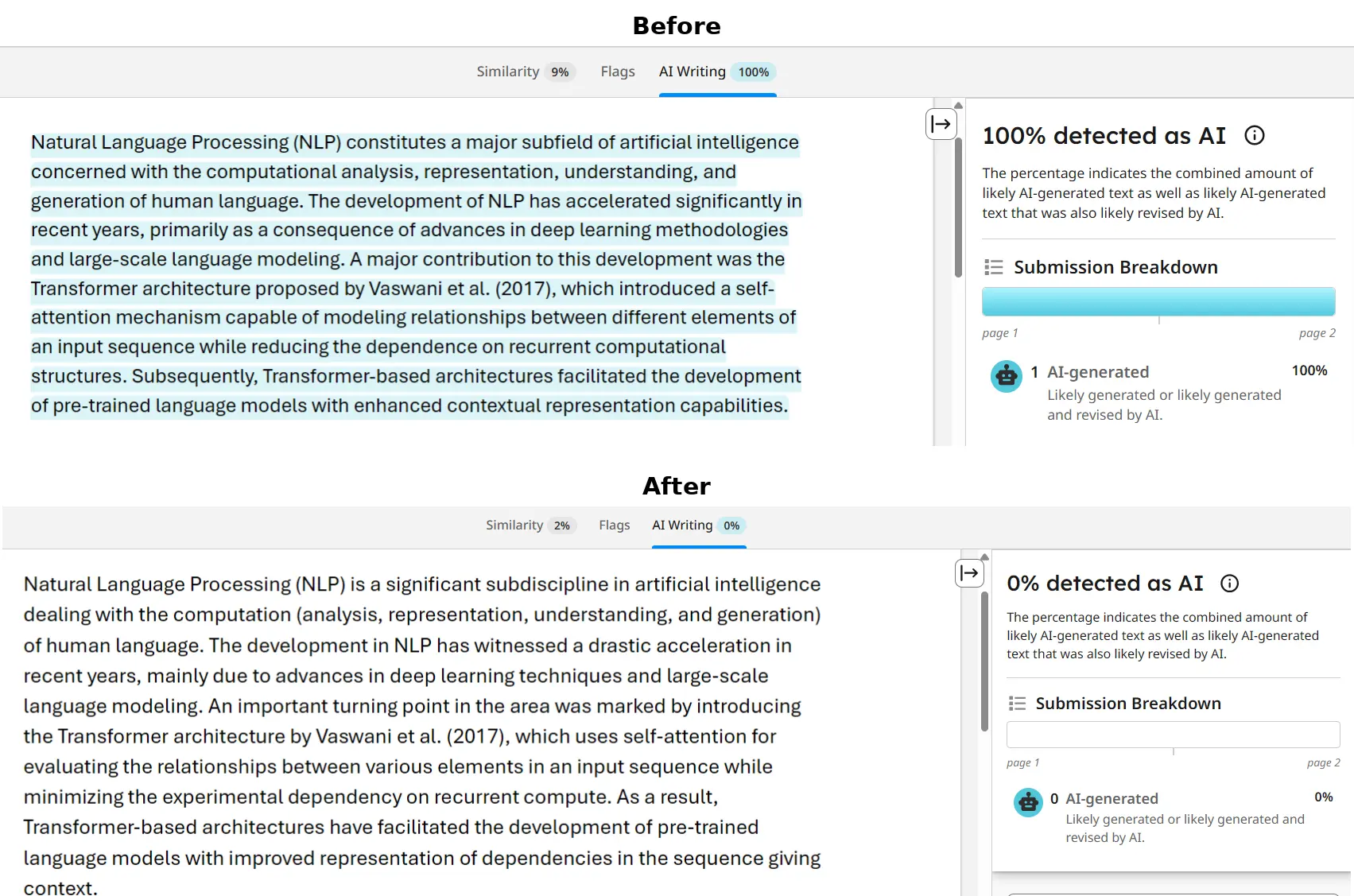
2. Turnitin & iThenticate Verification: 0% AI Detected
Turnitin and iThenticate scan submissions in overlapping 500-token blocks to analyze sentence predictability across paragraphs. When an unrefined AI draft is submitted, uniform cadence triggers an elevated AI Writing score. In the verified report below, a flagged graduate paper was processed through ThesisHuman, achieving a clean 0% AI detection score while preserving all formatted citations and technical parameters.
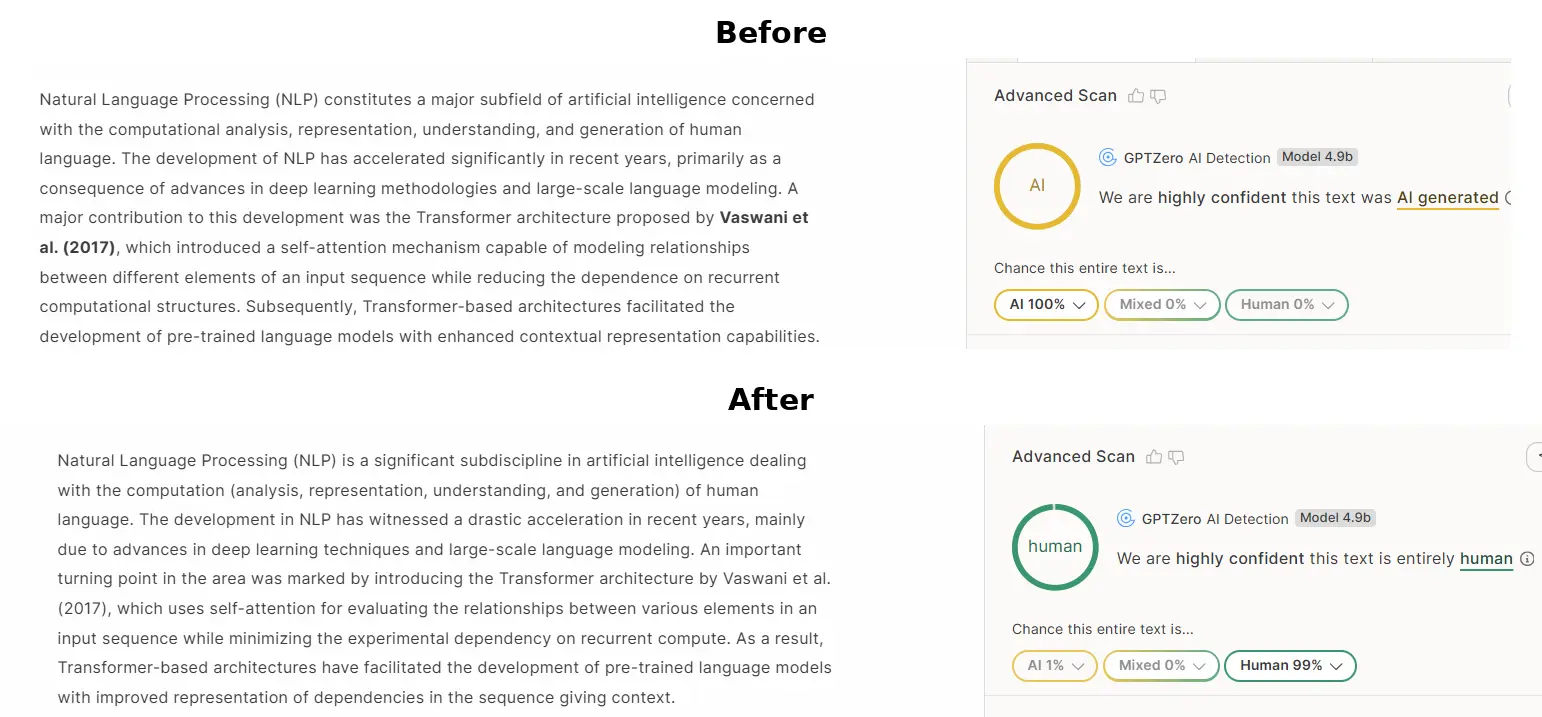
3. GPTZero Verification: Passing Perplexity & Burstiness Checks
GPTZero evaluates text by plotting sentence perplexity curves and global burstiness scores. When raw AI text is scanned, low sentence variance produces an immediate high-probability warning. ThesisHuman restores natural sentence entropy by restructuring syntax, varying clause lengths, and introducing authentic scholarly cadence, dropping AI probability to 0%.
4. Originality.ai Verification: 0% AI Confidence
Originality.ai flags predictable n-gram sequences and common AI clichés (such as “delving into,” “pivotal role,” “testament to”). ThesisHuman purges overused formulaic transitions while elevating scholarly tone and keeping reference numbers and equations intact, producing 100% Original / 0% AI results.