Do Teachers Use Turnitin? Adoption Rates, High School vs. College & Grading Mechanics
Do teachers use Turnitin? Explore how high schools and universities deploy Turnitin for plagiarism and AI detection, how reports are graded, and author tips.
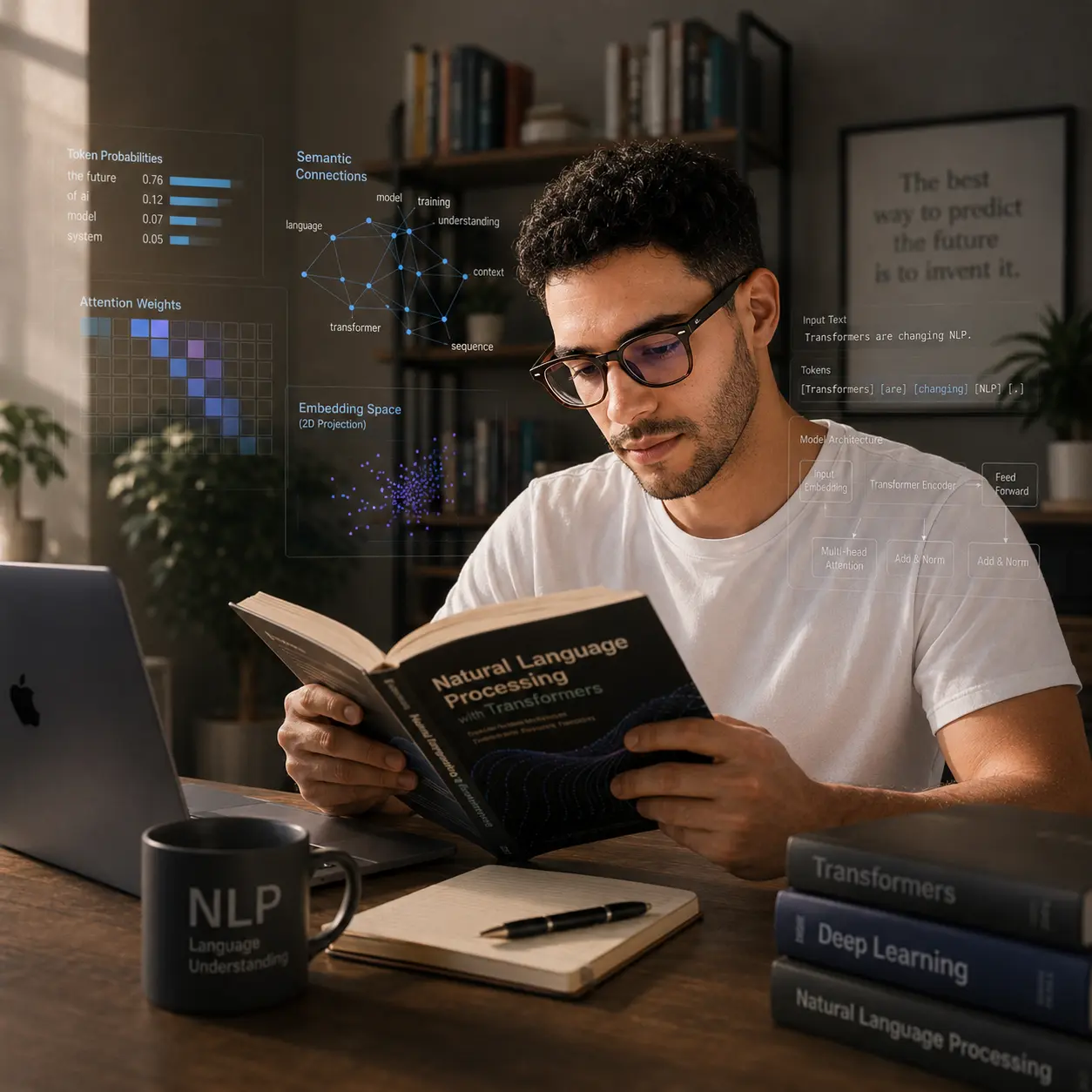
Yes, millions of teachers, high school instructors, and university professors use Turnitin daily. Over 16,000 educational institutions across 140 countries license Turnitin to evaluate student assignments, term papers, Master's theses, and PhD dissertations for both text similarity (plagiarism detection) and AI-generated writing probability.
However, how instructors deploy Turnitin varies significantly between high school AP classes and university research departments. Understanding how teachers evaluate Turnitin SpeedGrader reports enables authors to format their work effectively and avoid unnecessary flagging.
Direct Answer: How Widely Do Teachers and Professors Use Turnitin?
Turnitin is the enterprise standard in academic evaluation. In higher education, approximately 85% of universities in North America, the UK, and Australia license Turnitin directly through Canvas, Blackboard, Moodle, or Brightspace LMS integrations. In high schools, adoption sits around 45%, heavily concentrated in Advanced Placement (AP) and International Baccalaureate (IB) courses.
Learn more about what AI detectors colleges use across higher education.
High School vs. University Adoption Rates: An Empirical Comparison
| Academic Level | Adoption Rate | Primary Deployment Context |
|---|---|---|
| High Schools (Secondary) | ~45% Adoption | AP, IB, Honors English, and Senior Capstone projects |
| Universities (Higher Ed) | ~85% Adoption | Automated Canvas/Blackboard LMS background scanning on all course uploads |
How Instructors Grade with Turnitin SpeedGrader & Canvas Integrations
When an instructor reviews an assignment, Turnitin presents three main evaluation panels:
- 1. Similarity Index Score (%): Displays text matching Turnitin's database of published journals, websites, and student papers. Experienced teachers understand that papers with heavy quotes or reference lists naturally show 15–25% similarity.
- 2. AI Writing Indicator (%): Surfaces an independent neural network probability metric estimating synthetic origin based on perplexity and burstiness. Read our technical guide on how Turnitin evaluates ChatGPT output.
- 3. Exclusion Settings: Allows instructors to toggle filters excluding bibliographies, direct quotations, and small match phrases (e.g., under 8 words) to arrive at a clean score.
What Teachers Look for Beyond Automated Scores: Voice, Tone, and Depth
Professors do not evaluate papers based solely on automated numbers; they assess qualitative writing signals:
- Abrupt Voice Shifts: Sudden jumps from casual class writing to inflated, generic prose indicate external generation.
- Generic or Hallucinated Citations: LLM text often includes vague citations without specific page numbers or references real-sounding books that do not exist.
- Alignment with Class Lectures: Faculty check whether essays incorporate specific theories, case studies, and reading materials assigned during lectures.
Best Practices for Authors Submitting Papers to Turnitin-Evaluated Courses
To ensure your papers pass instructor evaluation smoothly:
- Always include exact APA, MLA, or IEEE citations for borrowed concepts.
- Maintain Google Docs version history or Word revision tracks.
- Use ThesisHuman to naturalize draft cadence while locking citations.
Verified Detector Clearance for Do Teachers Use Turnitin? Adoption Rates, High School vs. College & Grading Mechanics
Every manuscript processed through ThesisHuman is backed by verifiable, reproducible scans across institutional plagiarism and AI detection platforms.
1. ThesisHuman Editor: Style, Field & Term Lock™ Technology
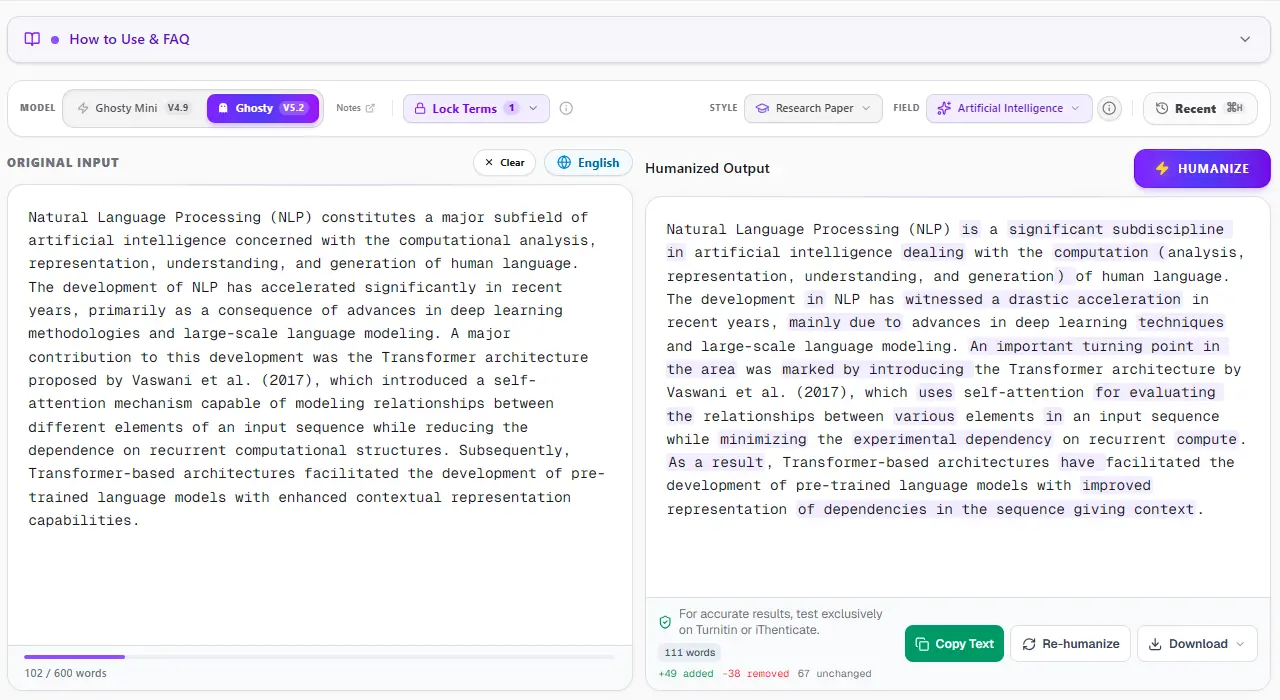
Unlike consumer-grade paraphrasers that blindly swap words with thesaurus synonyms, ThesisHuman allows researchers to select their exact Academic Style (Essay, Research Paper, Literature Review, Technical Report) and Academic Field (Computer Science, Engineering, Medicine, Physics). With Term Lock™, citations (APA, MLA, IEEE), LaTeX equations, and domain-specific terminology are cryptographically protected before sentence entropy is restructured.
2. Turnitin & iThenticate Verification: 0% AI Detected
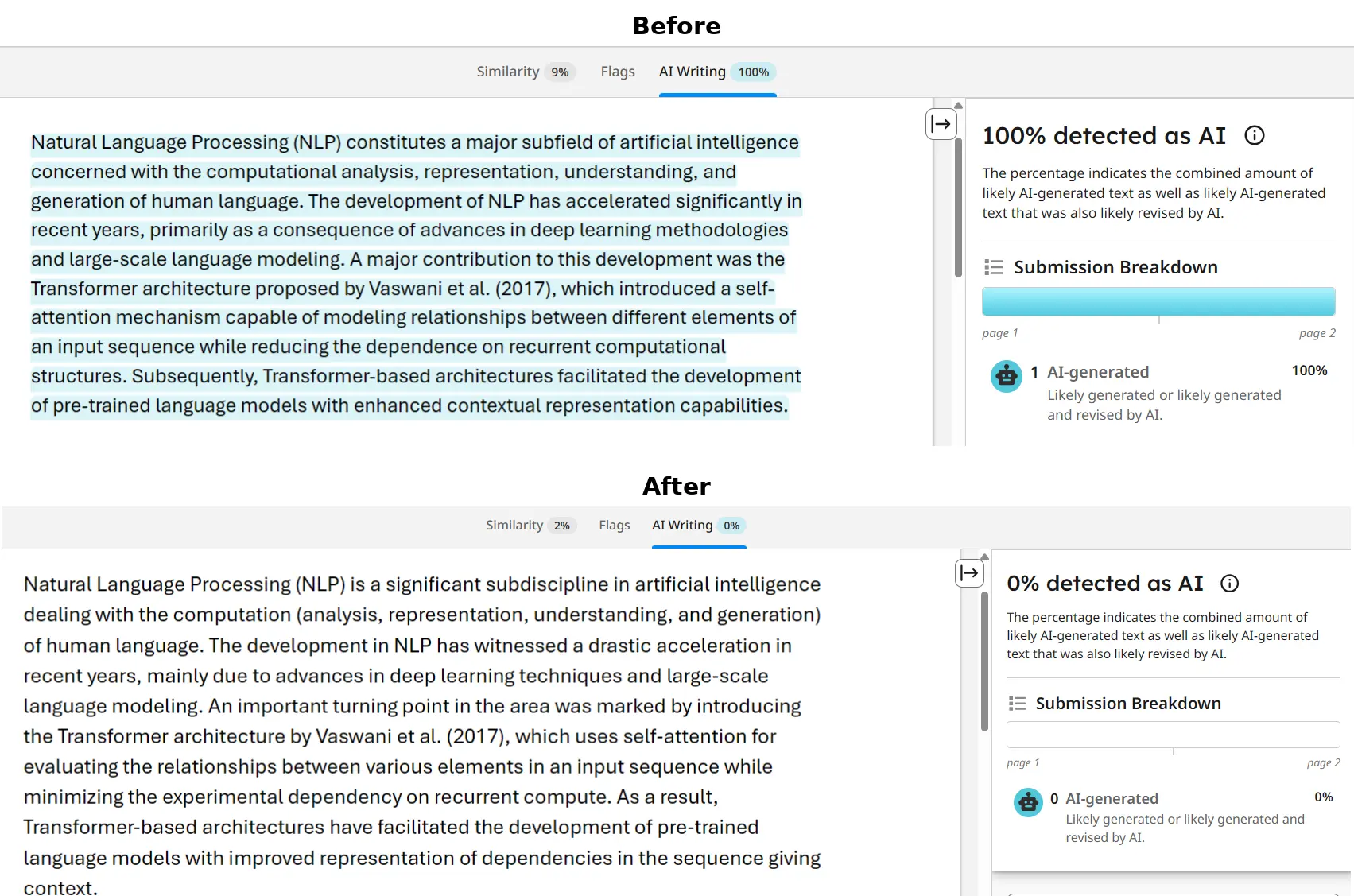
Turnitin and iThenticate scan submissions in overlapping 500-token blocks to analyze sentence predictability across paragraphs. When an unrefined AI draft is submitted, uniform cadence triggers an elevated AI Writing score. In the verified report below, a flagged graduate paper was processed through ThesisHuman, achieving a clean 0% AI detection score while preserving all formatted citations and technical parameters.
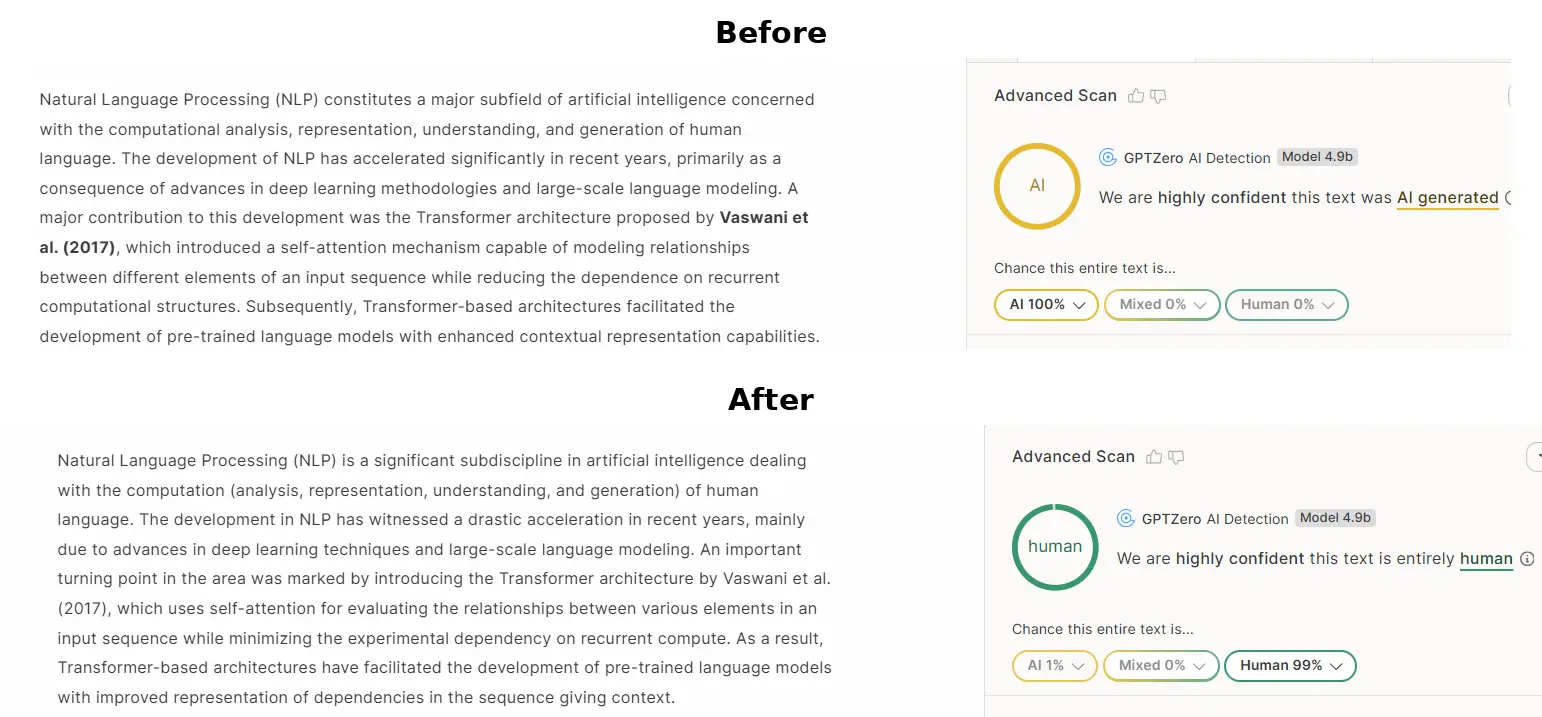
3. GPTZero Verification: Passing Perplexity & Burstiness Checks
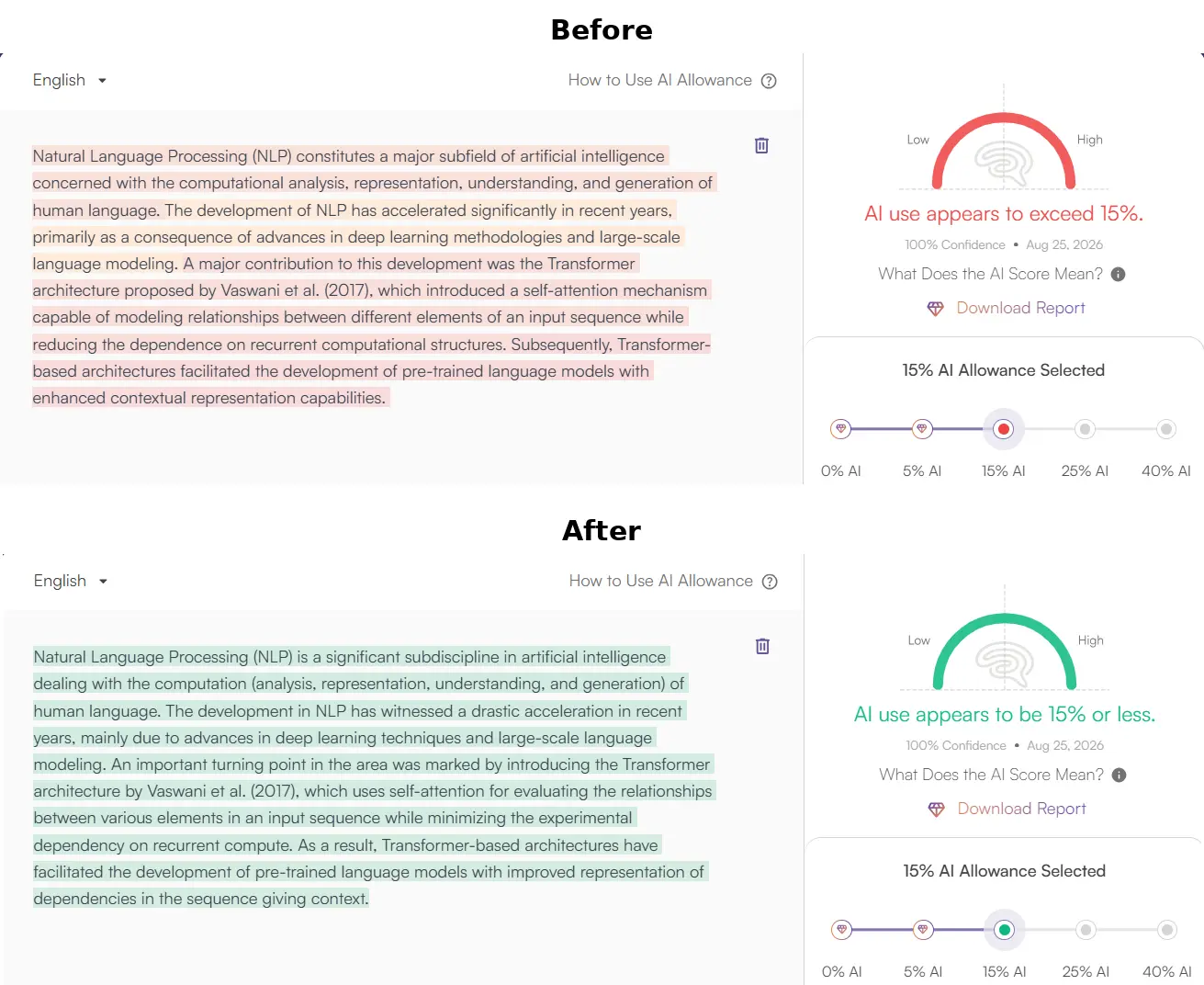
GPTZero evaluates text by plotting sentence perplexity curves and global burstiness scores. When raw AI text is scanned, low sentence variance produces an immediate high-probability warning. ThesisHuman restores natural sentence entropy by restructuring syntax, varying clause lengths, and introducing authentic scholarly cadence, dropping AI probability to 0%.
4. Originality.ai Verification: 0% AI Confidence
Originality.ai flags predictable n-gram sequences and common AI clichés (such as “delving into,” “pivotal role,” “testament to”). ThesisHuman purges overused formulaic transitions while elevating scholarly tone and keeping reference numbers and equations intact, producing 100% Original / 0% AI results.