What AI Detectors Do Colleges Use in 2026? Top Tools & Institutional Comparison
An empirical survey of higher education AI detection software: Turnitin, Copyleaks, GPTZero, and Originality.ai, detailing Canvas and Blackboard LMS API scanning mechanics.
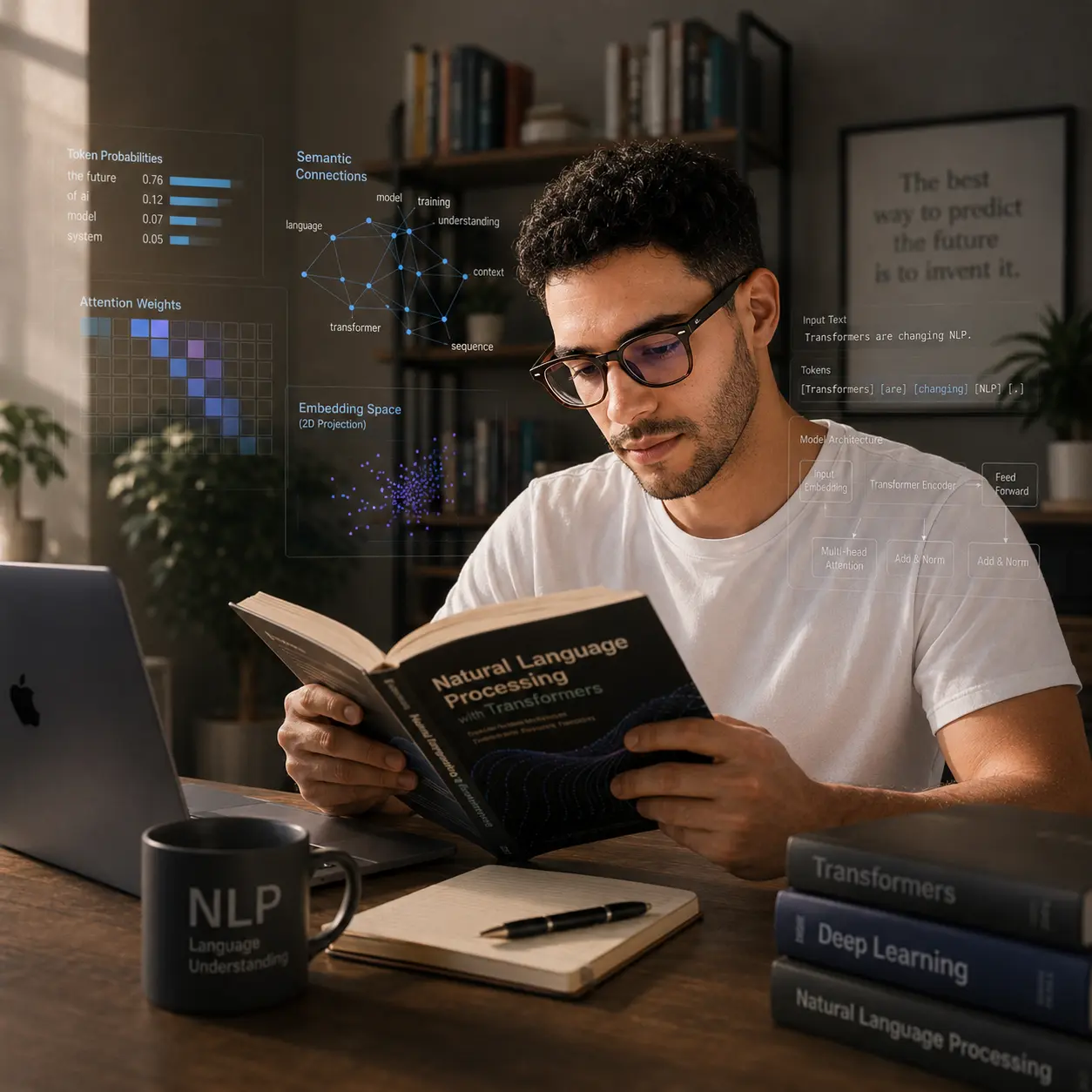
Universities, colleges, and research institutions in 2026 deploy enterprise AI detection platforms integrated directly into learning management environments. While Turnitin remains the dominant institutional provider across North America, Europe, and Australasia, major universities also license specialized detection systems including Copyleaks, GPTZero Enterprise, and Originality.ai to evaluate student coursework, thesis submissions, and grant proposals.
Understanding which AI detection platforms colleges use, how their background LMS scanners operate, and why detection scores vary across platforms enables authors to prepare their manuscripts with confidence.
The Landscape of Higher Education AI Detection in 2026
University AI detection is no longer conducted by individual professors pasting snippets into free web tools. Modern higher education institutions license enterprise software solutions integrated into Canvas, Blackboard, Moodle, and Brightspace. When a student uploads an assignment, background API protocols pass the document through detection classifiers before rendering a grade report for the instructor.
Enterprise market adoption breaks down across four primary detection platforms:
The Top 4 AI Detection Platforms Deployed by Colleges
1. Turnitin AI Writing Indicator (Dominant Enterprise Market Share)
Turnitin holds approximately 70% of higher education market share. Fully integrated into Canvas and Blackboard SpeedGraders, Turnitin scans document uploads automatically. Learn more about how Turnitin detects ChatGPT prose or explore how ThesisHuman naturalizes text for Turnitin submissions.
2. Copyleaks (Enterprise LMS & Code Submission Scanning)
Copyleaks commands approximately 15% of university licenses, specializing in multi-language AI detection and computer science code analysis. Popular in engineering and STEM departments, Copyleaks offers deep API integration with Canvas and Moodle.
3. GPTZero (Departmental & Independent Faculty Licenses)
Holding ~10% of institutional adoption, GPTZero is frequently licensed by humanities departments and writing centers. GPTZero relies heavily on burstiness and perplexity metrics, rendering visual sentence-by-sentence highlight maps.
4. Originality.ai (Selective Admissions & Research Grant Screening)
While primarily used in commercial web publishing, Originality.ai is deployed selectively by graduate university admissions offices, law schools, and research grant committees for high-stakes document screening.
LMS Integration Mechanics: How Canvas, Blackboard, and Moodle Scan Submissions
Automated university AI scanning occurs in three distinct technical stages:
Stage 1: Document Upload & Text Extraction
When a student submits a file (.pdf, .docx, .txt), the LMS background LTI module parses the raw text stream, stripping images, formatting tags, and margin spacing.
Stage 2: API Payload Transmission & Neural Classification
The extracted text payload is transmitted via encrypted REST API to the detection provider's cloud servers. Neural network classifiers calculate perplexity and burstiness across 50-word sliding windows.
Stage 3: Score Rendering inside Instructor SpeedGrader
The API returns an aggregated AI probability score and segment highlight map directly into the instructor's grading view alongside traditional plagiarism similarity metrics.
Cross-Detector Performance: Why Scores Differ Across Platforms
Submitting the exact same manuscript to Turnitin, Copyleaks, and GPTZero can produce vastly different scores (e.g., 0% on Turnitin, 35% on Copyleaks, 12% on GPTZero). These discrepancies occur because each vendor utilizes distinct neural training sets, sliding window boundaries, and weight distributions.
Discipline-Specific Evaluations: How STEM, Humanities, and Law Departments Evaluate AI
Academic disciplines approach AI detection with different analytical priorities:
- STEM & Medicine: Heavy focus on equation formatting, clinical trial data accuracy, and experimental method reproducibility. High false-positive rates due to rigid technical terminology.
- Humanities & Literature: Focus on voice, rhetorical argument structure, and original textual synthesis. Lower tolerance for generic LLM transition clichés.
- Law & Policy: Strict emphasis on case citation precision (Bluebook style) and statutory interpretation.
University Governance, COPE Benchmarks, and Academic Honor Codes
University academic integrity policies mandate that automated AI detector scores cannot serve as sole justification for disciplinary penalties. Faculty must conduct independent manual reviews, examine document edit logs, or invite the student to discuss their research methodology in person. If your work faces an unfair accusation, read our guide on appealing false Turnitin flags.
Preparing Academic Manuscripts for Multi-Detector Environments
To ensure your research papers perform reliably across all enterprise institutional detectors, adopt these submission best practices:
- Vary sentence length intentionally throughout every section.
- Lock and protect all inline citations (APA, IEEE, MLA).
- Maintain detailed version histories in Google Docs or Word.
- Use ThesisHuman's academic editing editor to refine prose cadence naturally before submission.
Verified Detector Clearance for What AI Detectors Do Colleges Use in 2026? Top Tools & Institutional Comparison
Every manuscript processed through ThesisHuman is backed by verifiable, reproducible scans across institutional plagiarism and AI detection platforms.
1. ThesisHuman Editor: Style, Field & Term Lock™ Technology
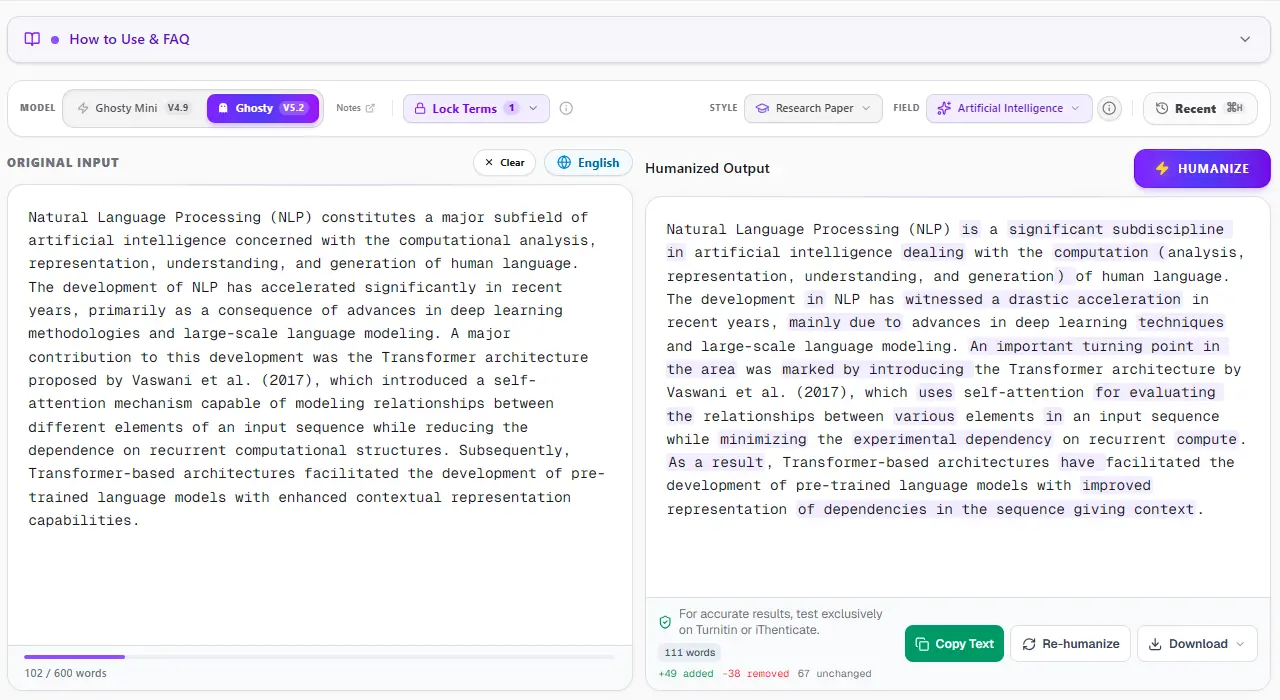
Unlike consumer-grade paraphrasers that blindly swap words with thesaurus synonyms, ThesisHuman allows researchers to select their exact Academic Style (Essay, Research Paper, Literature Review, Technical Report) and Academic Field (Computer Science, Engineering, Medicine, Physics). With Term Lock™, citations (APA, MLA, IEEE), LaTeX equations, and domain-specific terminology are cryptographically protected before sentence entropy is restructured.
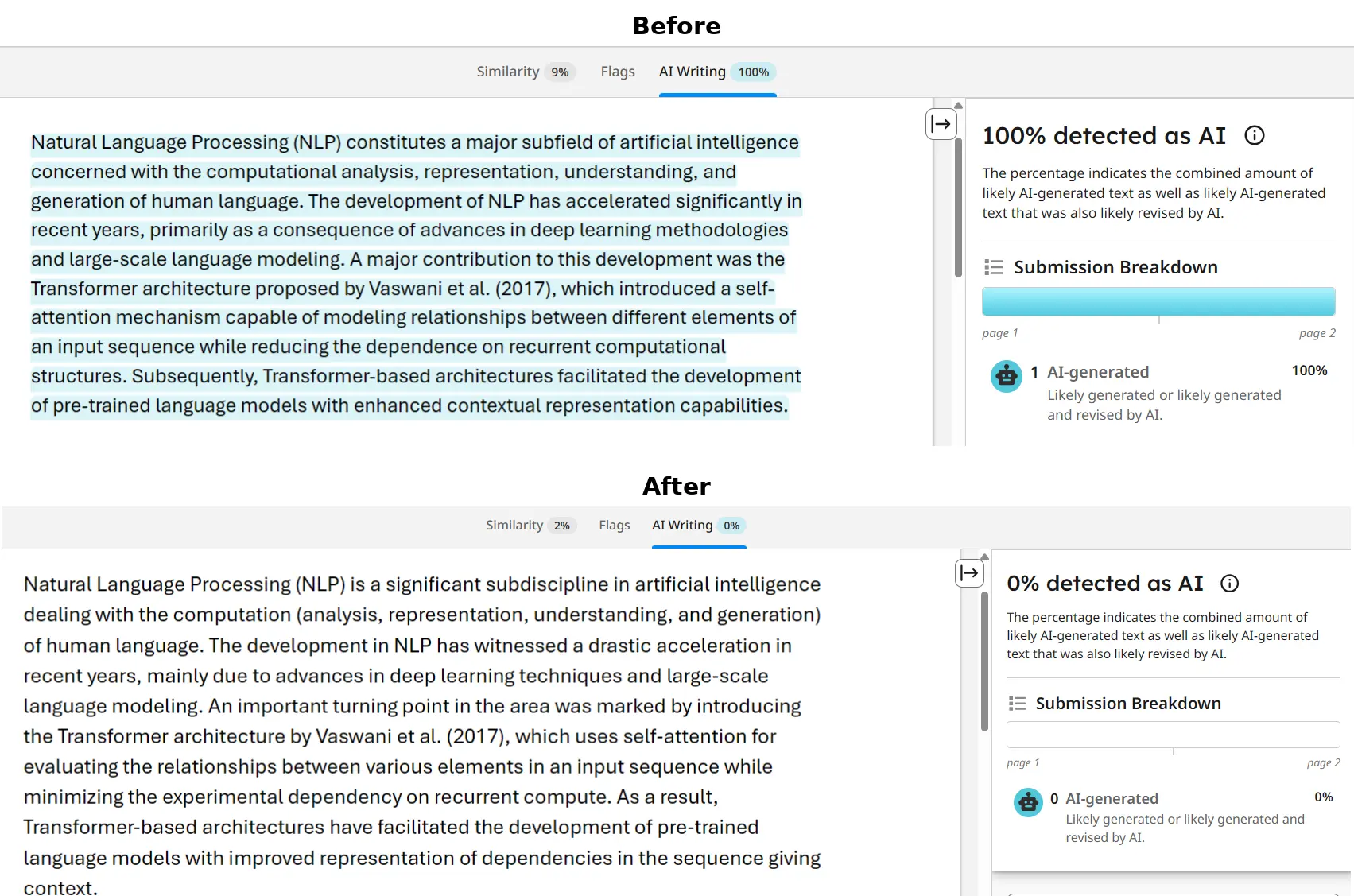
2. Turnitin & iThenticate Verification: 0% AI Detected
Turnitin and iThenticate scan submissions in overlapping 500-token blocks to analyze sentence predictability across paragraphs. When an unrefined AI draft is submitted, uniform cadence triggers an elevated AI Writing score. In the verified report below, a flagged graduate paper was processed through ThesisHuman, achieving a clean 0% AI detection score while preserving all formatted citations and technical parameters.
3. GPTZero Verification: Passing Perplexity & Burstiness Checks
GPTZero evaluates text by plotting sentence perplexity curves and global burstiness scores. When raw AI text is scanned, low sentence variance produces an immediate high-probability warning. ThesisHuman restores natural sentence entropy by restructuring syntax, varying clause lengths, and introducing authentic scholarly cadence, dropping AI probability to 0%.
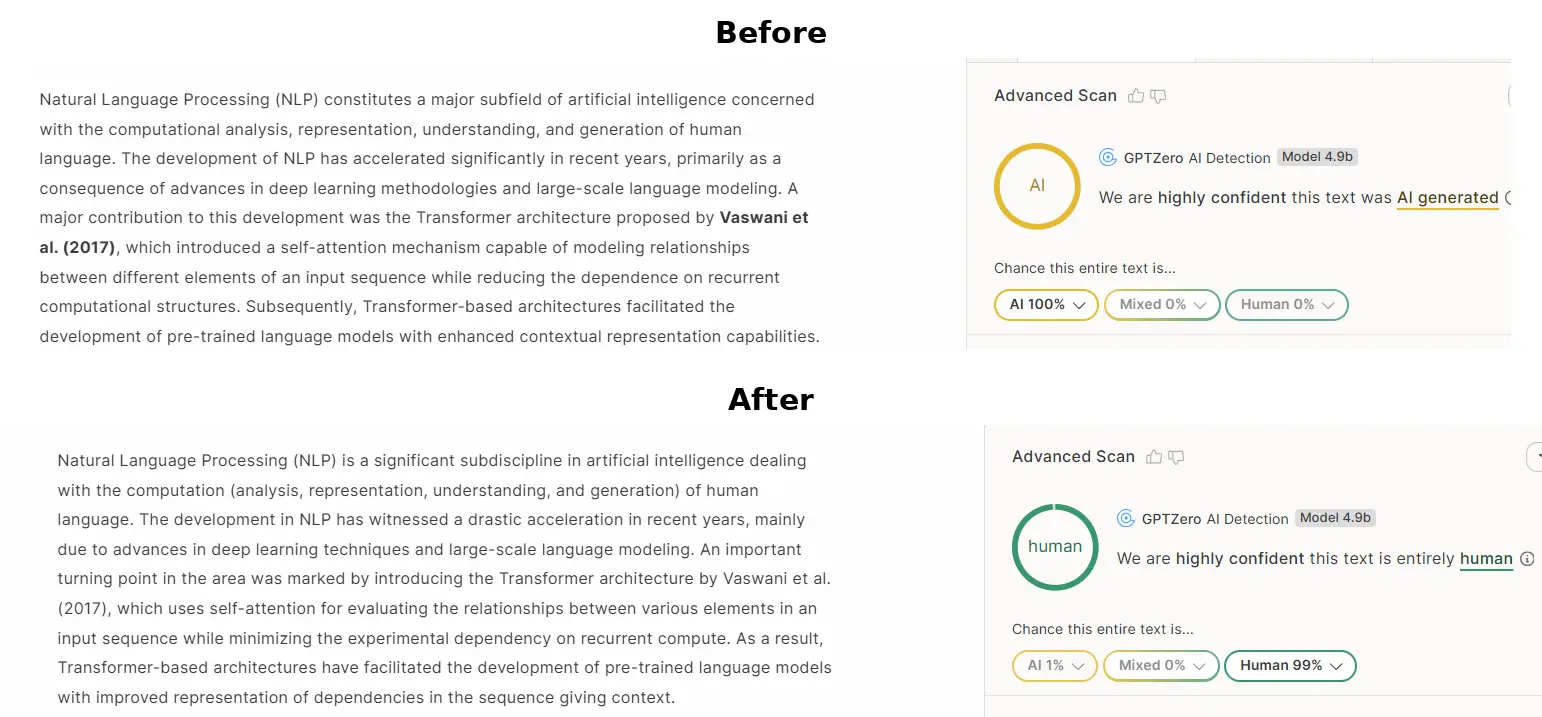
4. Originality.ai Verification: 0% AI Confidence
Originality.ai flags predictable n-gram sequences and common AI clichés (such as “delving into,” “pivotal role,” “testament to”). ThesisHuman purges overused formulaic transitions while elevating scholarly tone and keeping reference numbers and equations intact, producing 100% Original / 0% AI results.