What Is a Body Paragraph? Structure, Examples, and Writing Guide
Learn how to write strong academic body paragraphs. Explore the core elements, organizational models like MEAL and TEEL, and three fully annotated examples.

A body paragraph is the foundational building block of any academic essay, research paper, or dissertation. While the introduction outlines the overarching inquiry and the conclusion synthesizes broad takeaways, the body paragraphs perform the substantive heavy lifting. Each body paragraph must state a focused sub-claim, introduce credible empirical or textual evidence, critically analyze that material, and explicitly link the insight back to the paper's central thesis. When body paragraphs lack structure, arguments disintegrate into disconnected factual observations.
Many emerging scholars struggle to balance description with rigorous critical analysis. Students often present an abundance of direct citations without explaining what those sources prove, or they inadvertently combine multiple unrelated claims into an unruly 400-word paragraph. This comprehensive guide explains the anatomy of an effective academic body paragraph. We define its role in essay architecture, review flexible organizational frameworks such as MEAL and TEEL, analyze three fully annotated examples across academic disciplines, highlight common writing traps, and provide an actionable revision checklist.
1. What Is a Body Paragraph?
A body paragraph is an autonomous section within an essay or academic paper that develops a single, distinct argument or perspective in support of the central thesis statement. Positioned between the introduction and the conclusion, body paragraphs collectively construct the evidential and logical proof of the entire document.
Every body paragraph operates under the principle of paragraph unity. This means that every sentence within the paragraph must directly relate to, explain, or substantiate the specific controlling idea announced in its opening topic sentence. If a thought diverges into tangential background context, it must either be pruned or developed into an independent paragraph.
Core Rule: One paragraph equals one controlling idea. A body paragraph should never attempt to argue two competing claims simultaneously; doing so confuses readers and fragments scholarly momentum.
2. The Role of Body Paragraphs in Academic Essays
In scholarly discourse, assertions are meaningless without systematic validation. The primary role of body paragraphs is to transform an initial hypothesis into a defensible academic conclusion through progressive steps of reasoned demonstration.
- Substantiating Thesis Sub-Claims: A central thesis is typically too expansive to prove in a single sweep. Body paragraphs divide that complex macro-claim into manageable intellectual components, proving each facet sequentially.
- Presenting Primary and Secondary Evidence: Body paragraphs serve as the formal venue for integrating empirical data, statistical findings, archival records, and scholarly quotations.
- Delivering Scholarly Interpretation: The author's voice dominates the body paragraph. The author explains how the cited evidence should be interpreted, addressing nuances, limitations, and theoretical implications.
3. Relationship to the Introduction and Conclusion
An essay functions like an architectural bridge. The introduction constructs the opening pier, establishing the research question, historical context, and the foundational thesis statement. The conclusion forms the opposite pier, synthesizing major findings and exploring broader implications.
The body paragraphs represent the individual structural spans carrying the weight of the crossing. Each body paragraph must anchor its beginning in the thesis and conclude by moving the reader closer to the final destination. To explore how the introductory claim sets this entire progression in motion, consult our comprehensive guide on what is a thesis statement.
4. Four Core Building Blocks of Every Body Paragraph
Regardless of the academic discipline, every successful body paragraph consists of four indispensable structural components:
| Component | Primary Function | Typical Proportion |
|---|---|---|
| 1. Topic Sentence | States the paragraph's controlling idea and connects to the thesis | 1 sentence (15-20%) |
| 2. Supporting Evidence | Provides data, direct quotations, citations, or case examples | 1-3 sentences (25-35%) |
| 3. Analysis & Evaluation | Explains how the evidence validates the claim and reveals deeper meaning | 2-4 sentences (35-45%) |
| 4. Synthesis / Link | Summarizes the sub-claim's contribution or bridges to the next paragraph | 1 sentence (10-15%) |
5. Organizational Frameworks: MEAL, TEEL, and PEEL
Writing instructors frequently employ mnemonic frameworks to help students internalize paragraph balance. The most widely adopted models are MEAL, TEEL, and PEEL:
- The MEAL Framework (Main Idea, Evidence, Analysis, Link): Popular in university-level research writing because it explicitly emphasizes "Analysis" over simple description. It reminds authors that presenting data is only half the battle; interpreting that data carries the intellectual weight.
- The TEEL Framework (Topic, Explanation, Evidence, Link): Often used in argumentative and analytical essays. In TEEL, the author clarifies their conceptual claim (Explanation) immediately after the Topic Sentence, before introducing external Evidence.
- The PEEL Framework (Point, Evidence, Explanation, Link): Widely taught in secondary and introductory undergraduate writing. It ensures that every paragraph begins with a clear argumentative Point rather than a descriptive summary.
While these acronyms offer excellent scaffolding, advanced academic prose should treat them as flexible structural principles rather than rigid templates. Sometimes an author provides two alternating cycles of evidence and analysis within a single paragraph before reaching the concluding link.
6. How to Build an Academic Body Paragraph Step by Step
Constructing a rigorous body paragraph involves a deliberate, sequential workflow:
- Draft an Assertive Topic Sentence: Formulate a claim that requires proof. For a catalog of opening formulas tailored to various rhetorical moves, review our directory of topic sentence starters.
- Introduce Contextualized Evidence: Seamlessly integrate empirical metrics or source quotations. Avoid dropping citations without attribution frames; consult our guide on evidence sentence starters for scholarly phrasing.
- Deconstruct and Analyze the Evidence: Explain the operational mechanism. Answer the essential reader question: Why does this finding matter to the overarching inquiry?
- Synthesize and Transition Forward: Conclude the paragraph by linking the analytical takeaway back to the thesis statement and establishing momentum for the subsequent section. For strategies on connecting adjacent sections, explore our reference on transition sentences.
7. Weak versus Improved Paragraph Transformation
To appreciate how structural elements transform scholarly prose, examine this before-and-after case study:
Weak Paragraph (Descriptive and Unstructured)
Social media is bad for teenager sleep patterns. Johnson (2023) studied high school students and found they stay up late looking at screens. Also, blue light keeps people awake because it blocks melatonin. Many students feel tired in class the next morning, which hurts their grades. This shows screens affect adolescents.
Critique: Starts with a colloquial, unacademic generalization; relies on informal phrasing (bad for, looking at screens); drops the melatonin citation without explaining the hormonal mechanism; ends with an obvious, vague conclusion.
Improved Paragraph (Academic and Cohesive)
[Topic Sentence]: Prolonged nocturnal smartphone exposure fundamentally disrupts adolescent circadian rhythm regulation, precipitating significant deficits in classroom cognitive engagement. [Evidence]: In a controlled longitudinal study of 450 secondary school pupils, Johnson (2023) documented that nocturnal screen engagement exceeding two hours suppressed biological melatonin synthesis by 34%, shifting sleep onset latency by an average of 48 minutes. [Analysis]: This neurobiological suppression demonstrates that delayed sleep timing is not merely a consequence of disciplinary disengagement, but rather an unmediated physiological response to short-wavelength photic stimulation. When nocturnal screen immersion compromises REM sleep architecture, adolescents experience impaired memory consolidation and sustained executive dysfunction during instructional hours. [Link]: Consequently, addressing declining scholastic performance requires school districts to treat digital screen hygiene as an essential component of student public health policy rather than an individual behavioral failure.
Analysis: Employs precise medical and educational terminology; establishes clear causal progression; thoroughly evaluates the physiological mechanism; connects directly to institutional policy implications.
8. Three Annotated Examples Across Scholarly Disciplines
Review these three fully annotated models illustrating how the four building blocks adapt to diverse academic registers:
Example 1: Political Science & Public Policy
[Topic Sentence]: Municipal regulatory capture frequently discourages private clean-energy investments by entrenching legacy fossil-fuel utility monopolies.
[Evidence]: In an econometric panel analysis of sixty midwestern municipal energy boards, Davis and Miller (2024) observed that public utility oversight commissions composed predominantly of former corporate utility executives rejected decentralized grid interconnection permits at three times the rate of independent citizen commissions.
[Analysis]: This pronounced disparity illustrates that regulatory hurdles are rarely technical or engineering constraints; rather, they serve as strategic administrative barriers designed to protect entrenched centralized revenue models from distributed solar competition. When administrative commissions privilege historical revenue protection over statutory renewable targets, regional clean-energy transitions stall.
[Link]: Dismantling these systemic energy bottlenecks therefore requires structural reform of municipal commissioner appointment criteria to restore genuine public regulatory oversight.
Example 2: Biomedical Engineering & Biomaterials
[Topic Sentence]: Incorporating bioactive nanoparticle coatings significantly enhances the osteointegration profile of porous titanium orthopedic implants.
[Evidence]: Mechanical shear testing revealed that implants treated with hydroxyapatite-infused nanosilver coatings exhibited a 42% increase in interfacial bone-to-implant shear strength after twelve weeks of in vivo implantation (Patel et al., 2023).
[Analysis]: This accelerated mechanical anchorage indicates that surface nanotopography promotes rapid osteoblast adhesion and mineral deposition while the slow release of silver cations suppresses localized bacterial colonization. By concurrently encouraging bone regeneration and inhibiting biofilm formation, the dual-action surface eliminates the primary biomechanical failure modes observed in unfunctionalized titanium fixtures.
[Link]: These biofunctional coatings thus offer a highly promising path toward extending the clinical longevity of weight-bearing prosthetic reconstructions in high-risk patients.
Example 3: Cultural Studies & Literary History
[Topic Sentence]: Early twentieth-century modernist poetry mobilized industrial urban imagery to subvert romanticized pastoral notions of national identity.
[Evidence]: Throughout the 1922 manuscript of The Waste Land, T.S. Eliot repeatedly juxtaposes classical river nymphs with images of polluted urban waterways and mechanized human routine, describing the Thames as sweating oil and tar amidst mechanical commuter throngs.
[Analysis]: By deliberately contaminating pristine mythic tropes with the visceral residue of industrial manufacturing, the poem rejects Victorian nostalgic mythmaking, framing the modern metropolis as an alienated spiritual landscape shattered by industrial warfare and economic standardization.
[Link]: This deliberate aesthetic dislocation reflects a wider modernist conviction that contemporary artistic expression must confront the fragmented, mechanical realities of the post-war industrial era.
9. Maintaining Paragraph Unity and Pacing
Paragraph unity requires that every sentence within a paragraph contributes directly to proving the controlling claim. When writers experience topic drift, it usually stems from one of two habits:
- Uncontrolled Associative Thinking: The author finishes analyzing a data point and immediately mentions an interesting but tangential fact discovered during literature research. Even if historically true, tangential information dilutes the argument.
- Prematurely Introducing the Next Sub-Claim: Writers sometimes rush their conclusions by previewing the upcoming paragraph's topic in the final sentence of the current paragraph. The concluding sentence should synthesize the current point; the next paragraph's topic sentence handles the new claim.
10. Determining Optimal Paragraph Length
A standard academic body paragraph typically spans 150 to 250 words, corresponding to roughly five to eight sentences. Paragraphs shorter than 100 words often read as underdeveloped or journalistic, failing to provide sufficient analytical depth. Conversely, paragraphs exceeding 350 words risk cognitive overload, burying key insights under dense prose.
For an exhaustive analysis of clausal pacing and sentence distribution across varied essay types, consult our dedicated guide on how many sentences are in a paragraph.
11. Common Body Paragraph Mistakes to Avoid
- The Bare Fact Opener: Opening with an undisputed fact (e.g., "The Roman Empire fell in 476 AD") instead of an analytical argument. A fact cannot be argued; a claim must interpret the significance of that fact.
- The Dangling Quotation: Inserting a block quote or citation and ending the paragraph immediately. The author must provide at least one to two sentences of original analysis after every cited excerpt.
- Passive Repetition: Simply summarizing the evidence in the analysis section rather than evaluating its broader implications. Analysis must reveal why and how, not merely repeat what.
12. Practical Revision Checklist
Before submitting an essay, thesis chapter, or research manuscript, evaluate each body paragraph against this four-point diagnostic checklist:
- Does the opening sentence assert a clear analytical claim rather than stating a bare fact or citation?
- Is every external metric, finding, or quotation followed by original authorial analysis?
- Does every sentence in the paragraph support the controlling idea announced in the topic sentence?
- Does the final sentence synthesize the analytical takeaway and reinforce the overarching paper thesis?
13. Polishing Paragraphs with ThesisHuman
Writing cohesive, well-balanced body paragraphs requires careful line-editing and attention to syntactic cadence. When working with complex empirical datasets or extensive literature reviews, academic drafts can easily become repetitive or structurally unbalanced. Utilizing specialized writing tools like our essay rewriter or AI sentence rewriter can help you test alternative clausal structures while preserving your original citations and disciplinary terminology. You can paste your drafts directly into the interactive ThesisHuman editor to refine paragraph cadence and ensure scholarly rigor. For researchers developing a complete manuscript, our foundational guides on sentence starters for essays and how to write a research paper provide complementary scaffolding. You can also explore our accessible pricing plans designed for undergraduate and graduate scholars.
14. Frequently Asked Questions
What is the primary definition of a body paragraph?
A body paragraph is an independent organizational section of an essay or research paper that develops, explains, and substantiates a single focused claim supporting the paper's central thesis.
How many sentences should an academic body paragraph contain?
Most academic body paragraphs contain between four and eight well-structured sentences, totaling approximately 150 to 250 words. This provides sufficient space to introduce a controlling idea, present evidence, and deliver thorough analytical interpretation.
What is the difference between TEEL, PEEL, and MEAL frameworks?
TEEL (Topic, Evidence, Explanation, Link), PEEL (Point, Evidence, Explanation, Link), and MEAL (Main Idea, Evidence, Analysis, Link) are nearly identical acronyms describing the same foundational structure: start with a claim, support it with facts, interpret its meaning, and connect it back to the overarching thesis.
Can a body paragraph have more than one central idea?
No. Strict paragraph unity requires that each body paragraph focuses exclusively on a single controlling idea. When an author introduces a second unrelated concept, the paragraph should be divided into two separate sections.
Should a body paragraph end with a citation?
Generally no. Concluding a body paragraph with a raw citation leaves the evidence uninterpreted. The final sentence should belong to the author, explaining how the evidence substantiates the paragraph claim or linking into the next line of reasoning.
Verified Detector Clearance for What Is a Body Paragraph? Structure, Examples, and Writing Guide
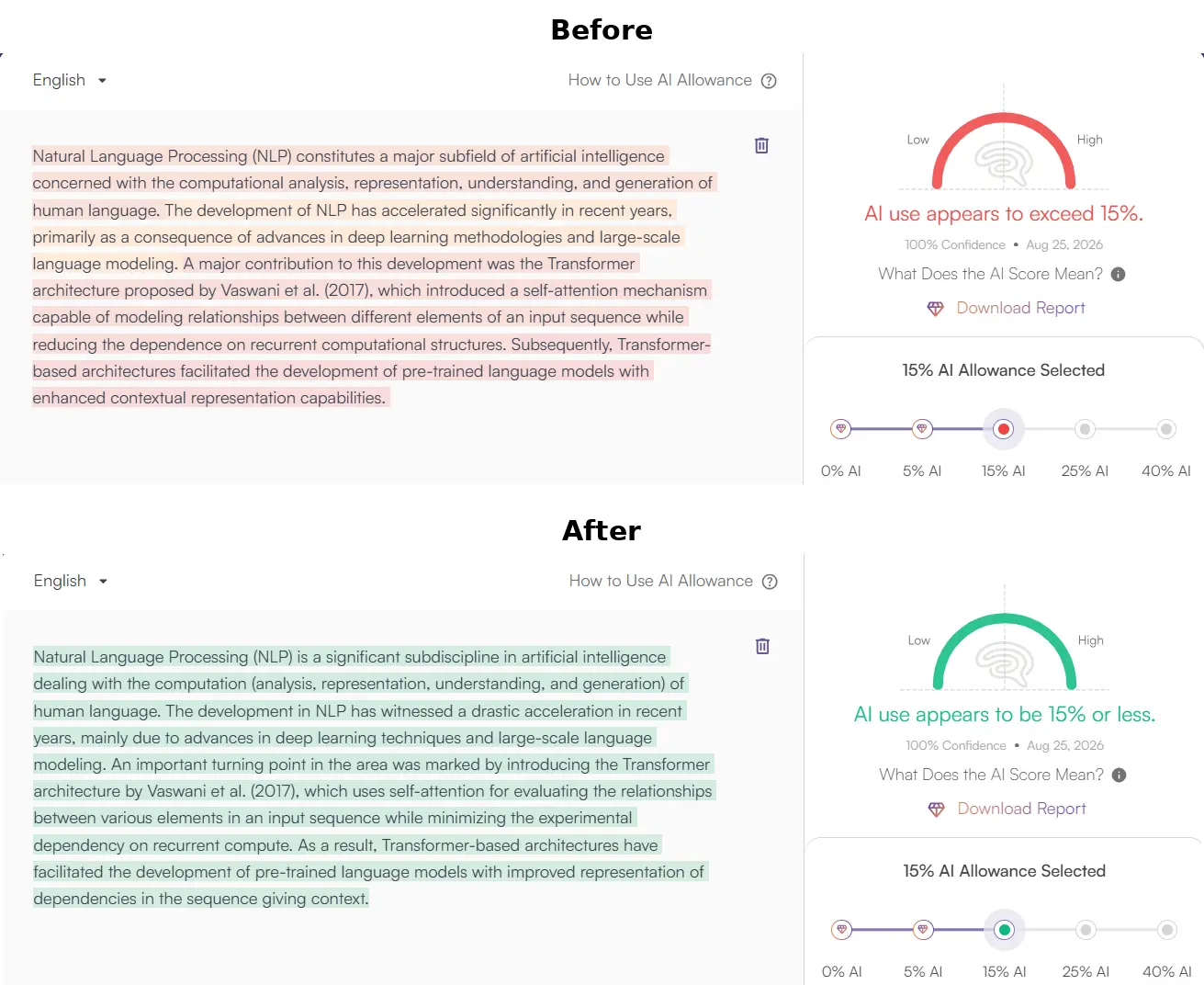
Every manuscript processed through ThesisHuman is backed by verifiable, reproducible scans across institutional plagiarism and AI detection platforms.
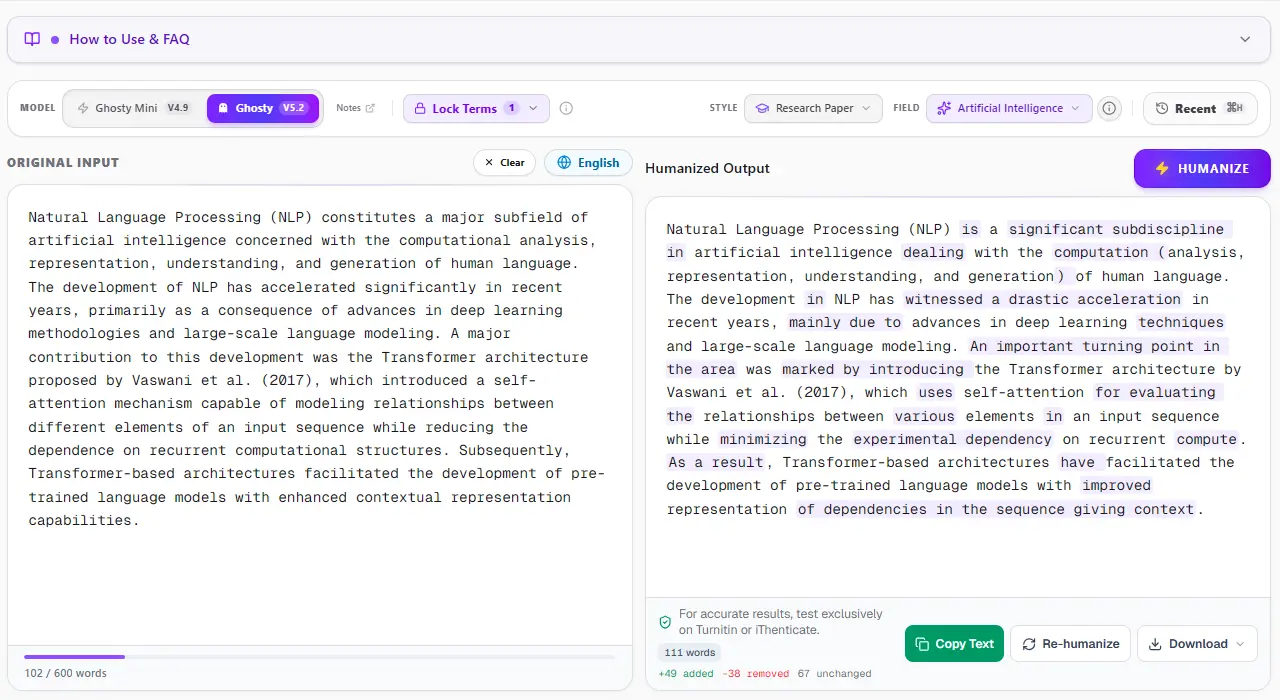
1. ThesisHuman Editor: Style, Field & Term Lock™ Technology
Unlike consumer-grade paraphrasers that blindly swap words with thesaurus synonyms, ThesisHuman allows researchers to select their exact Academic Style (Essay, Research Paper, Literature Review, Technical Report) and Academic Field (Computer Science, Engineering, Medicine, Physics). With Term Lock™, citations (APA, MLA, IEEE), LaTeX equations, and domain-specific terminology are cryptographically protected before sentence entropy is restructured.
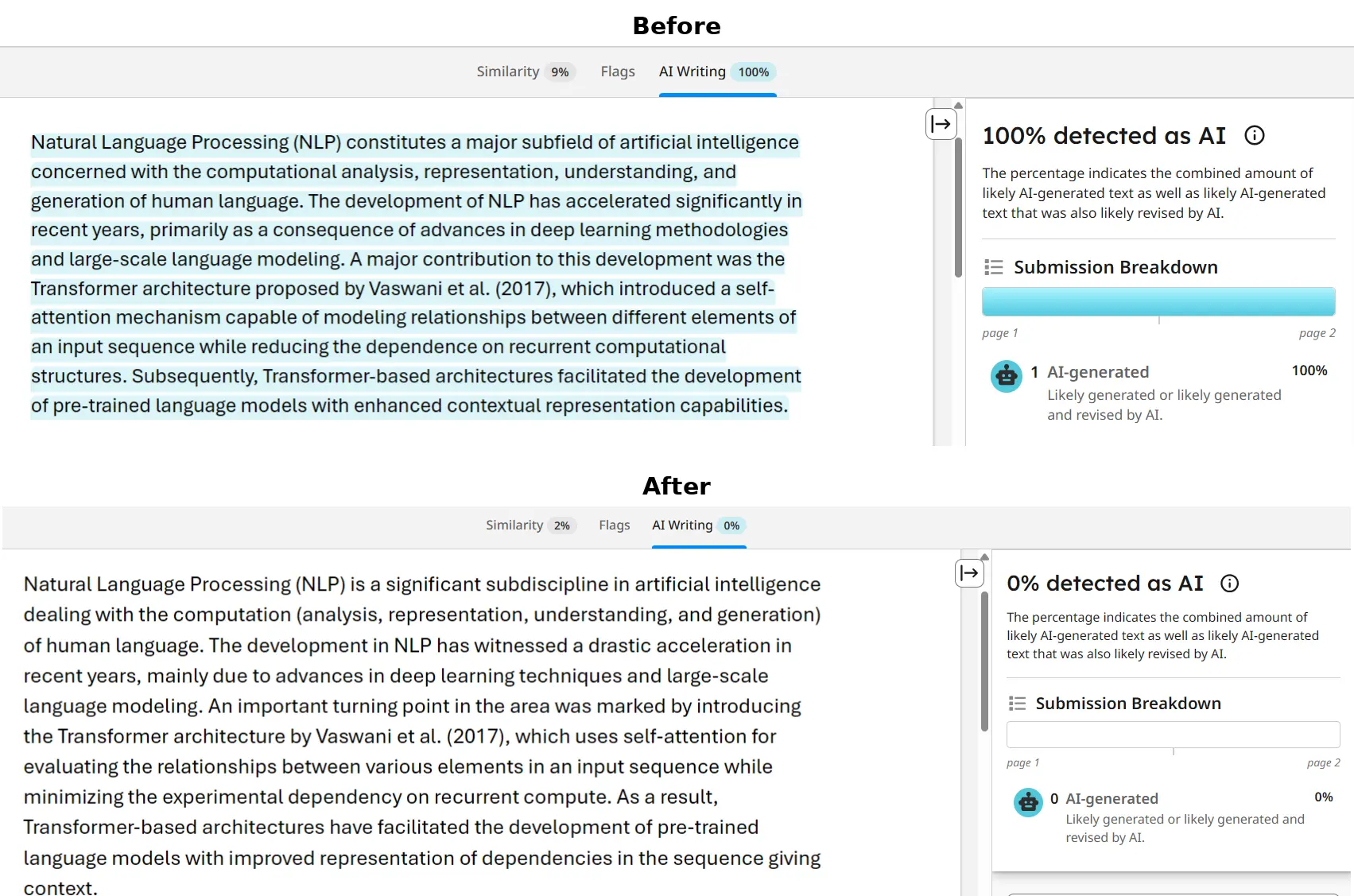
2. Turnitin & iThenticate Verification: 0% AI Detected
Turnitin and iThenticate scan submissions in overlapping 500-token blocks to analyze sentence predictability across paragraphs. When an unrefined AI draft is submitted, uniform cadence triggers an elevated AI Writing score. In the verified report below, a flagged graduate paper was processed through ThesisHuman, achieving a clean 0% AI detection score while preserving all formatted citations and technical parameters.
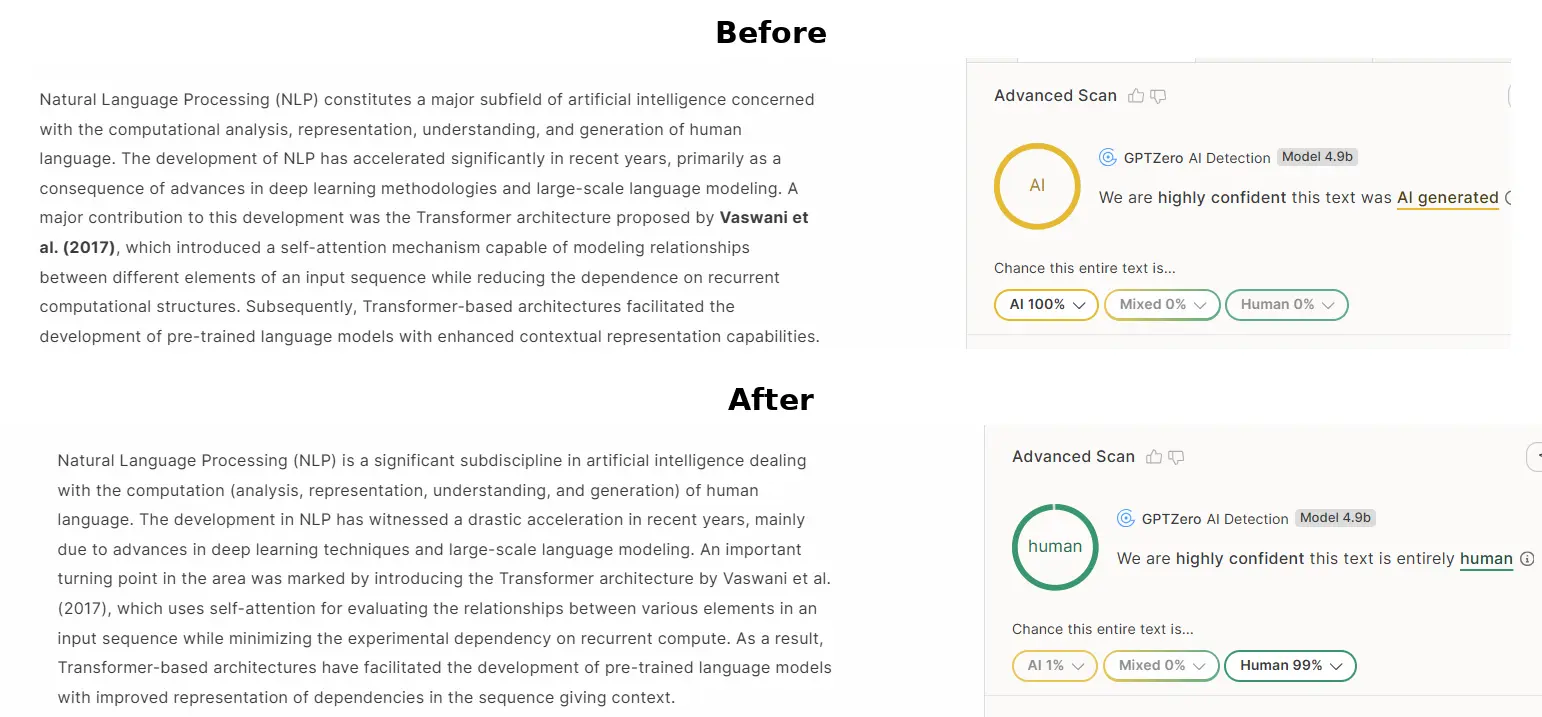
3. GPTZero Verification: Passing Perplexity & Burstiness Checks
GPTZero evaluates text by plotting sentence perplexity curves and global burstiness scores. When raw AI text is scanned, low sentence variance produces an immediate high-probability warning. ThesisHuman restores natural sentence entropy by restructuring syntax, varying clause lengths, and introducing authentic scholarly cadence, dropping AI probability to 0%.
4. Originality.ai Verification: 0% AI Confidence
Originality.ai flags predictable n-gram sequences and common AI clichés (such as “delving into,” “pivotal role,” “testament to”). ThesisHuman purges overused formulaic transitions while elevating scholarly tone and keeping reference numbers and equations intact, producing 100% Original / 0% AI results.