How to Write a Literature Review for a Research Paper: Step-by-Step Guide
Master the complete workflow for researching, structuring, and writing an academic literature review. Includes synthesis matrices, weak vs. strong models, and checklists.

Writing a literature review is one of the most critical stages in the lifecycle of any scholarly project. Whether drafted as an introductory foundation for an empirical thesis, a core chapter of a doctoral dissertation, or a standalone review manuscript, a literature review establishes what is currently known, how existing knowledge was generated, and where unresolved questions persist. Far from being a passive catalogue of book reports or disjointed summaries, an authoritative literature review is an active intellectual evaluation that builds a compelling academic justification for new research.
Many emerging researchers struggle because they treat literature reviews as descriptive summaries of individual articles read sequentially. This comprehensive guide outlines an end-to-end operational workflow for researching, organizing, critically evaluating, and writing a literature review. We examine the fundamental distinction between summary and synthesis, compare five recognized review methodologies, demonstrate how to construct a practical synthesis matrix, analyze weak versus strong prose transformations with original illustrative examples, and provide a pre-submission checklist for final revisions.
1. What Is a Literature Review?
A literature review is a comprehensive, critical evaluation of published scholarly works relevant to a specific research topic or question. It examines theoretical paradigms, empirical methodologies, findings, and ongoing academic debates within a discipline.
The foundational purposes of a literature review in academic scholarship include:
- Establishing the Current State of Knowledge: It charts established findings, consensus points, and prevailing theoretical frameworks within the field.
- Mapping Methodological Precedents: It surveys the research designs, sampling strategies, quantitative instruments, and qualitative protocols previously employed to investigate the topic.
- Contextualizing Your Investigation: It situates your research question within an ongoing scholarly conversation, demonstrating how your project builds upon or challenges prior work.
- Providing an Empirical and Theoretical Justification: It identifies unresolved gaps, contradictory data, or theoretical omissions, thereby proving to peer reviewers that your study address a necessary inquiry.
Core Principle: A literature review does not exist merely to prove that you read existing books and papers; it exists to construct an evidence-based argument justifying why your research must be undertaken.
2. Literature Review versus Descriptive Literature Summary
The most prevalent error in undergraduate and graduate writing is confusing a critical literature review with a descriptive summary. The table below delineates the core differences between these two approaches:
| Dimension | Descriptive Literature Summary | Critical Literature Review |
|---|---|---|
| Organizational Unit | Individual articles organized serially, one after another | Themes, conceptual debates, or methodological frameworks combining multiple studies |
| Analytical Voice | Passive reporting ('Author A found X. Author B studied Y. Author C stated Z.') | Active evaluation ('While Author A and B demonstrate X under lab conditions, Author C challenges this mechanism in field trials.') |
| Methodological Stance | Accepts findings at face value without interrogating study designs | Interrogates sampling bias, statistical power, measurement validity, and construct definitions |
| Treatment of Gaps | Mentions omissions casually or treats absence of a paper as a gap | Demonstrates systematic empirical contradictions or theoretical boundaries requiring resolution |
| Primary Objective | Cataloguing what previous researchers have written | Synthesizing evidence to establish the rationale for the current investigation |
Understanding this distinction transforms your drafting process. Instead of asking yourself 'What did this paper say?', ask 'How does this paper modify, corroborate, or complicate what other authors have reported?' For related guidance on essay structure, see our overview of what is academic writing.
3. Five Types of Literature Reviews and Their Methodologies
Literature reviews take multiple forms depending on disciplinary standards, research questions, and institutional requirements. It is vital not to treat these types as interchangeable:
- Narrative (Traditional) Literature Review: A qualitative overview that synthesizes published works to establish theoretical context and historical perspective. Narrative reviews are widely used in dissertation proposals, term papers, and journal introductions. They do not require a rigid PRISMA protocol, but they must be balanced and comprehensive.
- Systematic Literature Review: A structured, replicable review method adhering to strict inclusion and exclusion criteria, pre-registered protocols, and transparent search logs across multiple databases. It seeks to answer a narrowly defined clinical or empirical question while minimizing researcher selection bias.
- Scoping Review: An exploratory review designed to map the volume, nature, and characteristics of existing literature across a broad, emerging, or heterogeneous field. Rather than assessing study quality in depth, it identifies key concepts, types of evidence, and operational gaps.
- Integrative Literature Review: A review methodology that combines diverse empirical paradigms, such as quantitative experimental trials, qualitative interviews, and theoretical treatises, into a unified conceptual framework.
- Meta-Analysis: A formal quantitative statistical aggregation that pools effect sizes across multiple independent experimental studies to calculate an overall statistical effect and test for publication bias.
Do not assume that every academic paper demands a systematic review protocol. Unless your instructor or journal specifically mandates a pre-registered protocol, a well-structured narrative or thematic review is usually the appropriate format for student theses and research manuscripts.
4. Defining the Research Question and Review Scope
Before searching databases, you must clearly establish boundaries for your review. A review that attempts to cover everything will inevitably produce shallow analysis.
Setting Research Boundaries
- Temporal Scope: Define your publication window (e.g., studies published between 2015 and 2026, alongside seminal historical papers).
- Disciplinary Breadth: Clarify whether you are examining sociology, clinical psychology, health economics, or public policy.
- Population & Context: Limit analysis to relevant cohorts (e.g., university undergraduates, pediatric patients, or municipal transit systems).
Inclusion & Exclusion Criteria
- Inclusion: Peer-reviewed empirical articles, randomized controlled trials, validated psychometric scales, English full-text manuscripts.
- Exclusion: Non-peer-reviewed blog posts, unverified commercial white papers, non-experimental opinion pieces, studies lacking clear methodology.
- Feasibility: Ensure the scope yields a manageable corpus that can be synthesized within your project timeline.
5. Finding Relevant Academic Literature Across Databases
Conducting a thorough academic literature search requires moving beyond casual Google searches to consult specialized bibliographic databases and search strategies:
- Multidisciplinary Academic Databases: Scopus, Web of Science, and Google Scholar offer broad cross-disciplinary indexing.
- Discipline-Specific Repositories: PubMed and MEDLINE for biomedical sciences; IEEE Xplore and ACM Digital Library for computer science and engineering; PsycINFO for psychology; ERIC for education; SSRN and JSTOR for humanities and social sciences.
- Boolean Search Operators: Utilize
ANDto intersect concepts (e.g., 'artificial intelligence' AND 'metacognition'),ORto capture synonyms (e.g., 'college students' OR 'undergraduates'), andNOTto filter out irrelevant domains (e.g., NOT 'pediatric'). - Backward Citation Chaining: Inspect the reference lists of seminal articles to discover prior foundational publications.
- Forward Citation Chaining: Use Google Scholar's 'Cited by' feature to locate newer studies that have cited foundational works.
Note that automated text editing tools do not provide academic database discovery or literature screening engines. High-integrity scholarship requires consulting original repositories directly.
6. Evaluating Source Quality, Methodology, and Bias
Scholars do not treat all published papers as equally authoritative. Critical evaluation demands assessing the methodological strength of each study:
- Methodological Rigor: Did the authors employ appropriate sample sizes? Were control groups utilized in experimental conditions? Are qualitative coding frameworks transparent?
- Construct Validity: Did the measurement tools accurately capture the theoretical constructs under investigation?
- Sampling and Generalizability: Were participants selected through representative sampling or convenience cohorts that limit broader generalizability?
- Potential Researcher and Publication Bias: Did funding sources or institutional pressures influence study design? Were negative findings reported or suppressed?
- Currency and Relevance: Does the study reflect contemporary empirical reality, or have subsequent technological or societal developments altered baseline assumptions?
Avoid relying exclusively on journal impact factors as a surrogate for quality. A paper published in a top-tier journal may still exhibit sample limitations, while valuable empirical insights can emerge from specialized regional journals.
7. Building a Practical Literature Review Matrix
A literature review matrix is a structured table that allows you to compare multiple studies across standardized dimensions. Below is an illustrative matrix demonstrating how to organize studies on student engagement in blended learning environments (all study references are clearly fictional illustrative models):
| Study (Illustrative) | Research Objective | Methodology & Sample | Key Empirical Findings | Noted Limitations | Relation to Research Gap |
|---|---|---|---|---|---|
| Aris et al. (2023) [Illustrative Fictional Study] | Evaluate asynchronous discussion forums on critical thinking | Quasi-experimental pre/post test; n=142 undergraduate biology students | Structured prompt scaffolding increased analytical reasoning scores by 18% | Single university; high voluntary dropout in control cohort | Demonstrates intervention success in STEM, but leaves non-STEM disciplines unexamined |
| Morales & Chen (2024) [Illustrative Fictional Study] | Measure student self-regulation during unproctored online modules | Log-file telemetry and retrospective survey; n=310 business undergraduates | Students with low baseline metacognitive skills spent 40% less time reviewing feedback | Relied on self-reported survey data to validate automated telemetry logs | Shows telemetry feasibility, but does not provide real-time scaffolding interventions |
| Vogel (2022) [Illustrative Fictional Study] | Investigate peer-to-peer feedback mechanisms in blended seminars | Qualitative thematic analysis; 28 semi-structured graduate interviews | Unmoderated peer reviews frequently generated interpersonal friction and inaccurate rubric scoring | Small qualitative sample restricted to humanities graduate cohorts | Highlights rubric failure modes, creating a rationale for testing automated rubric calibration |
Once your matrix contains 15 to 30 studies, you will readily observe patterns across columns. These vertical intersections form the thematic sections of your written review.
8. Four Core Approaches to Organizing Literature
You can organize your literature review using one of four proven structural frameworks:
- Thematic Organization: Group studies by core concepts, variables, or theoretical debates (e.g., 'Metacognitive Scaffolding,' 'Telemetry Log Analysis,' and 'Peer Evaluation Failure Modes'). This is the most prevalent and intellectually robust approach.
- Chronological Organization: Trace the evolution of a topic over time. This approach is valuable when documenting paradigm shifts or historical policy developments, but it must analyze why perspectives evolved rather than merely narrating timelines.
- Methodological Organization: Group literature by the empirical methods employed (e.g., qualitative case studies versus quantitative clinical trials versus computational simulations). Useful when methodological choices directly explain divergent findings.
- Theoretical Organization: Compare competing theoretical frameworks (e.g., Behaviorism versus Cognitive Constructivism versus Sociocultural Theory) to show how each paradigm interprets the research problem.
9. Writing a Critical Synthesis (Weak versus Strong Models)
To master academic synthesis, study the following contrasting examples. Both models discuss the same fictional research corpus, but model 2 demonstrates true critical synthesis:
Model 1: Weak Serial Descriptive Summary
Aris et al. (2023) studied asynchronous discussion forums. They tested 142 biology students and found that structured prompts improved analytical reasoning by 18%. In another study, Morales and Chen (2024) investigated online self-regulation. They examined 310 business students and found that students with low metacognitive skills spent less time reading feedback. Finally, Vogel (2022) conducted 28 interviews with humanities students. The author discovered that unmoderated peer review caused interpersonal friction.
Critique: This is an annotated bibliography presented in paragraph form. The author merely recites one study per sentence with zero intellectual cross-talk, synthesis, or methodological comparison.
Model 2: Strong Multi-Source Critical Synthesis
Empirical evaluations of blended learning environments demonstrate that instructional scaffolding directly mediates student analytical performance, yet optimal intervention mechanisms remain disputed. While Aris et al. (2023) established that structured prompt templates yielded an 18% improvement in quantitative reasoning scores among STEM cohorts, subsequent behavioral telemetry reveals that student engagement with feedback is highly uneven. Specifically, Morales and Chen (2024) observed that undergraduates with low baseline self-regulation spent 40% less time reviewing feedback modules, suggesting that static prompt scaffolding alone fails to engage vulnerable learners. Furthermore, while peer-mediated feedback has been proposed as a scalable alternative, Vogel (2022) cautions that unmoderated student evaluations frequently introduce rubric scoring errors and interpersonal friction. Taken together, these findings indicate that while instructional scaffolding is vital, self-regulatory deficits cannot be resolved without automated, adaptive feedback mechanisms tailored to individual engagement levels.
Critique: This paragraph synthesizes all three studies into a unified argument. It compares STEM versus non-STEM findings, contrasts quantitative metrics with qualitative friction, and establishes an evidence-based conclusion.
For further analysis on integrating evidence seamlessly into scholarly prose, review our dedicated guide on evidence sentence starters and our breakdown of transition sentences.
10. Identifying and Articulating a Genuine Research Gap
The culmination of your literature review is the identification of a genuine research gap. A credible research gap falls into one of six distinct academic categories:
- Empirical Contradiction Gap: Two or more well-designed studies yield conflicting outcomes regarding the same phenomenon, requiring targeted investigation of mediating variables.
- Methodological Limitation Gap: Prior research relied almost exclusively on cross-sectional surveys or self-reported data, leaving causal relationships unverified by longitudinal or experimental designs.
- Population and Contextual Gap: Established theories have been tested solely in Western, educated, industrialized populations, leaving cross-cultural or underrepresented cohorts unexamined.
- Theoretical Tension Gap: Two established paradigms offer mutually incompatible explanations for an observed empirical behavior.
- Replication and Generalizability Gap: Rapidly changing technological, legislative, or ecological conditions call into question whether historical baseline findings still hold true.
- Under-Theorized Phenomenon Gap: A newly emerging development has been documented empirically, but lacks a coherent theoretical framework to explain its mechanics.
Crucially, you cannot claim a research gap exists simply because you have not located an article addressing your exact query. A true research gap must be documented by demonstrating where existing scholarship ends.
11. Structuring the Complete Literature Review Manuscript
A complete literature review chapter or article generally follows a five-part macro-structure:
- Introduction: Define the overarching research domain, establish the real-world or theoretical significance of the topic, state the scope and organizational logic of the review, and preview your central thesis.
- Thematic Body Section 1 (Foundational Frameworks): Review historical origins, seminal models, and standard terminology defining the field.
- Thematic Body Section 2 (Current Empirical Findings): Synthesize contemporary experimental, observational, or qualitative studies, comparing methodologies and effect sizes.
- Thematic Body Section 3 (Methodological Debates & Conflicting Evidence): Interrogate weaknesses, measurement discrepancies, and points of ongoing scholarly debate.
- Synthesis and Research Gap (Conclusion): Summarize primary takeaways, articulate the documented knowledge gap, and explicitly transition to how your proposed study methodology directly addresses that gap.
12. Citation Integrity and Avoiding Patchwriting
Synthesizing dozens of articles requires meticulous attribution. Patchwriting, the practice of taking another author's sentence structure and merely swapping out synonyms while keeping the grammatical architecture intact, violates academic integrity standards even when a citation is included.
To maintain academic integrity:
- Read the original source, close the document, and articulate the key takeaway in your own words.
- Ensure that every factual claim, statistical metric, and unique conceptual insight is linked directly to its primary source via proper in-text citation.
- When revising drafted prose, preserve all author-year markers, numeric bracket notations, and mathematical formulas intact.
For a comprehensive examination of citation rules and paraphrasing requirements, consult our detailed resource on how to cite a paraphrase and our definition guide on paraphrase definition and mechanics.
13. Common Mistakes in Literature Reviews
Academic editors and thesis committees frequently reject or demand major revisions on literature reviews due to the following eight mistakes:
- Sequential Study Summaries: Writing paragraph after paragraph that begins with 'Author X found' without synthesizing connections.
- Uncritical Acceptance: Treating every published peer-reviewed finding as indisputable empirical truth without evaluating methodological limitations.
- Excessive Direct Quotations: Quoting long excerpts from sources instead of digesting, paraphrasing, and synthesizing ideas in your own scholarly voice.
- Relying on Secondary Citations: Citing a seminal study from a secondary summary without reading and verifying the primary publication.
- Overly Broad Topic Boundaries: Failing to limit review scope, resulting in an unmanageable list of shallow summaries.
- Invented or Hallucinated Citations: Relying on unverified generative AI outputs that manufacture non-existent author names, volumes, and DOIs.
- Absence of Synthesis Transitions: Abruptly jumping between disparate studies without transitional topic sentences that explain conceptual connections.
- Failing to Connect the Review to Your Study: Concluding the literature review without explicitly showing how the identified gap leads to your research design.
14. Ten-Point Pre-Submission Checklist
Before submitting your literature review chapter or manuscript, verify each of the following ten criteria:
- 1. Clear Organizational Logic: Is the manuscript organized thematically or methodologically rather than as a serial list of study summaries?
- 2. Multi-Source Paragraphs: Does each substantive body paragraph synthesize at least two or three independent scholarly sources?
- 3. Critical Evaluation: Are sample sizes, methodology flaws, and construct validity issues actively interrogated rather than accepted uncritically?
- 4. Balanced Source Corpus: Does the review balance foundational historical models with recent peer-reviewed articles from the past 3 to 5 years?
- 5. Explicit Research Gap: Is the knowledge gap clearly defined as an empirical, methodological, or theoretical limitation rather than subjective unfamiliarity?
- 6. Logical Transition: Does the final section explain exactly how your proposed study resolves or illuminates the identified gap?
- 7. Zero Patchwriting: Are all paraphrased passages written in your authentic scholarly voice without retaining the original sentence structures?
- 8. Primary Source Verification: Have you directly inspected every primary article cited in your bibliography rather than relying on secondary citations?
- 9. Citation Style Consistency: Are in-text citations and reference list entries formatted consistently according to your mandated style guide (APA, MLA, Chicago, IEEE)?
- 10. Scholarly Tone and Register: Is the prose free of colloquial language, hyperbolic rhetoric, and repetitive sentence openings?
15. Refining Scholarly Literature Reviews with ThesisHuman
Drafting a multi-page literature review requires balancing dense technical terminology with smooth transitions and varied sentence structures. When researchers draft sections with AI assistance or struggle with monotonous phrasing across lengthy comparative paragraphs, automated classifiers often flag the uniform rhythm as synthetic.
ThesisHuman provides specialized academic rewriting and naturalization tools calibrated specifically for scholarly drafts. Using our specialized research paper humanizer and AI paper rewriter, you can refine clunky synthesis passages, improve clausal cadence, and eliminate repetitive transitions. With Term Lock protection, your empirical variables, medical terminology, and bracketed citations remain completely untouched. Explore our comprehensive guides on how to write a research paper and literature review synthesis techniques, or test your text in the interactive ThesisHuman editor today. Review our pricing plans for detailed information on free allowances and advanced tier limits.
16. Frequently Asked Questions
What is the primary difference between a literature review and an annotated bibliography?
An annotated bibliography provides separate, sequential summaries and evaluations of individual sources listed alphabetically. A literature review integrates multiple sources thematically, analyzing how studies connect, contradict, or corroborate each other to establish the current boundary of knowledge.
Does every university literature review require a formal PRISMA systematic protocol?
No. Formal PRISMA guidelines and pre-registered search protocols are specifically required for systematic reviews and meta-analyses, common in clinical medicine and public policy. Most thesis chapters and research paper introductions use narrative or thematic reviews, which require thorough coverage and transparent selection without pre-registration.
How many sources should be included in an academic literature review?
Source volume depends on academic level and disciplinary norms. An undergraduate term paper typically synthesizes 10 to 20 peer-reviewed articles; a master's thesis commonly incorporates 40 to 80 studies; and a doctoral dissertation or standalone review journal article often references 100 to 200 or more seminal and contemporary works.
What constitutes a genuine research gap rather than personal unfamiliarity?
A genuine research gap exists when existing published literature exhibits conflicting empirical results, unaddressed theoretical tensions, methodological limitations, or demographic omissions recognized by scholars. Personal unfamiliarity occurs when a researcher simply has not yet searched existing databases for relevant publications.
Can AI writing tools conduct academic literature searches or systematic screening?
No. General generative AI models cannot reliably search live academic repositories, screen full-text PDFs against clinical criteria, or guarantee accurate bibliographic citations. While tools like ThesisHuman can assist in polishing already drafted synthesis prose, discovery and evidence evaluation must be conducted directly through verified academic databases.
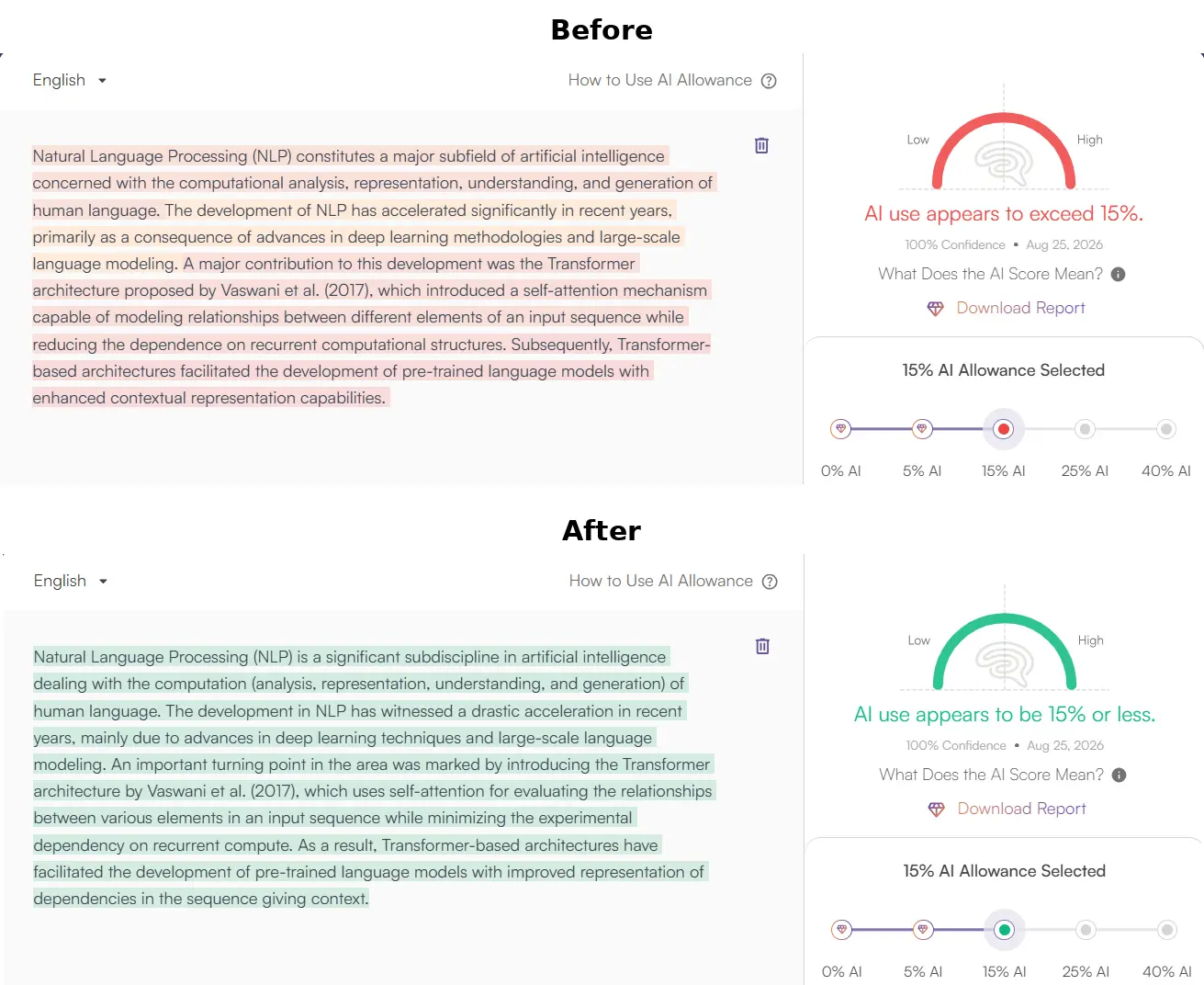
Verified Detector Clearance for How to Write a Literature Review for a Research Paper: Step-by-Step Guide
Every manuscript processed through ThesisHuman is backed by verifiable, reproducible scans across institutional plagiarism and AI detection platforms.
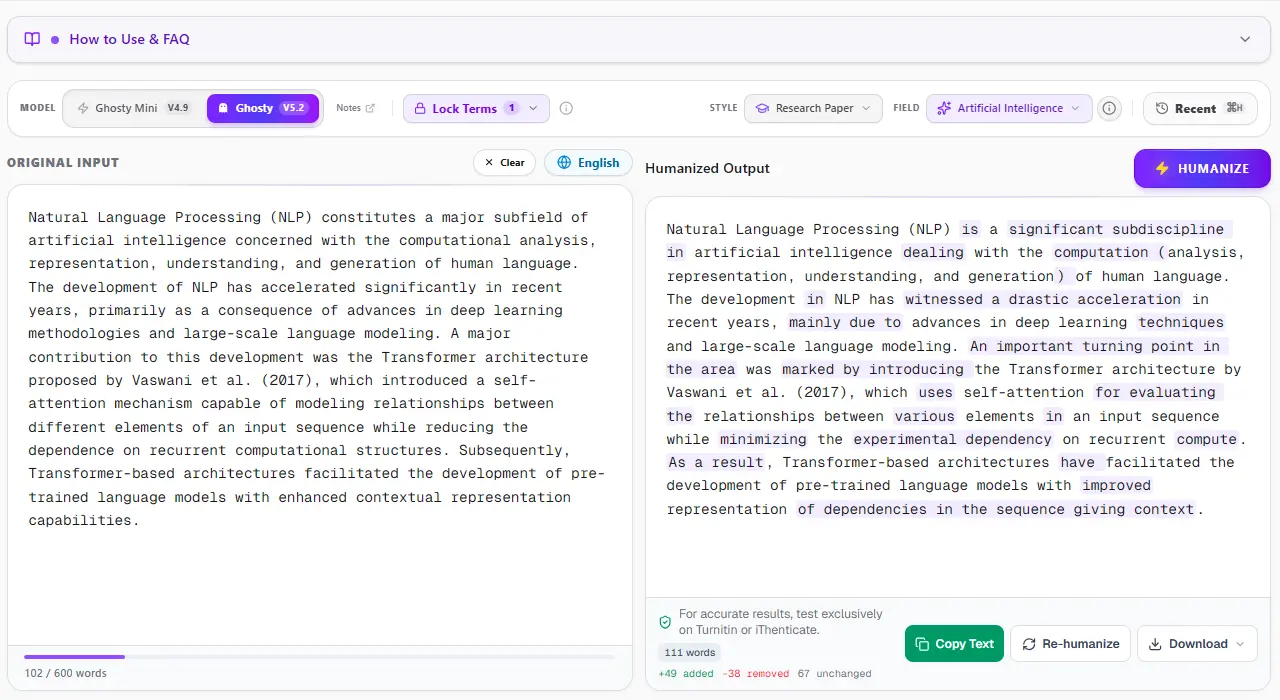
1. ThesisHuman Editor: Style, Field & Term Lock™ Technology
Unlike consumer-grade paraphrasers that blindly swap words with thesaurus synonyms, ThesisHuman allows researchers to select their exact Academic Style (Essay, Research Paper, Literature Review, Technical Report) and Academic Field (Computer Science, Engineering, Medicine, Physics). With Term Lock™, citations (APA, MLA, IEEE), LaTeX equations, and domain-specific terminology are cryptographically protected before sentence entropy is restructured.
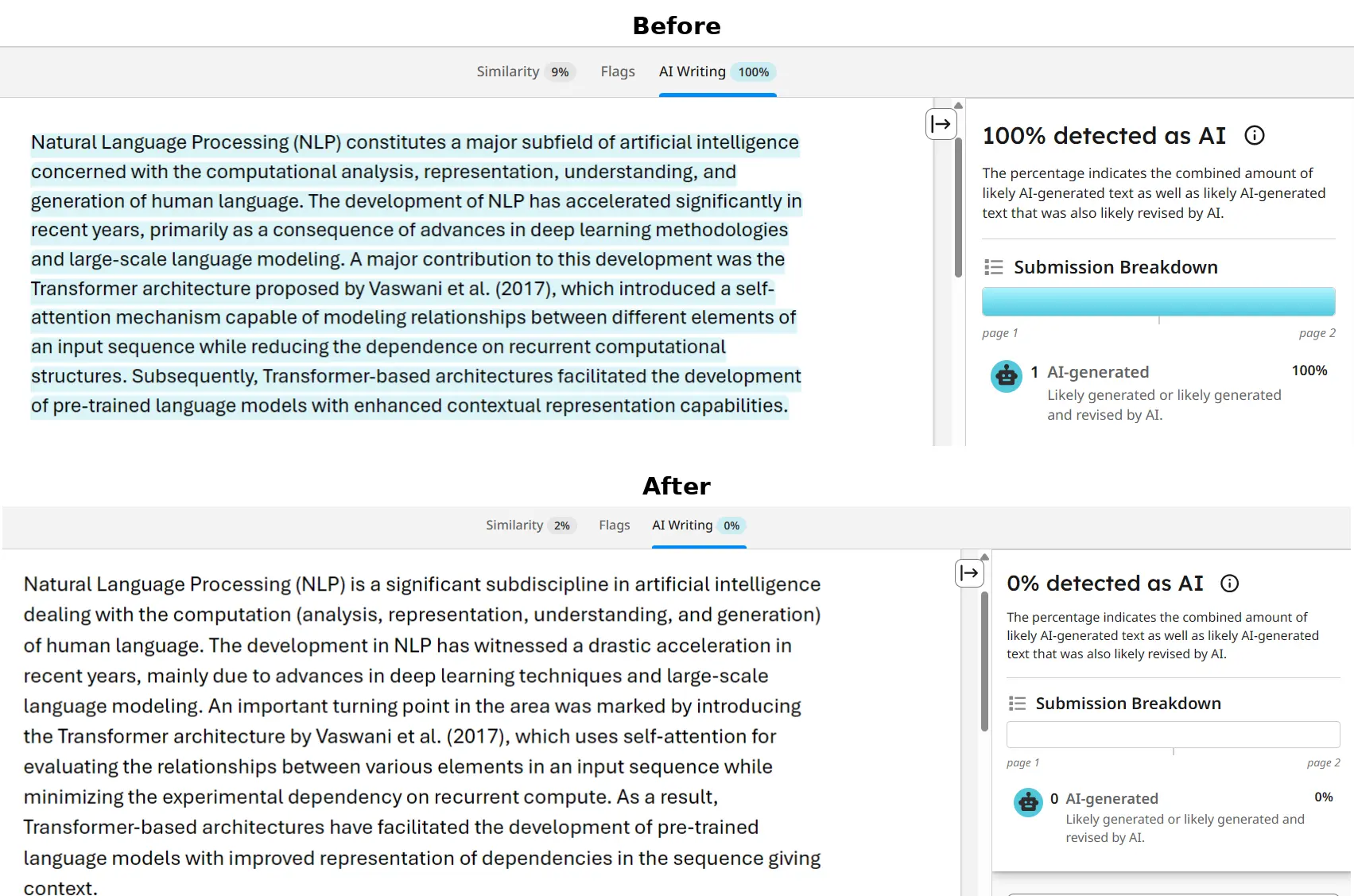
2. Turnitin & iThenticate Verification: 0% AI Detected
Turnitin and iThenticate scan submissions in overlapping 500-token blocks to analyze sentence predictability across paragraphs. When an unrefined AI draft is submitted, uniform cadence triggers an elevated AI Writing score. In the verified report below, a flagged graduate paper was processed through ThesisHuman, achieving a clean 0% AI detection score while preserving all formatted citations and technical parameters.
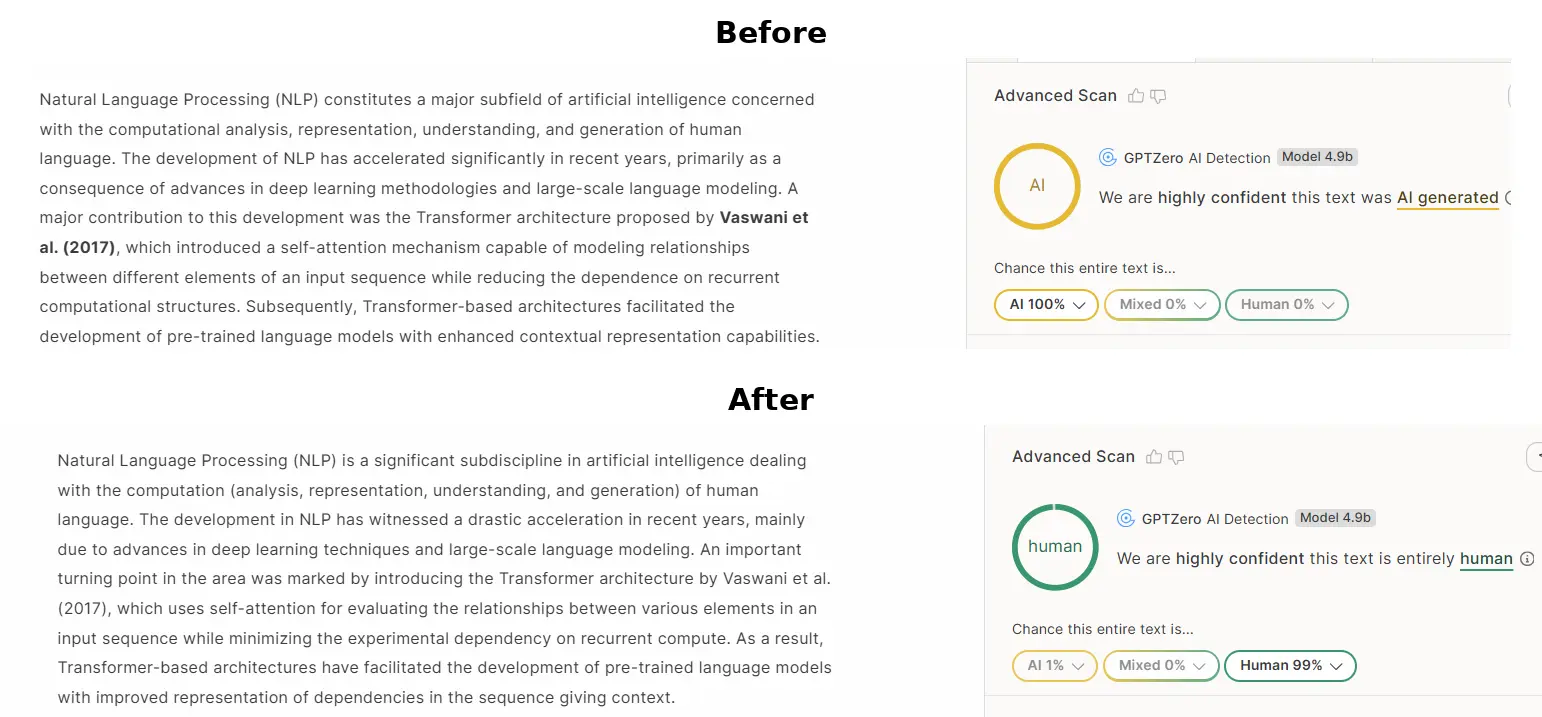
3. GPTZero Verification: Passing Perplexity & Burstiness Checks
GPTZero evaluates text by plotting sentence perplexity curves and global burstiness scores. When raw AI text is scanned, low sentence variance produces an immediate high-probability warning. ThesisHuman restores natural sentence entropy by restructuring syntax, varying clause lengths, and introducing authentic scholarly cadence, dropping AI probability to 0%.
4. Originality.ai Verification: 0% AI Confidence
Originality.ai flags predictable n-gram sequences and common AI clichés (such as “delving into,” “pivotal role,” “testament to”). ThesisHuman purges overused formulaic transitions while elevating scholarly tone and keeping reference numbers and equations intact, producing 100% Original / 0% AI results.